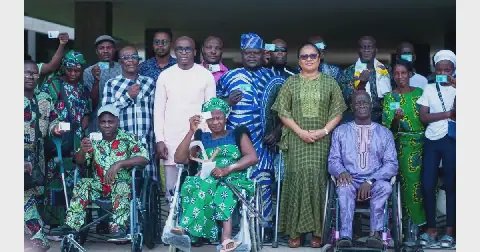
The Bureau of Public Procurement (BPP) and the Association of Professional Women Engineers of Nigeria (APWEN) are working together to increase the participation of women-owned engineering businesses in public projects. The BPP is developing a new affirmative procurement policy to create more opportunities for women in government contracting. This policy aims to promote economic inclusion, enterprise development, and broader participation in national development.
The BPP Director-General, Adebowale Adedokun, stated that the policy would use public procurement to promote economic inclusion and enterprise development. He emphasized that affirmative procurement serves as a tool to deliver governance dividends to all citizens. The policy is being developed to align public procurement with the broader national agenda of economic inclusion, enterprise development, and national development.
Women-owned businesses in Nigeria face significant barriers, including limited access to finance, technical capacity, and historical exclusion from large-scale contracts. The new policy aims to address these challenges by creating mechanisms that enable eligible businesses to compete effectively. Adedokun stressed that the policy does not imply preferential treatment without merit but rather aims to expand opportunities and strengthen supplier diversity.
The President of APWEN, Chinyere Nnenna Igwegbe, emphasized the need for women engineers to be at the center of Nigeria's infrastructure development, particularly in the face of climate change, energy transition, and urbanization. She called for stronger collaboration among government, industry, academia, and professional bodies to address infrastructure challenges. Igwegbe highlighted that supporting a woman engineer strengthens an entire profession and uplifts a whole community.
The 2026 International Conference, Exhibition, and Annual General Meeting of APWEN, held in Abuja, had the theme "Designing Adaptive Systems: Engineering Energy, Building Net-Zero, Delivering Tomorrow's Infrastructure." The conference aimed to promote sustainable infrastructure development and encourage women engineers to take a leading role in the process. Keynote speakers and participants discussed the need for adaptive systems that can respond to changing conditions and climate pressures.
Former Minister of Aviation, Babatunde Omotoba, delivered the keynote address, emphasizing the need for Nigeria to design infrastructure as interconnected systems capable of responding to changing conditions. He cited examples of adaptive systems, such as the installation of total radar coverage and an aircraft sequencing system in the Nigerian airspace. Omotoba also called for a realistic approach to Nigeria's energy transition, balancing environmental objectives with immediate electricity needs.
The Nigerian Society of Engineers, represented by Patricia Nekpen Opene-Odili, urged APWEN to continue strengthening mentorship and leadership development for women engineers. She emphasized that Nigeria must design deliberately for its future and ensure women engineers play a central role in that process. The collaboration between BPP and APWEN is expected to create new opportunities for women-owned engineering businesses and promote sustainable infrastructure development in Nigeria.
Key points
- The BPP is developing a new affirmative procurement policy to create opportunities for women-owned engineering businesses in Nigeria's public projects.
- Women engineers must be positioned at the center of Nigeria's infrastructure development to address climate change, energy transition, and urbanization.
- The policy aims to promote economic inclusion, enterprise development, and broader participation in national development.