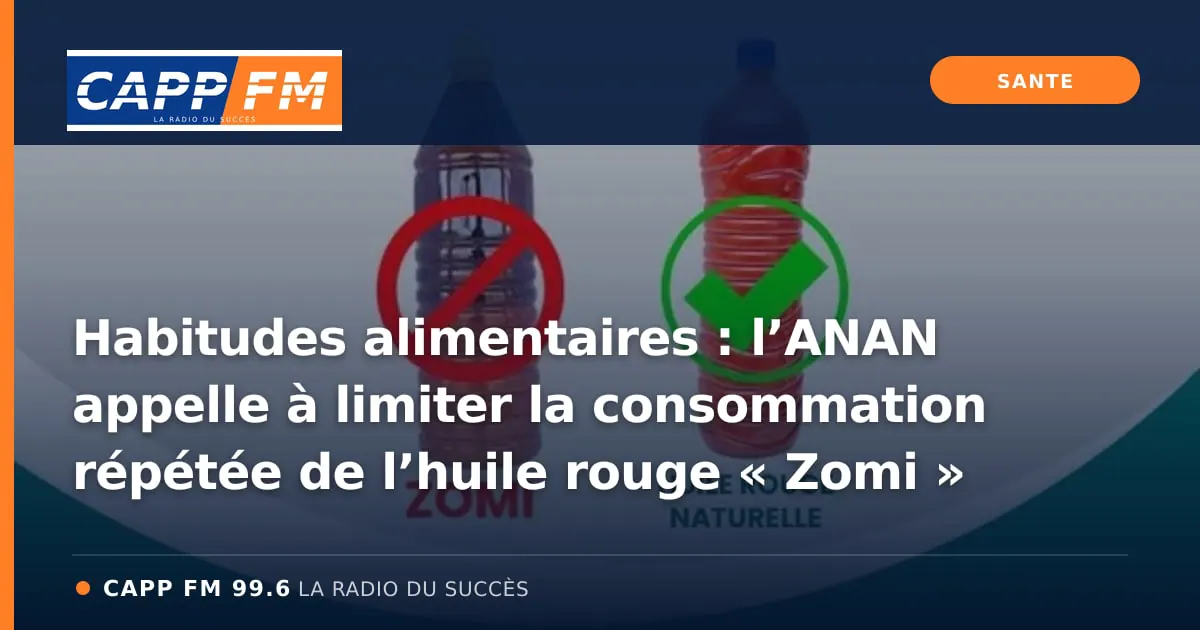
The National Food and Nutrition Agency (ANAN) of Benin has issued a warning against the excessive consumption of 'Zomi', a type of red palm oil. According to Professor Charles Sossa, Director of Nutrition, the agency recommends not making 'Zomi' a primary part of daily meals. This is due to its artisanal processing method, which involves prolonged heating, degrading some of its nutritional qualities.
Professor Sossa highlights that natural red palm oil has nutritional value, particularly being rich in vitamin A precursors. However, the transformation process into 'Zomi' leads to significant degradation of certain nutrients. As a result, ANAN advises against normalizing the consumption of this processed oil and recommends diversifying sources of vegetable fats.
To maintain cardiovascular health, ANAN suggests incorporating other oils like peanut, corn, and soybean oil, as well as natural red palm oil, into a balanced diet. This approach aligns with the World Health Organization's (WHO) general recommendations on healthy eating. The WHO advises prioritizing unsaturated fats and limiting saturated fats to less than 10% of total energy intake.
The WHO also recommends keeping trans fatty acids below 1% and notes that the quantity of fats consumed is as important as their quality. For adults, lipids should not exceed 30% of daily energy intake. ANAN's recommendation in Benin focuses on moderating 'Zomi' consumption rather than eliminating it.
According to Professor Sossa, 'Zomi' consumption should be moderate and occasional to minimize risks associated with excessive intake of certain fats. The agency's goal is to promote healthy eating habits and reduce the risks linked to improper food consumption.
The ANAN's warning is based on the potential health risks associated with the consumption of processed oils. By advising moderation and diversification in fat intake, the agency aims to protect public health. The recommendation is part of a broader effort to promote healthy eating habits in Benin.
The Benin National Food and Nutrition Agency's advice to limit 'Zomi' consumption reflects a broader concern about the impact of food processing on nutritional value. The agency continues to work towards educating the public about healthy eating habits and promoting a balanced diet.
Key points
- The National Food and Nutrition Agency of Benin advises limiting 'Zomi' consumption due to its artisanal processing method.
- Natural red palm oil has nutritional value, but its processing into 'Zomi' degrades some nutrients.
- The agency recommends diversifying sources of vegetable fats and moderating 'Zomi' consumption.