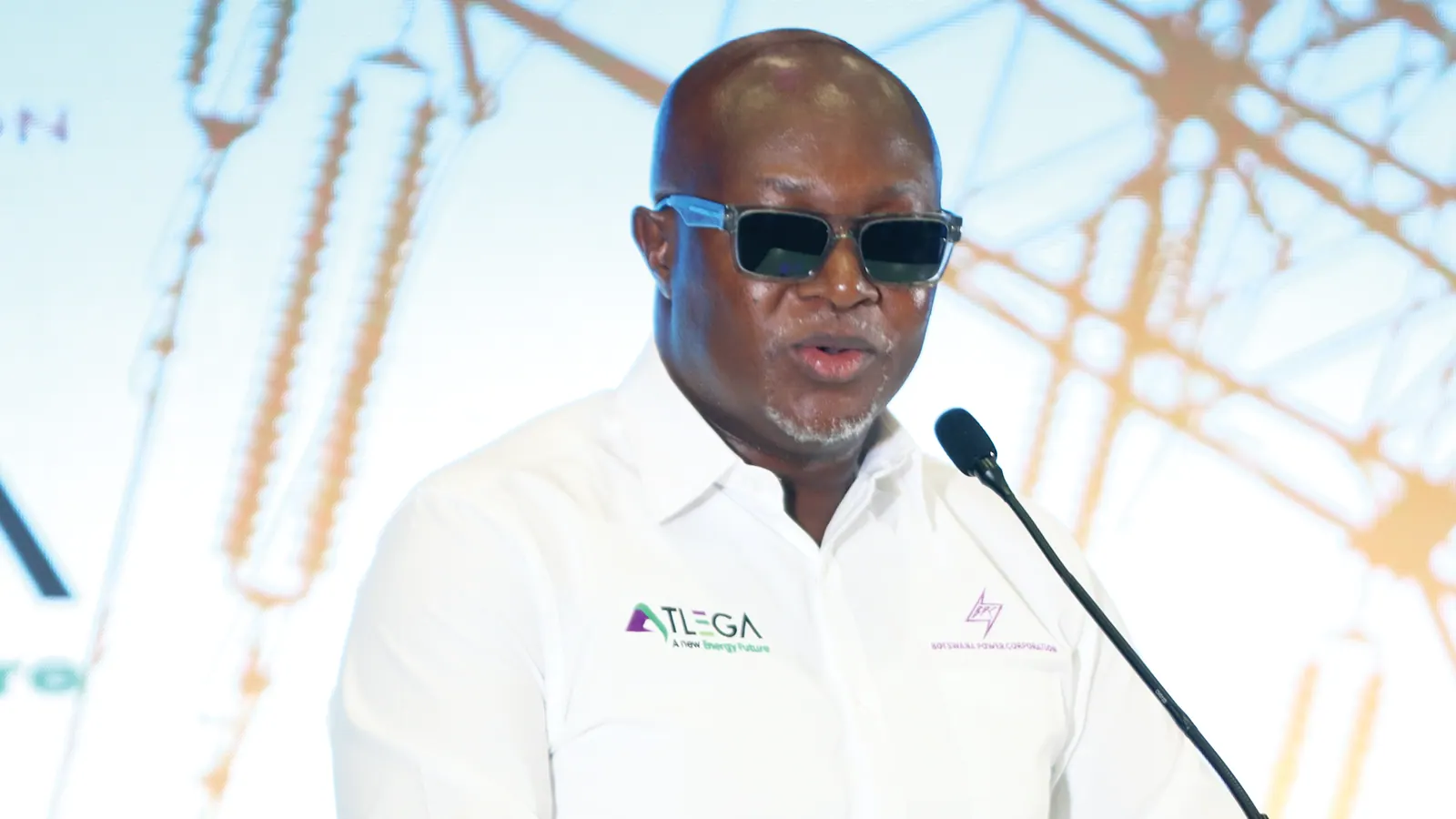
The Botswana Power Corporation (BPC) has reported a significant increase in electricity generation from its own assets. During the first quarter of the 2026-27 financial year, the utility supplied 86 percent of the country's electricity requirements from its own generation assets. This marks a substantial improvement from the 67 percent of national electricity requirements that BPC met through its own generation during the previous year. According to David Kgoboko, BPC's chief executive, the result is evidence that the utility's generating units have become more reliable after years of operational strain.
The improvement in electricity generation is crucial for Botswana, as it reduces the country's reliance on costly imports. In 2025, Botswana generated about 2.52 billion kilowatt-hours but imported another 1.86 billion kilowatt-hours to supplement domestic supply. The country's economy, heavily dependent on mining, requires increasingly dependable power. Kgoboko stated that the stronger performance has already produced wider benefits, including reduced reliance on costly imports, strengthened national energy security, and eased pressure on BPC's finances.
The turnaround is notable, given that Botswana's principal power station, Morupule B, has faced frequent breakdowns and extended maintenance problems. The 600-megawatt coal-fired plant, commissioned in 2012, has been a persistent source of concern. However, the recent gains reflect not only new solar capacity but also efforts to restore performance from an older, more troubled generation base. The World Bank's Botswana National Energy Compact said the plant's difficulties had forced Botswana to rely on expensive imports.
BPC is also investing in renewable energy, with 209 megawatts of utility-scale renewable energy connected to the national grid. The utility has identified the 100-megawatt Mmadinare and 100-megawatt Jwaneng solar photovoltaic plants as commissioned and in commercial operation. Additionally, BPC's rooftop solar program has expanded from 40 megawatts to 75 megawatts, with about 30 megawatts already installed and operating. Rooftop systems can reduce pressure on the central grid during daylight hours and distribute generation across homes, businesses, and institutions.
The solar push reflects Botswana's natural advantage, with much of the country receiving intense sunlight. The government's Integrated Resource Plan provides a framework for new generation, and Botswana has set a target of obtaining 50 percent of its energy mix from renewable sources by 2030. The World Bank's energy compact says the target is expected to be driven primarily by solar photovoltaic installations, with solar capacity projected to reach 1.5 gigawatts by 2030.
However, achieving this target will require more than just building solar farms. Botswana will need stronger transmission links, better forecasting, and storage systems capable of shifting electricity from midday into the evening. The World Bank has pointed to battery energy storage systems as part of the infrastructure needed to integrate a larger share of variable renewable power. BPC says it has delivered all renewable energy projects assigned to it under the Integrated Resource Plan and is targeting as much as 1.3 gigawatts of solar energy by 2030.
The shift towards renewable energy is unfolding alongside structural changes in the electricity sector. In July 2025, the government began unbundling BPC, separating generation operations from transmission and distribution. Such reforms are intended to clarify responsibilities and attract investment, though they can also expose the financial condition of each part of a utility more plainly. The challenge for BPC is to prove that the 86 percent figure is not a short-lived peak and to sustain its improved performance.
Key points
- BPC supplies 86% of national electricity requirements from its own generation assets.
- Botswana targets 50% of its energy mix from renewable sources by 2030.
- BPC aims to achieve 1.3 gigawatts of solar energy by 2030.