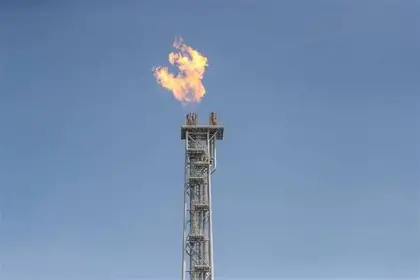
Senegal's economy experienced a significant growth of 6.5% in 2025, compared to 6.3% in 2024, largely due to the dynamism of the secondary sector and an increase in extractive activities. This growth occurred in a context where 2025 marked the first full year of oil production from the Sangomar field and the start of gas production from the Grand Tortue Ahmeyim (GTA) project.
According to the provisional national accounts published by the National Agency of Statistics and Demography (ANSD) on Friday, September 18, the growth was driven by various sectors. The secondary sector, with an expansion of 15.9%, contributed 4.1 points to the GDP increase. This success is mainly due to extraction operations, which saw a 62.5% increase, as well as refining and coking, which grew by 49.4%.
The primary sector also saw growth, with a 5.5% increase in value added, driven particularly by agriculture (+7.4%), livestock (+5.3%), and fishing and aquaculture (+2.8%). However, the forestry sector experienced a 2.6% decline. The tertiary sector recorded a growth of 2.8%, significantly lower than the 6.1% anticipated for 2024, mainly due to a 17.5% decline in specialized, scientific, and technical activities.
In terms of demand, exports of goods and services surged by 30.7%, primarily due to hydrocarbon exports. Goods exports jumped by 36.5%, compared to a 6.8% increase in services. Final consumption rose by 4.2%, with household consumption increasing by 4.0% and public administration consumption by 4.9%. However, gross fixed capital formation (GFCF) fell by 13.0%, with public investment decreasing by 36.9% and private investment by 6.5%.
The GDP, in current value, reached 25,767.3 billion FCFA in 2025. Exports of goods and services amounted to 7,081.3 billion FCFA, while imports of goods and services totaled 8,414.5 billion FCFA. The ANSD reported that the 2025 growth was largely supported by the secondary sector, particularly extractive activities, which drove the economy.
Despite the overall growth, some sectors experienced declines. The GDP excluding hydrocarbons increased by 2.4%, compared to a 3.3% increase in 2024. The GDP excluding both agriculture and hydrocarbons rose by 2.0%, after a 4.0% increase the previous year. These declines highlight the need for diversified growth across various sectors.
According to Rémi SOUSSO, the growth in 2025 demonstrates the positive impact of hydrocarbon production on Senegal's economy. The ANSD's report highlights the importance of continued investment in extractive industries and other sectors to sustain economic growth. Key sectors to watch include the hydrocarbon sector, which drove growth, and the tertiary sector, which experienced a decline.
Key points
- Senegal's economy grew 6.5% in 2025, driven by hydrocarbon sector growth.
- The secondary sector contributed 4.1 points to GDP growth with a 15.9% expansion.
- Exports of goods and services surged by 30.7%, primarily due to hydrocarbon exports.