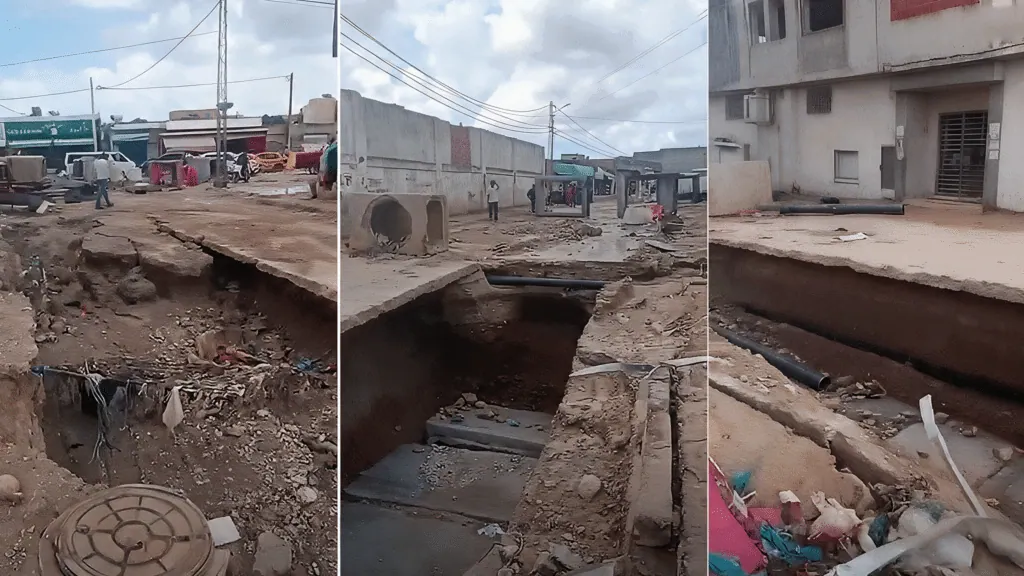
Heavy rainfall last week caused significant disruptions to traffic and damaged roads in Tunisia's Ariana region. The damage was particularly severe in the Boujaafar area of Raoued, where large sections of asphalt were washed away, and a car was swept into a massive hole. The incident has raised concerns about the quality of road construction and maintenance in the region.
The damage to roads in Ariana has been a recurring problem, with similar incidents occurring every year during periods of heavy rainfall. This has led to questions about whether private contractors are adhering to construction standards when building or rehabilitating roads. The repeated damage to infrastructure has sparked concerns about the effectiveness of current construction practices.
Chokri Khlifi, Director of Urban Water at the Ministry of Equipment and Housing, has provided technical insights into the causes of the damage. He explained that intense rainfall over a short period can cause significant damage to infrastructure. However, Khlifi also clarified that the massive hole in the road was not directly caused by the rainfall, but rather by ongoing construction work to protect the area from flooding.
The construction work, which began in late 2025 and is expected to last 18 months, involves digging and installing underground drainage systems to channel rainwater away from the area. The goal of the project is to prevent future flooding and mitigate the risk of accidents caused by infrastructure failure.
The frequency of intense rainfall events in the region, particularly during the summer and autumn months, has highlighted the need for urgent action to rehabilitate and strengthen the road infrastructure. The current vulnerability of the infrastructure has raised concerns about the risk of accidents and the potential for more severe damage in the future.
The repeated incidents of damage to roads in Ariana have sparked calls for accelerated rehabilitation work to protect urban areas from flooding and other hazards. The government and private contractors must work together to address the issue and ensure that roads are built and maintained to withstand extreme weather conditions.
The recent events in Ariana serve as a reminder of the importance of investing in robust and resilient infrastructure to mitigate the impact of climate-related events. By prioritizing infrastructure development and maintenance, Tunisia can reduce the risk of accidents and damage to property, and ensure safer and more reliable transportation networks for its citizens.
Key points
- The recent heavy rainfall in Tunisia's Ariana region has exposed weaknesses in the country's road infrastructure, highlighting the need for urgent rehabilitation work.
- The damage to roads has been a recurring problem, with similar incidents occurring every year during periods of heavy rainfall.
- The government and private contractors must work together to address the issue and ensure that roads are built and maintained to withstand extreme weather conditions.