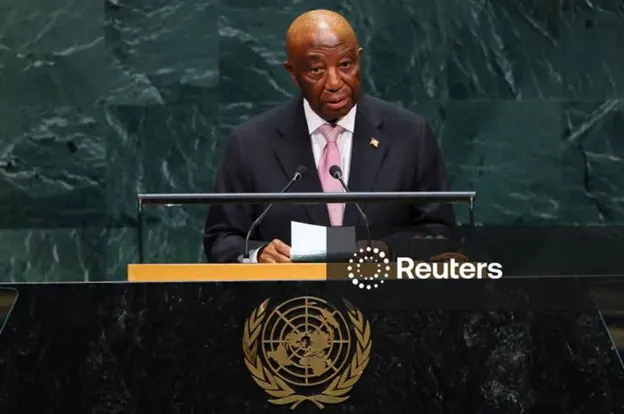
On September 25, 2026, Liberian President Joseph Nyuma Boakai, Sr. addressed the United Nations General Assembly, advocating for a more equitable global order. He emphasized the need for reform in the international financial architecture, particularly in the World Bank and the International Monetary Fund (IMF). Boakai, whose country helped found the UN in 1945, stressed that developing nations require a stronger voice in these institutions. He also requested support from international partners in combating drug cartels in the Gulf of Guinea.
During the general debate of the 81st session, Boakai highlighted the crisis of legitimacy and relevance facing the UN. He stated that trust in multilateralism is broken due to the inconsistent and selective application of the UN Charter's principles. However, he emphasized that the principles themselves remain sound. Boakai called for "better multilateralism" to address global fragmentation. He congratulated Khalilur Rahman, Bangladesh's Foreign Minister, on his election as President of the 81st session and pledged Liberia's full support.
Boakai reminded delegates that Liberia was one of only four African nations to sign the UN Charter. He presented Liberia as a nation that has risen from conflict to become a resilient democracy, demonstrating that dialogue can overcome division and institutions can be rebuilt. The President tied Liberia's history to his administration's domestic program, which focuses on strengthening public accountability, ensuring prudent financial management, and intensifying the fight against corruption.
The Liberian President emphasized the importance of peace, prevention, and humanitarian law. He called for an immediate end to hostilities, unhindered humanitarian access, and full respect for international humanitarian law. Boakai argued that prevention must be at the heart of international peace and security, citing the cost of preventing war as a moral imperative and fiscally prudent. He also highlighted evolving threats across West Africa, including transnational organized crime and illicit narcotics trafficking.
As a current member of the UN Security Council, Boakai appealed for targeted support from international partners in coast guard surveillance, intelligence sharing, and port security technologies. He stated that no nation can police global criminal networks alone. The President also addressed the 2030 Agenda for Sustainable Development, noting that developing nations are being squeezed by unsustainable debt, shrinking fiscal space, and mounting external shocks.
Boakai called for urgent, structural reform of the international financial architecture, emphasizing that developing countries need concessional financing, debt sustainability, and predictable development capital. He argued that the governance of the Bretton Woods institutions still reflects the world of 1945 and that developing countries deserve a fairer voice and vote within them. The President described such reform as a precondition for delivering the Sustainable Development Goals (SDGs) and restoring trust.
Boakai presented the ARREST Agenda for Inclusive Development, Liberia's national development blueprint, which focuses on Agriculture, Roads, Rule of Law, Education, Sanitation, and Tourism. He highlighted concrete strides made in revenue administration and infrastructure, including rural roads linking farms to markets. The President also emphasized climate justice, noting that Liberia contributes virtually nothing to global emissions yet faces significant climate-related challenges.
Key points
- Boakai seeks two permanent African seats with veto power in the UNSC.
- He calls for reform in the international financial architecture.
- The President emphasizes the importance of climate justice and support for developing nations.