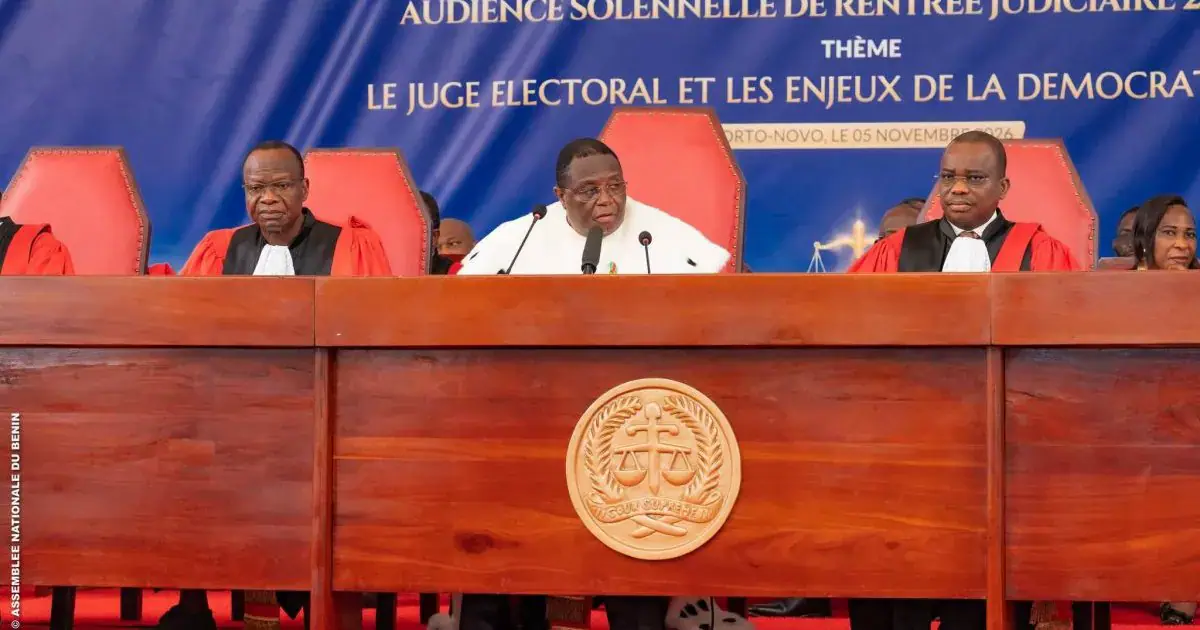
Benin's Supreme Court officially launched its 2026-2027 judicial year on November 5, 2026, in Cotonou. The court's president, Victor Dassi Adossou, highlighted the significance of the event, which included a discussion on the role of judges in electoral disputes. The ceremony was attended by several high-profile figures, including the President of the National Assembly, Joseph Fifamin Djogbénou, and the Vice-President of the Republic, Mariam Chabi Talata Zimé, who represented the Head of State.
The Supreme Court's judicial year was marked by a theme: "The Electoral Judge and the Challenges of Local Democracy." This theme aimed to shed light on the crucial role of judges in ensuring the legitimacy of local institutions. The court's focus on electoral disputes comes after a contentious election period. The event also served as an exercise in accountability, with the court's performance over the past year being reviewed.
During the ceremony, the Public Prosecutor, Saturnin Afaton, presented the court's achievements, including 1,322 rulings issued within an average of seven days. He emphasized the democratic significance of the court's decisions, particularly in electoral disputes. Afaton stated that when judges annul an election, they are not undermining democracy but rather upholding it.
The Beninese Bar Association also contributed to the discussion, with Bar leader Zacharie Baba Body stressing the importance of local institutions in building democracy. He expressed hope that the new judicial year would be marked by serenity, authority, and humanity. The Bar's participation underscored the need for collaboration between the judiciary and other stakeholders in promoting democratic values.
The Vice-President of the Republic, Mariam Chabi Talata Zimé, represented the Head of State at the ceremony. She commended the Supreme Court for its work and expressed the hope that the new judicial year would consolidate the progress made and strengthen the guarantees necessary for the organization of future elections. Her presence highlighted the government's commitment to the judiciary and democratic processes.
The launch of the Supreme Court's judicial year was also attended by delegations from Senegal and Côte d'Ivoire, demonstrating the court's regional significance. The event provided a platform for stakeholders to reflect on the challenges facing local democracy and the role of judges in addressing these challenges. The discussions are expected to inform the court's approach to electoral disputes in the future.
As the Supreme Court begins its new judicial year, it faces the task of navigating complex electoral disputes while upholding democratic principles. The court's performance will be closely watched by stakeholders, both domestically and internationally. The court's commitment to transparency and accountability, as demonstrated during the launch event, is a positive step towards promoting trust in the judiciary and democratic institutions.
Key points
- The Supreme Court's focus on electoral disputes reflects its critical role in protecting democracy in Benin.
Reporting sources
- La Cour suprême fait sa rentrée · 24 Heures au Bénin