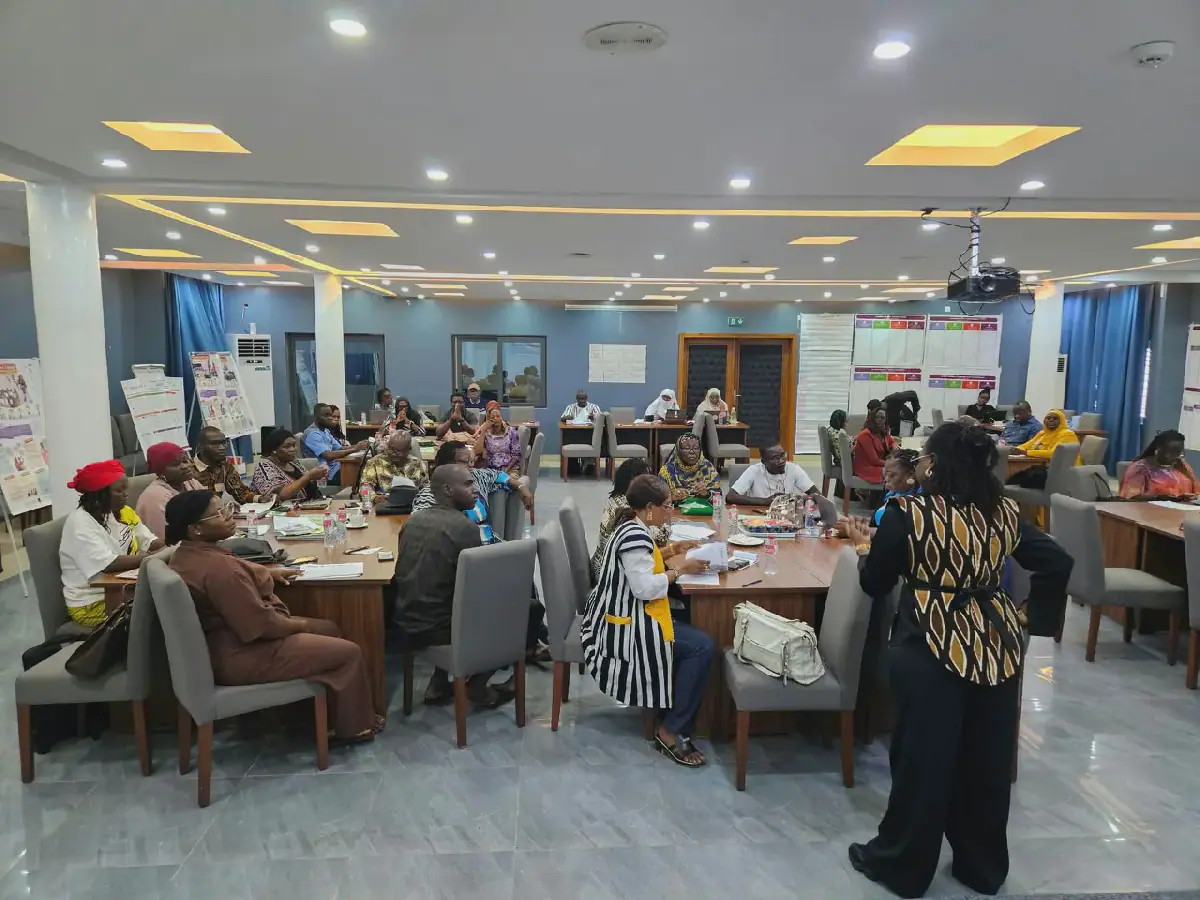
The Fps-Jps project, an initiative aimed at promoting feminist agendas for peace and security in West Africa and the Sahel, has completed its three-year term. The project, supported by the French Development Agency (Afd) through the Feminist Organizations Support Fund (Fsof), was implemented by a consortium comprising Equipop, Fad Niger, Diakonia, and Gorée Institute. During its three-year term, the project provided technical and financial support to 67 organizations in Benin, Togo, Côte d'Ivoire, and other countries.
The project's primary objective was to strengthen the capacity of women's and youth organizations to participate in conflict prevention and peacebuilding mechanisms. According to Fatim Diallo, program manager at Equipop, the project focused on supporting the development of organizational capacities, as well as promoting the appropriation of feminist agendas for peace and security. The project also aimed to foster networking and collaboration among organizations at the local, national, and regional levels.
The project's impact was highlighted through various testimonials from participating organizations. In Niger, Safiatou noted that the project had enabled her organization to establish exchange groups comprising men and women, promoting experience sharing and collaboration. However, she also acknowledged the challenges posed by insecurity, which had hindered the implementation of certain activities. Despite these obstacles, the project had contributed to the capacity building of organizations, enabling them to engage more effectively in peacebuilding efforts.
In Burkina Faso, Annick emphasized the importance of collective action and collaboration among organizations working towards peace and security. She used the analogy of a vehicle, where the engine represents common engagement, the wheels symbolize mobilized organizations and networks, and the fuel represents solidarity and resources. The project's focus on inclusivity and collective action was seen as crucial in promoting sustainable peace and security.
The project's achievements and challenges were also highlighted in Côte d'Ivoire, where Mafélina presented an analysis of the project's strengths, weaknesses, opportunities, and threats. Her intervention revealed that the project's implementation had been hindered by insufficient formal commitments from authorities, time constraints, and security-related challenges. Despite these challenges, the project had contributed to the strengthening of organizational capacities and networking among actors.
As the project comes to a close, participating organizations have formulated recommendations for a potential second phase. Alida Delou, representing Benin, emphasized the need to maintain beneficiaries at the center of interventions, particularly young girls and women. She also stressed the importance of greater media involvement, including feminist media, in promoting the project's objectives and causes. The organizations have also called for sustained advocacy, mobilization of new partners, and enhanced communication.
The project's completion has raised concerns about the sustainability of the progress achieved. Participating organizations have expressed a desire for institutional commitments and new partnerships to ensure the continuation of their work. The representative of the Ministry of Family and Social Action has acknowledged the initiatives undertaken by civil society organizations and platforms, reaffirming the ministry's commitment to supporting their efforts.
Key points
- The Fps-Jps project has empowered 67 organizations in Benin, Togo, Côte d'Ivoire, and other countries to promote feminist agendas for peace and security.