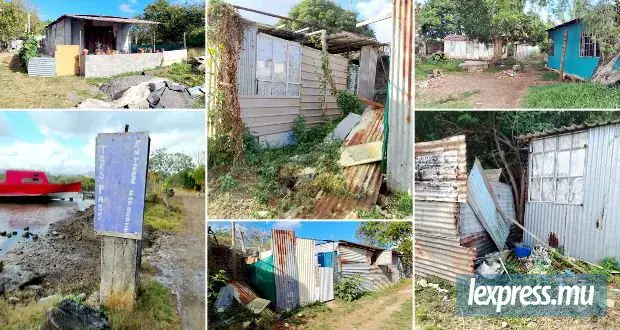
The Télémaque neighborhood, located near Mahébourg, Mauritius, is home to a small community of residents who have been living in basic conditions for decades. The community consists of around a dozen houses, with less than 30 residents, who have made the area their home despite lacking access to basic services such as electricity and running water. Residents rely on candles for lighting and collect water from nearby sources.
Long-time resident Kinsley Potage shared that his family has lived in Télémaque since around 1975. He described the harsh conditions, stating that residents live in darkness, relying on candles for light, and must fetch water from nearby rivers. Potage mentioned that some residents have left due to the difficult conditions, while others, like himself, continue to make do with limited resources.
The community faces challenges with infrastructure and recognition, with the government considering them squatters due to their lack of formal ownership of the land. However, Potage disputes this label, arguing that his family has lived on the land for over 50 years and has made efforts to improve their homes and living conditions. He has initiated steps to regularize his residence but has yet to receive a response.
Despite these challenges, residents like Potage continue to make the best of their situation. Potage has constructed a solid house and started building a concrete home, highlighting the resilience of the community. However, the area's isolation and lack of services also make it an attractive spot for drug users, who come to the area to consume substances out of sight.
Christian Aristide, a councilor from the nearby village of Beau-Vallon, acknowledged the community's situation, stating that they are living on illegally occupied land, which complicates their chances of regularization. However, he emphasized that the community is not entirely abandoned, with services such as road maintenance and waste collection provided on a regular basis.
The Télémaque community's struggles highlight the complexities of addressing informal settlements in Mauritius. While the government may view residents as squatters, long-time residents like Potage argue that their long-standing presence on the land and efforts to improve their living conditions warrant consideration. The situation underscores the need for a nuanced approach to addressing the needs of such communities.
As the community continues to face challenges, residents like Potage remain determined to improve their living conditions. With support from local authorities and advocacy, the Télémaque community may one day gain recognition and access to basic services, allowing them to thrive in their homes.
Key points
- The Télémaque community in Mauritius faces challenges with infrastructure and recognition due to their status as squatters on illegally occupied land.