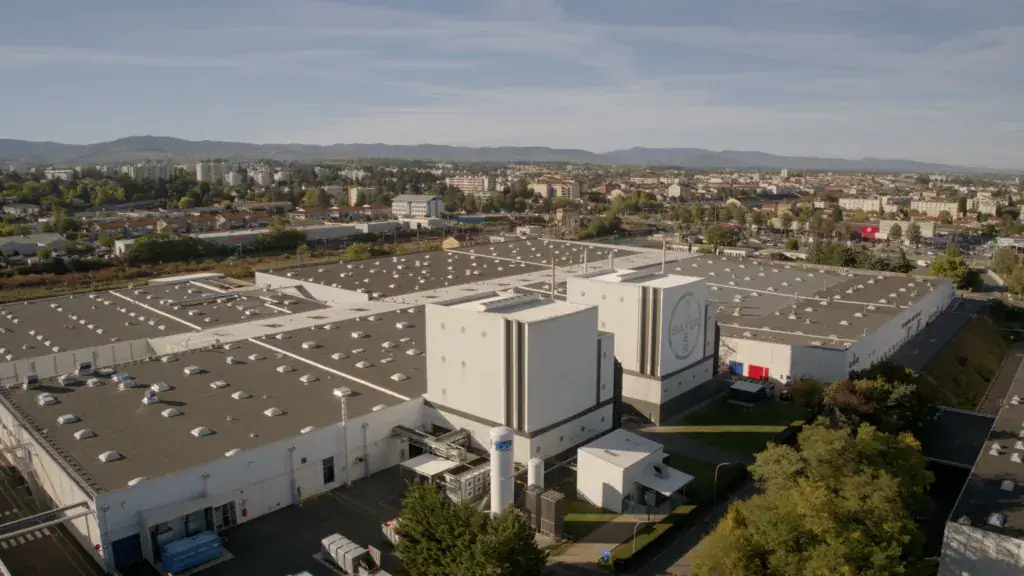
Bayer has redefined its approach to crop protection, leveraging digital tools, scientific partnerships, and innovative methods to develop more effective solutions. The company's new strategy was recently showcased at its research centers in Lyon, France, where a delegation of journalists from Morocco, Algeria, and Tunisia were invited to explore its research chain. This approach aims to address the growing challenges faced by agriculture, including climate change, water scarcity, and increasing pressure from pests and diseases.
The company's new platform, CropKey, is at the heart of this transformation. CropKey uses artificial intelligence, data analysis, and molecular modeling to identify new solutions for crop protection. By starting with a specific biological target, researchers can develop molecules that effectively act on that target, reducing the risk of resistance and ensuring a more sustainable approach. This approach marks a significant shift from traditional methods, which often begin with a broad portfolio of molecules.
Bayer's new approach has significant implications for the agriculture sector, particularly in North Africa, where farming plays a vital role in the economy, employment, and food security. The region faces numerous challenges, including limited water availability, extreme climate events, and increasing pressure from pests and diseases. Amina L'Kima, CEO of Bayer Morocco and director of the Crop Science division for Bayer North Africa, emphasized that agriculture is at a critical juncture, requiring innovative solutions to address these challenges.
The company's research centers in Lyon, including the LifeHub and the Centre de recherche de La Dargoire (CRLD), are key to its new approach. These facilities enable researchers to collaborate with scientific partners, leverage digital tools, and develop innovative solutions. The company's industrial site in Villefranche-Limas also plays a critical role in the development and production of new crop protection products.
Bayer's new approach is expected to yield significant benefits, including the development of more effective and sustainable solutions. The company aims to bring new products to market within two to three years, with the first commercialization of a product developed using the CropKey approach expected by 2028. Philippe Méresse, director of the LifeHub Lyon, emphasized that the company's goal is to develop solutions that are not only effective but also sustainable and environmentally friendly.
The use of artificial intelligence in Bayer's research approach is a key factor in accelerating the development of new solutions. AI enables researchers to explore a vast number of hypotheses and chemical structures, orienting their work more effectively and identifying promising leads. However, Méresse noted that human expertise remains essential in the decision-making process, ensuring that the company's solutions meet the highest standards of safety and efficacy.
The company's commitment to innovation and sustainability is reflected in its goal of developing products that are not only effective but also environmentally friendly. With a focus on reducing the risk of resistance and ensuring a more sustainable approach, Bayer's new research strategy is poised to make a significant impact on the agriculture sector. As the company continues to develop and commercialize new solutions, it is likely to play a key role in shaping the future of crop protection.
Key points
- Bayer's new research approach focuses on digital tools, scientific partnerships, and innovative methods to develop more effective and sustainable crop protection solutions.
- The company's CropKey platform uses artificial intelligence and data analysis to identify new solutions for crop protection.
- Bayer aims to bring new products to market within two to three years, with the first commercialization of a product developed using the CropKey approach expected by 2028.