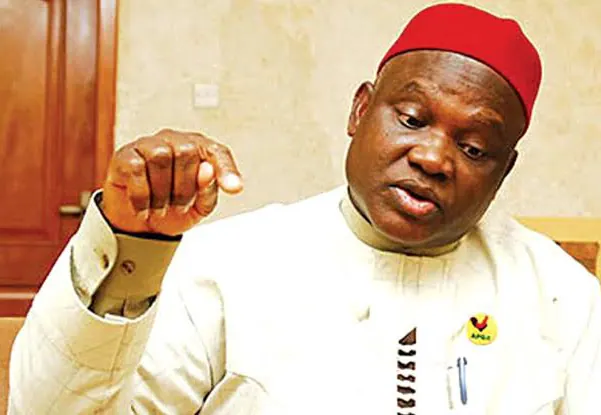
Chief Chekwas Okorie, the founder and former National Chairman of the All Progressives Grand Alliance (APGA), has expressed his thoughts on Nigeria's 66th anniversary. Okorie noted that Nigeria's journey since gaining independence has been chequered, marked by significant challenges and setbacks. He attributed the country's progress to its 27 years of unbroken democratic rule since 1999. Okorie's comments come as Nigeria celebrates its 66th anniversary as an independent nation.
Okorie reflected on Nigeria's early years, describing the country's development as rapid, particularly in the Eastern region, which was once recorded as the fastest-growing third-world economy globally. However, he noted that the military's intervention in 1966 disrupted this progress, leading to the civil war and Nigeria's loss of innocence. Okorie believes that the military's actions after the war were not sincere, and their policies were designed to continue the war by other means, ultimately affecting the country's growth.
According to Okorie, Nigeria's structure has contributed to its current state, with every subsequent government becoming worse than the previous one. He emphasized that the country's major achievement is its 27 years of unbroken democratic rule, but expressed hope that Nigerians have become more conscious of their power to effect change. Okorie suggested that Nigerians should use this awareness to recruit sincere individuals into elective offices, particularly the presidency, to drive positive change.
Okorie identified several areas where Nigeria has lagged behind other countries that gained independence around the same time. He noted that many of these countries have overtaken Nigeria in various development indices, including human resources. Okorie attributed this to Nigeria's post-war policies, which he believes were designed to bring some people down or halt their growth to allow others to catch up. He cited the quota system and educationally disadvantaged areas as examples of such policies.
The APGA founder also criticized the country's constitution, which he believes has created a strong central government that encourages autocratic rule. He argued that this has led to the abuse of power, with presidents using their position to favour cronies, ethnic groups, or adherents of their religion. Okorie also highlighted corruption as a major challenge, noting that incompetent individuals are often appointed to positions, and those who commit offences are protected due to their loyalty to those in power.
Okorie expressed concern about the current state of Nigeria's governance, citing the lack of checks and balances. He noted that the president has successfully cornered the governors, National Assembly, and judiciary, allowing him to behave as he likes. Okorie believes that this has led to a lack of accountability and the disregard of constitutional provisions, such as the 21-day limit for presidential travel abroad.
Okorie's advice to Nigerians is to take matters into their own hands, particularly with elections approaching in less than four months. He urged Nigerians to use their awareness of the country's challenges to drive positive change by recruiting sincere individuals into elective offices. Okorie emphasized that this is an opportunity for Nigerians to take decisive steps towards a better future.
Key points
- Okorie regrets Nigeria's journey since gaining nationhood, citing 27 years of unbroken democracy as a major achievement.