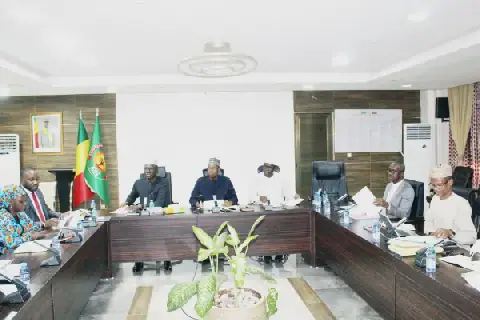
The 10th Senate, led by Senate President Godswill Akpabio and Deputy Senate President Barau Jibrin, has been steering a legislative agenda aligned with President Bola Ahmed Tinubu's Renewed Hope agenda. Their leadership has brought together two politicians with different regional backgrounds and legislative experiences to preside over the Red Chamber. This unique blend of leadership has enabled the Senate to take difficult decisions and accelerate legislative processes that could shape Nigeria's future.
The Senate's legislative footprints are evident in the various laws it has considered, including the National Minimum Wage Amendment Act, which raised the minimum wage from ₦30,000 to ₦70,000. The Students Loans (Access to Higher Education) Act established the Nigerian Education Loan Fund, providing access to higher education for students whose parents cannot afford university fees. Additionally, amendments to the Electricity Act have enabled greater state and private-sector participation in the electricity market.
The Senate's economic agenda has also extended into taxation, investment, insurance, and revenue administration. The Nigeria Tax Bill, Nigeria Tax Administration Bill, Joint Revenue Board Bill, and Nigeria Revenue Service Bill aim to reshape aspects of Nigeria's fiscal architecture by improving compliance, simplifying administration, and strengthening revenue mobilisation. These legislative efforts demonstrate the Senate's commitment to driving economic growth and development.
According to the National Assembly's legislative tracker, as of 29 April, 1,033 Senate bills had entered the process, with 453 at second reading and 424 before committees. The official dashboard recorded 106 bills passed by 23 April. Earlier Senate figures put the number of bills passed during its second-year milestone at 113, with 55 receiving presidential assent. This legislative volume is significant, especially when compared to the Ninth Senate under Ahmad Lawan, which had passed 58 bills out of 742 introduced at that point.
Akpabio's presidency has also been defined by the challenge of balancing political management with institutional responsibility. The Senate operates within the wider architecture of government, and its committees summon officials, scrutinise expenditure, examine policies, and investigate matters of public concern. The Senate has also demonstrated its willingness to enforce parliamentary discipline, as evident in the suspension of Senator Abdul Ningi and Senator Natasha Akpoti-Uduaghan for violating parliamentary rules.
Deputy Senate President Barau Jibrin has played a significant role in the Senate, presiding over sessions when Akpabio is unavailable and sponsoring or co-sponsoring several bills, including constitutional alteration proposals and security-related legislation. As chair of the Senate committee reviewing the 1999 Constitution, Barau has been central to discussions on state policing, devolution, and other structural reforms essential to addressing insecurity from the grassroots.
As the 10th Senate moves toward the completion of its tenure, its legislative footprints will be remembered for their impact on various aspects of Nigerian life. The Senate's efforts to drive economic growth, improve education, and enhance security will have a lasting legacy. Key points include:
Key points
- The 10th Senate has passed significant laws, including the National Minimum Wage Amendment Act and the Students Loans (Access to Higher Education) Act.
- The Senate has demonstrated its commitment to driving economic growth through legislative efforts in taxation, investment, and revenue administration.
- The Senate has shown its willingness to enforce parliamentary discipline and tackle pressing national issues, such as insecurity and constitutional reform.