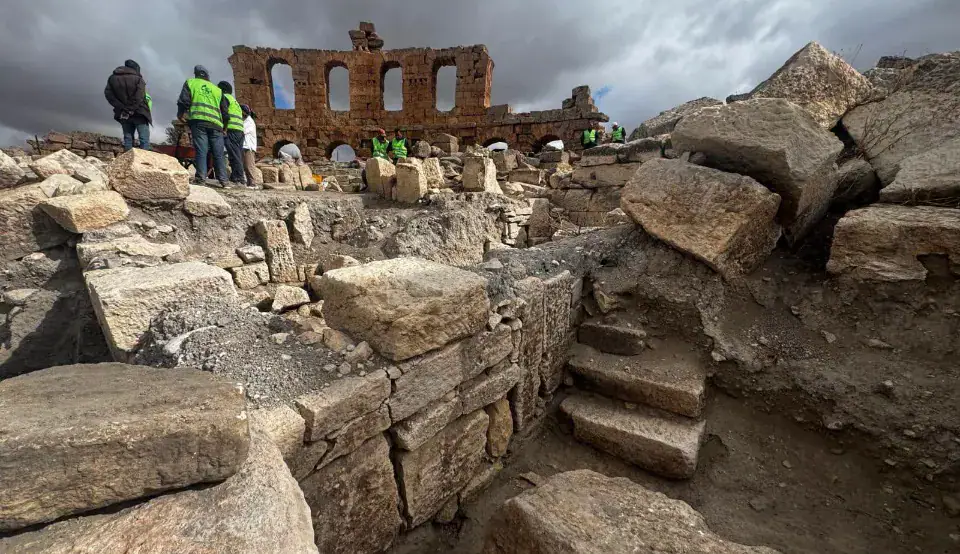
The National Heritage Institute of Tunisia has announced the discovery of residential remains dating back to the Fatimid and Aghlabid periods at the ancient city of Al-Tiburos, located in the delegation of Dehmani, Kef governorate. This finding was made possible through Tunisian-Italian archaeological excavations that took place from October 11 to 22, 2026. The excavations not only uncovered residential remains but also documented architectural details and ornaments characteristic of the Roman theater.
The site of Al-Tiburos, with its rich history, has been a subject of interest for archaeologists and historians. The discovery of residential remains from the Fatimid and Aghlabid periods is particularly significant as it reveals the site's continued occupation beyond the Roman era. This finding opens up new avenues for research into the nature of human settlement in Al-Tiburos and the succession of civilizations that inhabited the city.
The excavations, a collaborative effort between Tunisian and Italian archaeologists, highlight the importance of continued exploration and excavation of historical sites in the Kef region. The region is home to numerous archaeological sites that hold the key to understanding Tunisia's rich cultural heritage. The discovery at Al-Tiburos underscores the significance of preserving and studying these sites to gain a deeper understanding of the country's history.
The Fatimid and Aghlabid periods, which spanned from the 9th to the 12th centuries, were marked by significant cultural, architectural, and artistic achievements. The residential remains uncovered at Al-Tiburos provide a unique glimpse into the lives of people who lived during these periods. The discovery of these remains is expected to shed new light on the social, economic, and cultural dynamics of the region during that time.
The National Heritage Institute of Tunisia has emphasized the importance of this discovery, highlighting its potential to enrich our understanding of Tunisia's history and its place within the broader Mediterranean cultural landscape. The institute's efforts to preserve and study the site's archaeological heritage are crucial in promoting cultural awareness and appreciation.
The archaeological excavations at Al-Tiburos are a testament to the fruitful collaboration between Tunisian and Italian researchers. This joint effort has not only uncovered significant archaeological findings but also demonstrated the value of international cooperation in the field of cultural heritage preservation. The discovery is expected to have a lasting impact on our understanding of Tunisia's rich cultural heritage.
Further research and excavation at the site are expected to uncover more secrets about the lives of people who lived in Al-Tiburos during the Fatimid and Aghlabid periods. The discovery of residential remains has opened up new avenues for investigation, and archaeologists are eager to explore the site further to gain a deeper understanding of its history and cultural significance.
Key points
- The discovery of residential remains from the Fatimid and Aghlabid periods at Al-Tiburos provides insights into the site's history and cultural evolution.