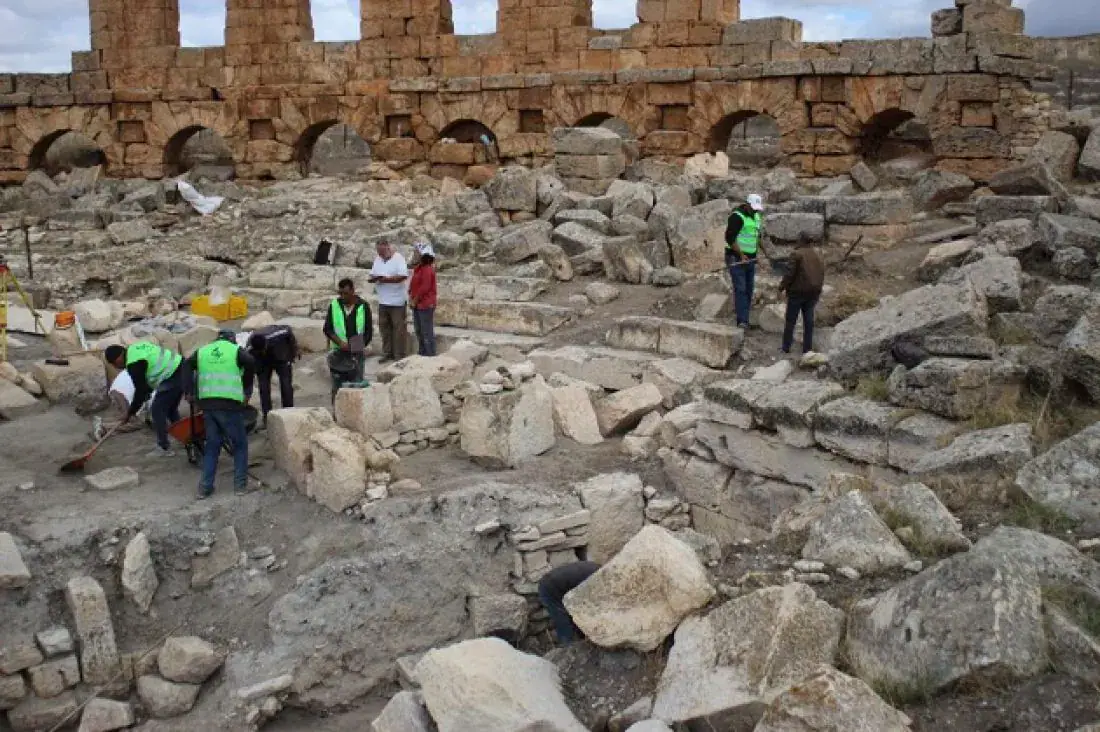
The National Heritage Institute of Tunisia recently conducted an archaeological dig at the ancient Roman theater site in El Dhemma, located in the Kef Governorate. The excavation, which took place from October 11 to 22, 2026, was carried out in collaboration with the University of Palermo in Italy. A team of researchers, heritage conservators, and archaeology students participated in the dig, which aimed to uncover more about the theater's history and significance.
The site, known as Madiyah or Altiporus in ancient times, features a well-preserved Roman theater that dates back to the Roman era. The dig has provided valuable insights into the theater's architecture and history, including details about the arrangement of the seating areas, the stage, and decorative elements. The team also discovered remains of homes from the Fatimid and Aghlabid periods, which provide a unique glimpse into the site's history beyond the Roman era.
One of the significant findings of the dig is the discovery of decorative elements that were reused in the theater's walls and floors. These elements, which include intricate designs and carvings, provide valuable information about the theater's history and the cultural exchange between the Romans and other civilizations. The dig has also shed light on the site's significance during the Islamic period, which is not well documented in North Africa.
The excavation has been hailed as a significant achievement in the field of archaeology, particularly in North Africa. According to the National Heritage Institute, this dig is one of the most detailed and comprehensive excavations of a Roman theater in the region. The findings will contribute to a better understanding of the cultural and historical significance of the site and its importance in the Roman era.
The collaboration between the Tunisian and Italian research teams has been instrumental in the success of the dig. The University of Palermo has provided significant support and expertise, which has enabled the team to uncover new information about the site. The excavation is a testament to the importance of international cooperation in the field of archaeology and cultural heritage preservation.
The National Heritage Institute has announced that the findings from the dig will be used to develop a more comprehensive understanding of the site's history and significance. The institute plans to use the results to inform conservation and restoration efforts at the site, ensuring that the theater is preserved for future generations. The excavation has also highlighted the importance of protecting cultural heritage sites in Tunisia and the region.
The archaeological dig at the Roman theater site in El Dhemma is a significant achievement in the field of archaeology and cultural heritage preservation. The findings from the excavation will contribute to a better understanding of the site's history and significance, and will inform conservation and restoration efforts. The collaboration between the Tunisian and Italian research teams is a model for future international cooperation in the field.
Key points
- The archaeological dig at the Roman theater site in El Dhemma was conducted in collaboration with the University of Palermo in Italy.
- The excavation uncovered details about the theater's architecture and history, including the arrangement of the seating areas and decorative elements.
- The dig also revealed remains of homes from the Fatimid and Aghlabid periods, providing a unique glimpse into the site's history beyond the Roman era.