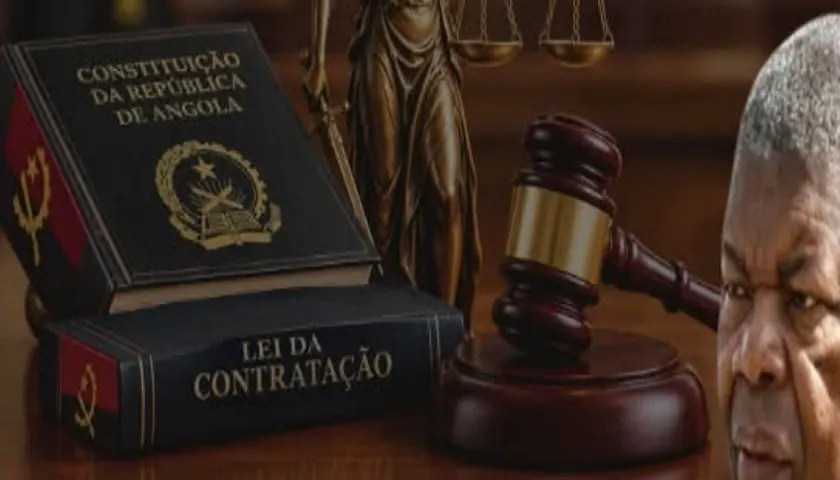
The Angolan government's reliance on simplified procurement processes, known as "Ajuste Directo," has sparked concerns about the undermining of the rule of law and transparency in the country's public administration. According to the Constitution of the Republic of Angola (CRA), the use of such processes is only justified in exceptional circumstances, such as emergencies or natural disasters. However, the current administration has made it a common practice, raising concerns about corruption and the lack of competition.
The CRA and the Public Procurement Law (Lei n.º 41/20) establish that public procurement should be conducted through open tenders, with limited exceptions. However, the systematic use of simplified procurement processes has led to accusations of improbability and abuse of power. Jurists argue that this practice violates the principles of economic order enshrined in the Constitution, including the right to free competition and equal opportunities.
The consequences of this practice are far-reaching, with allegations of artificial monopolies, embezzlement of public funds, and degradation of the business environment. The country's economy has suffered significantly, with foreign direct investment (FDI) being deterred by the lack of transparency and unpredictability in public procurement. The use of simplified procurement processes has also led to concerns about the quality of goods and services provided to the public.
The Angolan government has taken steps to combat corruption and promote transparency, including the revision of the Public Procurement Law. However, the implementation of these measures has been slow, and concerns remain about the effectiveness of the country's institutions in enforcing the law. The Tribunal de Contas, the country's audit court, has a crucial role to play in ensuring that public procurement processes are transparent and fair.
The use of simplified procurement processes has also had a negative impact on small and medium-sized enterprises (SMEs), which are critical to the country's economic development. These enterprises rely on transparent and fair procurement processes to access government contracts, but the current system has made it difficult for them to compete. This has led to concerns about the concentration of economic power in the hands of a few large companies.
To address these concerns, the Angolan government needs to take a more robust approach to promoting transparency and accountability in public procurement. This includes strengthening the role of the Tribunal de Contas and other institutions responsible for enforcing the law. The government should also prioritize the use of open tenders and ensure that simplified procurement processes are only used in exceptional circumstances.
Ultimately, the rule of law and transparency are essential for Angola's economic development and democratic consolidation. The country's institutions must be strengthened to ensure that they can effectively enforce the law and promote accountability. By doing so, Angola can create a more favorable business environment and promote economic growth and development.
Key points
- The systematic use of simplified procurement processes in Angola undermines the rule of law and transparency in the country's public administration.
- The practice has led to allegations of corruption, artificial monopolies, and embezzlement of public funds.
- Strengthening the role of institutions responsible for enforcing the law is crucial to promoting transparency and accountability in public procurement.