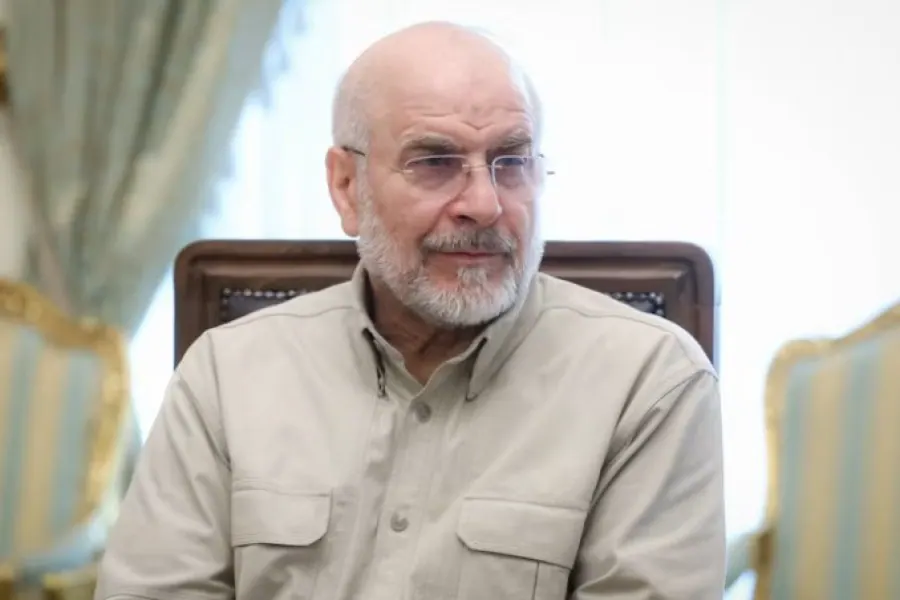
Iran has threatened to strike Middle Eastern infrastructure if its security is compromised, while awaiting an official US response to its latest proposal to reopen the Strait of Hormuz. The threat was made on September 29, 2026, by Mohammad Bagher Ghalibaf, Iran's top negotiator and parliament speaker. Ghalibaf warned Washington and its allies that if Iran's security is not guaranteed, no infrastructure will be safe.
The tensions between Iran and the US have been escalating for over seven months, with indirect talks resuming between the two countries on the sidelines of the UN General Assembly. However, the outcome of these talks remains uncertain. The US has intensified its economic offensive against Iran, which has led Ghalibaf to issue a warning. He stated that if Iran cannot sell oil, no one else will be able to either.
The conflict began on February 28, 2026, when an Israeli-American offensive triggered a war, leading Iran to launch strikes on US allies in the region, targeting American bases and energy sites, and blockading the strategic Strait of Hormuz. Despite an apparent calm in recent weeks, with no major bombardments, ships have been regularly targeted in the passage.
Qatar has been playing a mediation role in the conflict, with its Foreign Ministry spokesperson, Majed Al Ansari, urging Iranian authorities to adopt a clear stance of non-aggression towards their neighbors. Al Ansari stated that current mediation efforts focus on building a common base between the parties and trying to bridge the gap between them.
Iranian Foreign Minister Abbas Araghchi said that Qataris were hoping for a final US response to Iran's new proposal to reopen the Strait of Hormuz within a day. The proposal involves reopening the strait within seven days. Araghchi specified that the talks were solely focused on this maritime passage, which was previously a major route for a fifth of the world's oil and liquefied natural gas.
The US has imposed a naval blockade on Iranian ports, crippling Tehran's oil exports. Iran demands an end to hostilities, the release of its frozen assets, the lifting of sanctions on its oil sector, and the end of the US blockade in exchange for reopening the strait. US President Donald Trump has already rejected Tehran's proposal, stating that it is not the agreement he wants to conclude.
The Iranian Revolutionary Guard Corps (IRGC) has stated that the Strait of Hormuz is effectively closed, contradicting US claims that it remains open. The IRGC's spokesperson, Hossein Mohebi, asserted that the US cannot block Iran's trade with its neighbors and that while restrictions can be imposed, the links cannot be completely severed.
Key points
- Iran threatens new strikes in the Middle East if its security is compromised.
- The US and Iran are engaged in indirect talks to resolve the conflict.
- The Strait of Hormuz remains a critical point of contention between the two nations.