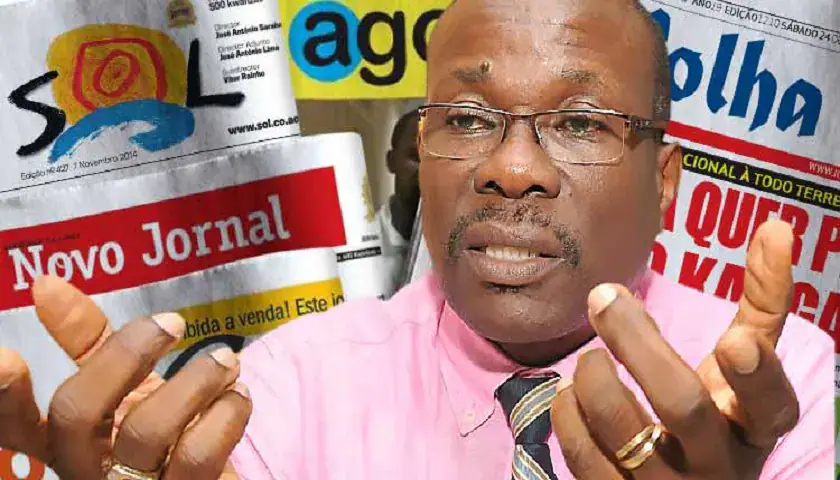
Angolan citizens have both rights and duties, including civic, moral, and ethical responsibilities. A recent commentary by Commissioner William Tonet highlights the delicate balance between free speech and accountability. Tonet, a former National Electoral Commissioner, notes that while citizens have the right to criticize and express themselves freely, this right is not absolute and must be exercised responsibly.
Tonet's reflections come amid concerns about the increasing criticism of his work and the apparent contradiction between his role as a Commissioner and his continued writing of opinion pieces. He argues that the law allows him to maintain a column of opinion on personal, legal, or historical matters, but must do so in a way that does not compromise his impartiality. Tonet has made significant changes to his column, reversing its direction by 360 degrees to ensure compliance with the Law of the Press and the Statute of Public Office Holders.
One of the significant challenges facing Angola is the misuse of laws related to defamation, libel, and slander. Tonet criticizes the practice of cumulative prosecution, where an individual is charged with multiple crimes for a single act, leading to excessive penalties. He argues that this approach undermines the principle of proportionality and ignores the element of intent required for such crimes. The Commissioner also highlights the need for a nuanced understanding of the difference between defamation and slander, with the latter involving the false attribution of a crime to someone.
The issue of "exceptio veritatis" or the truth exception is also crucial in Angola's defamation laws. Tonet notes that while the law allows for the defense of truth in defamation cases, the judiciary often ignores this exception, prioritizing the protection of public officials' reputations over the public's right to know. This approach has significant implications for investigative journalism, which often relies on revealing facts of public interest.
Racial, ideological, and social calumny are distinct concepts in Angolan law, with severe penalties for those found guilty. The Constitution and Penal Code combine to provide robust protection against hate speech and discriminatory behavior. Tonet emphasizes that the law must be applied in a way that respects the principles of equality and non-discrimination, enshrined in the Constitution.
The intersection of free speech and accountability is complex, with implications for Angola's democracy and development. Tonet's reflections highlight the need for a balanced approach that protects citizens' rights while promoting responsible expression. The proposed changes to the law must be carefully considered to ensure that they do not undermine the fundamental rights enshrined in the Constitution.
Ultimately, finding the right balance between free speech and accountability will require ongoing dialogue and engagement among stakeholders, including citizens, policymakers, and the media. Tonet's commentary serves as a valuable contribution to this discussion, emphasizing the importance of responsible expression and the need for a nuanced understanding of the laws governing free speech in Angola.
Key points
- Proposed changes to Angola's laws on defamation and slander aim to balance free speech with accountability.
- The country's Constitution guarantees the right to free speech, but also provides for limitations to protect citizens' reputations.
- Racial, ideological, and social calumny are distinct concepts in Angolan law, with severe penalties for those found guilty.
Reporting sources
- DA PENA JURIS À BALANÇA EQUILIBRADA · jornalf8.net