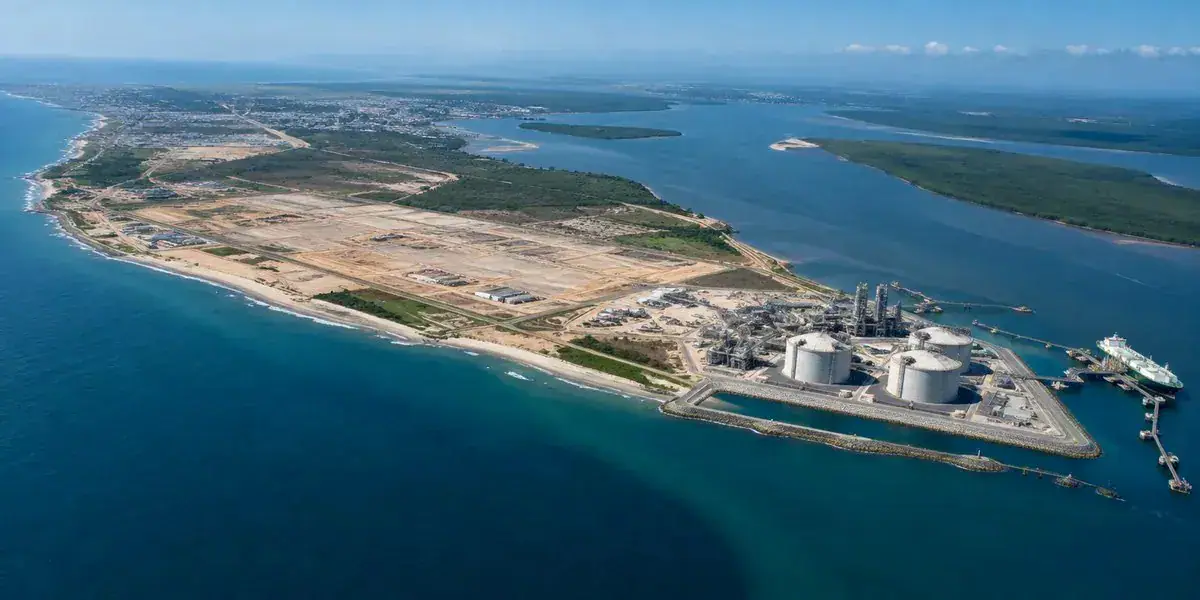
Angola has taken a significant step towards diversifying its economy with the launch of its first large-scale fertiliser plant in Soyo. The project, being developed by Amufert S.A., has secured a $1.45B financing agreement with Afreximbank, bringing the total investment to approximately $2.6B. This makes it the country's largest non-oil industrial investment to date. The plant will be built on a 152-hectare site at Soyo, on Angola's Atlantic coast, and is expected to be completed by 2027.
The fertiliser plant is a strategic move to convert Angola's natural-gas reserves into industrial output. The country has long exported hydrocarbons while importing most of its manufactured goods, leaving its economy exposed to oil-price cycles and foreign-exchange pressures. Successive governments have promised diversification, and this project marks a decisive step towards achieving that goal. The Soyo site was chosen for its proximity to natural-gas infrastructure, including the Angola LNG terminal and direct port access.
The project has significant implications for investors, with Afreximbank's involvement acting as a form of political-risk mitigation. The funding structure, which combines equity and debt, will help to absorb construction-phase risk and fund equipment procurement and civil works. Investors will still want clarity on repayment terms and completion guarantees. The project's economics depend on sustained gas feedstock supply, stable urea pricing, and reliable offtake.
The fertiliser plant will have a significant impact on Angola's economy and the wider region. With a planned output of 2,300 metric tonnes of ammonia and 4,000 metric tonnes of urea per day, the plant will help to meet rising food-security concerns across the continent. Africa currently imports a significant share of its fertiliser needs, and domestic supply chains are seen as crucial to addressing this issue.
The project also highlights the willingness of continental development banks to back large, complex industrial projects beyond the traditional oil sector. Afreximbank's involvement demonstrates its commitment to supporting economic diversification and industrialisation in Africa. The bank's relationships with African sovereigns also provide a level of comfort for investors.
Amufert S.A., the developer of the project, is majority-owned by OPAIA Group and partnered with state-owned Sonagas. The company has released key project metrics, including planned urea output of 4,000 tonnes/day and planned ammonia output of 2,300 tonnes/day. These figures describe a large industrial platform that will make a significant contribution to Angola's economy.
The launch of the fertiliser plant marks a significant milestone in Angola's drive to diversify its economy and develop its industrial sector. With Afreximbank's financing in place, the project is well-positioned to move forward, and investors will be watching closely for progress. The plant's success will depend on a range of factors, including sustained gas feedstock supply and stable urea pricing.
Key points
- The project marks a decisive step in Angola's drive to convert natural-gas reserves into industrial output.
- The fertiliser plant will have a significant impact on Angola's economy and the wider region, helping to meet rising food-security concerns.
- Afreximbank's involvement demonstrates its commitment to supporting economic diversification and industrialisation in Africa.
Reporting sources
- Angola opens its first fertiliser plant with US$1.45B · FurtherAfrica