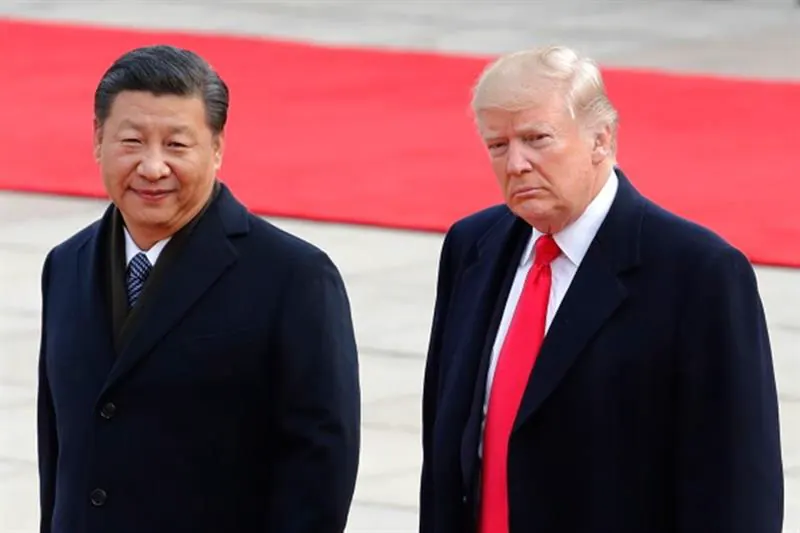
US President Donald Trump and Chinese President Xi Jinping are scheduled to meet in the United States on September 24, 2026, with trade, technology, and Taiwan expected to be the main topics of discussion. The summit comes nearly five months after the two leaders last met in May 2026, when they focused on the same set of issues. According to sources, the technology element has taken on added urgency due to rapid developments in artificial intelligence.
The trade issue is considered the most urgent, but also the simplest to resolve. In November 2025, Trump and Xi reached an agreement in Busan, South Korea, where the US agreed to lift some export controls on high-end technology and reduce tariffs on Chinese goods. China, in turn, agreed not to restrict the flow of critical minerals and rare earths to US users. The pact is now up for renewal, and both sides are likely to want a continuation of the current arrangement.
A new instrument, a Board of Trade, has been proposed by both sides to assess non-sensitive US-China business interests. However, details about the institution remain vague, and business leaders will be watching to see how comprehensive and lasting the arrangements for the board will be. Additionally, a proposed Board of Investment remains on the drawing board. The Chinese side has suggested bringing major Chinese CEOs to the summit to match the likes of Nvidia's Jensen Huang and Tesla's Elon Musk.
The issue of Taiwan is a much harder one to solve, and it's unlikely that much progress will be made during Xi's visit. Trump has been less willing than his predecessor to commit the US to defending the island in the event of a Beijing invasion, instead reasserting Washington's long-held position of strategic ambiguity. China prefers to find methods short of war to bring the island under Beijing's control, and the island's January 2028 presidential election is likely to be a more crucial moment for Taiwan's future.
Other international issues, such as the war on Iran and China's purchase of Russian oil, are expected to gain less attention during the summit. China is likely to express its unhappiness about the war, while the US may remind China of new legislation allowing sanctions on countries that buy Russian oil. However, neither issue is likely to lead to any major change in practice.
The area of technology, particularly AI, is where both sides will be trying to make diplomacy catch up with reality. The May summit saw a surprise discussion on mutual agreement on regulation of AI, and both sides agreed that talks in principle about regulation might be possible. On September 20, 2026, the US and China mooted the idea of a "hotline" to notify the other over AI national security risks.
Despite mutual concerns about AI, progress is unlikely in the short term due to the competition between the US and China on AI. Neither governments nor private sector actors in either country are willing to make concessions that could advantage the other side. Levels of trust between Washington and Beijing remain very low, making it challenging to reach a mutually beneficial agreement on AI regulation.
Key points
- The Trump-Xi summit is expected to focus on trade, Taiwan, and technology.
- The US and China have proposed a Board of Trade to assess non-sensitive business interests.
- The issue of Taiwan remains a contentious and difficult issue to resolve.