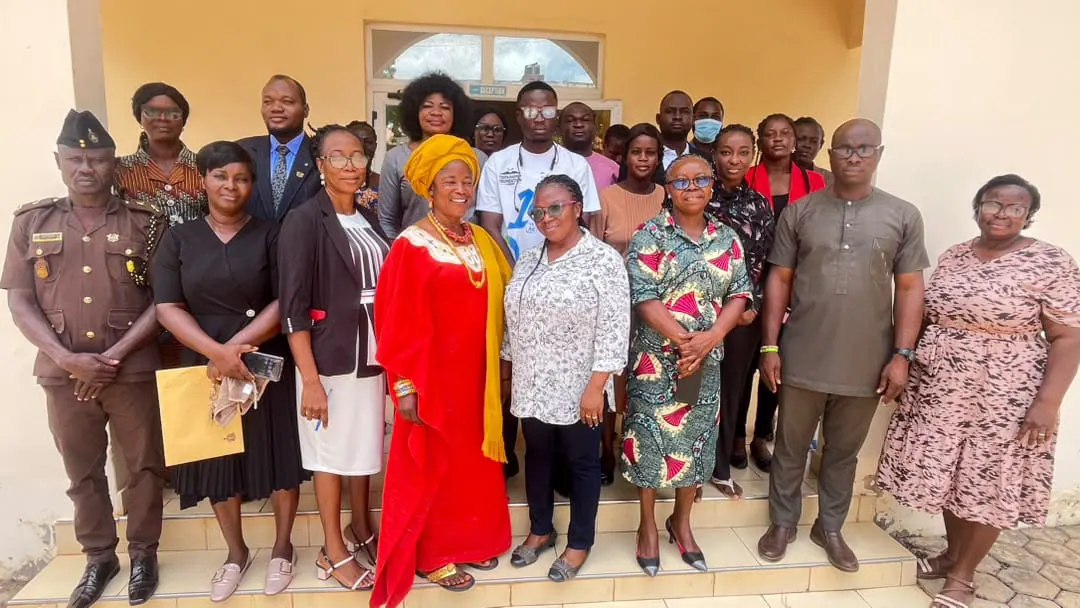
The Acting Upper East Regional Director of the Department of Gender, Mr. James Twene, has urged families in the region to refrain from interfering in defilement cases and allow the law to take its course. He emphasized that defilement and rape are serious criminal offenses that should not be resolved at the family level. Mr. Twene made this call at a Regional Review Meeting on Essential Services Providers (ESP) for survivors of Sexual and Gender-Based Violence (SGBV) in Bolgatanga.
The meeting, organized by the Department of Gender with funding support from the United Nations Population Fund (UNFPA), brought together key service providers and stakeholders to review progress, challenges, and coordination in providing services to survivors of SGBV. Participants included representatives from the Ghana Health Service, Domestic Violence and Victim Support Unit (DOVVSU) of the Ghana Police Service, Social Welfare, Judicial Service, and Legal Aid. Mr. Twene highlighted the importance of collaboration among these institutions to ensure justice for survivors.
Mr. Twene expressed concern about the region's high rate of teenage pregnancies, with 49 girls aged between 10 and 14 years pregnant, according to presentations at the meeting. He stressed that these cases should not be treated merely as statistics, but rather as a human story behind each data point. The pregnancies involving girls as young as 10, 12, and 13 years old raise questions about who impregnated them, which could constitute defilement and require legal action.
Mr. Twene noted that some families and witnesses fail to appear in court to testify, while influential persons in communities, including chiefs and assembly members, sometimes intervene in cases and attempt to have them withdrawn. This interference hampers the efforts of the police, prosecutors, and other institutions to secure justice for survivors. He urged the public to report suspected cases of sexual abuse to the police, Social Welfare, the Commission on Human Rights and Administrative Justice (CHRAJ), the Department of Gender, and other mandated institutions.
The Department of Gender will intensify community and radio engagements to educate families and community members on the need to report SGBV cases and cooperate with institutions responsible for handling them. Mr. Twene identified ignorance, family relationships, and the influence of powerful persons within communities as reasons why some people are reluctant to report cases. He emphasized the need for community involvement in addressing SGBV.
Other stakeholders, including Mr. Robert Apambila, the Nabdam District Adolescent Focal Person of the Ghana Health Service, and Ms Yvonne Wonchua, the Upper East Regional Focal Person for the UNFPA, also spoke at the meeting. Mr. Apambila attributed the reduction in adolescent pregnancies in the district to collaboration among service providers, while Ms Wonchua called for increased collaboration among stakeholders to ensure that essential services reach vulnerable individuals in need.
The Regional Review Meeting aimed to strengthen coordination and collaboration among service providers to address SGBV in the Upper East Region. Key stakeholders will continue to work together to provide essential services to survivors and prevent SGBV.
Key points
- The Department of Gender urges families to report defilement cases to the police and other mandated institutions.
- The Upper East Region faces challenges with teenage pregnancies, with 49 girls aged 10-14 years pregnant.
- Collaboration among service providers is crucial to addressing SGBV in the region.