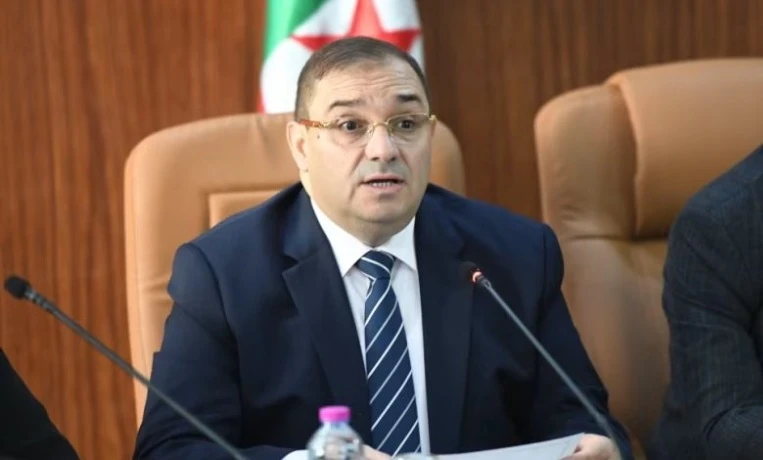
On Thursday, Algerian Justice Minister, Lotfi Bougjemaa, presented a law project to the National Council, aiming to modernize the military judiciary. The project is part of the country's deep reforms initiated by President Abdelmadjid Tebboune. The proposed law seeks to address practical shortcomings in the military judiciary and harmonize with the national legal system's evolution, particularly after the adoption of the new penal procedure law.
The project, according to Bougjemaa, aims to update the military judiciary law, ensuring it aligns with the 2020 constitution and the country's overall reform efforts. This update includes a comprehensive review of the law, preserving achieved gains, especially after its 2018 amendment, and adopting principles of fair trial and two-level litigation. The project also focuses on integrating information and communication technologies in military judicial proceedings.
The proposed law introduces several new provisions that reinforce the organization and structure of military judicial bodies, define their functioning and procedures, and specify military crimes and corresponding penalties. It also involves rephrasing certain articles, adjusting legal terminology, and harmonizing it with the penal procedure law. These provisions are categorized into main axes, including determining the foundations of the military judiciary.
The military judiciary is defined as a specialized penal judiciary, not an exceptional one, exercising its functions in the name of the people through military judicial bodies, under the supervision of the Supreme Court, and in accordance with the principles of legality, fair trial, and respect for human rights and dignity. The project also organizes military judicial bodies into first-instance military courts and military appeal councils within each military district.
The project proposes raising the rank of the assigned judge from the Ministry of Justice to at least a president of a judicial council, addressing practical difficulties related to the replacement of military judges to complete the formation of a criminal court. It also introduces two new positions: a first assistant military prosecutor and a first deputy military prosecutor, with the military prosecutor having presidential authority over users under the Ministry of National Defense.
The proposed law outlines the competencies of the military judicial body, which exercises its authority in times of peace and war. Additionally, it stipulates that military judicial police are managed by the military prosecutor under the supervision of the military prosecutor, the authority of the Minister of National Defense, and the control of the investigating chamber at the military appeal council.
The law project also addresses the issue of appeal, specifying that the appeal does not suspend execution, except for sentences and decisions imposing the death penalty for crimes related to state security, treason, and espionage as stipulated in the military judiciary law. The project aims to enhance the efficiency and fairness of the military judiciary in Algeria.
Key points
- The Algerian government aims to modernize its military judiciary to align with the 2020 constitution and improve the country's judicial system.