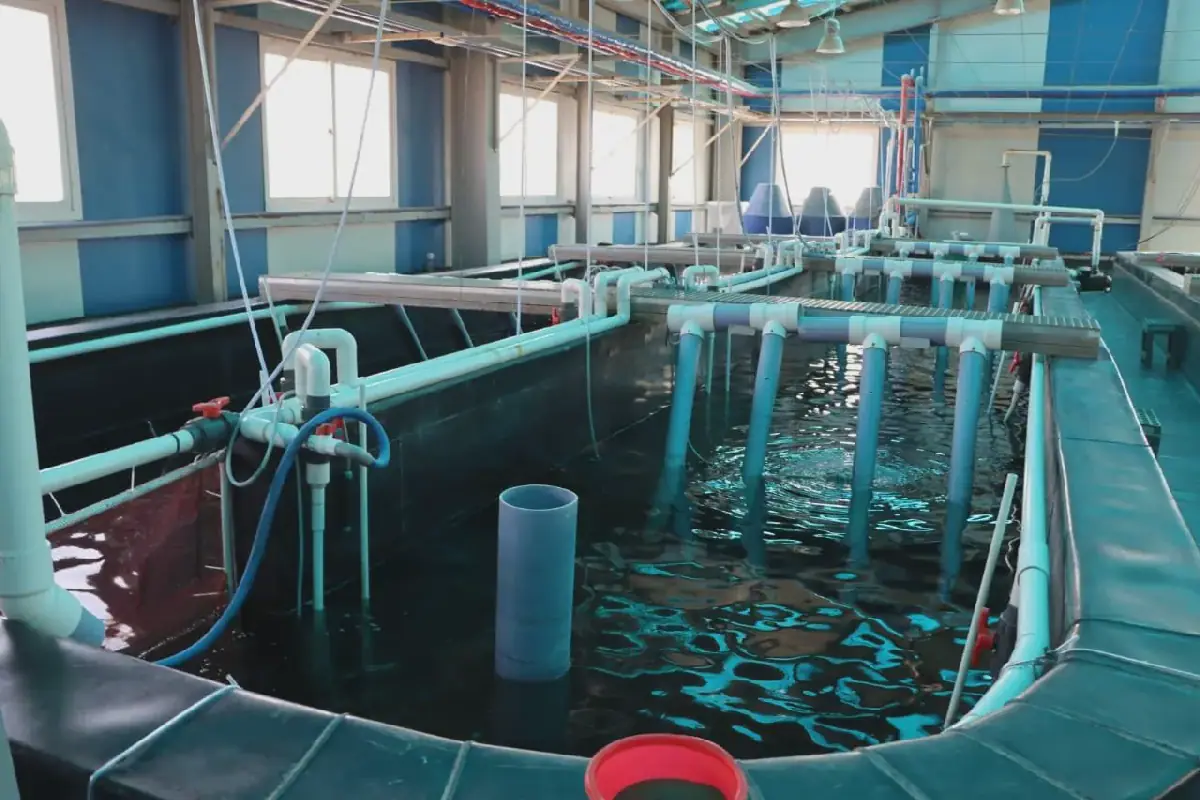
The fish feed production unit at Hassi-Benabdallah's pilot aquaculture farm in Ouargla, Algeria, is set to become operational by the end of 2026. The unit, a result of Algerian-South Korean cooperation, will produce various types of fish feed. It features facilities for raw material grinding, mixing, drying, and cooling to produce a finished product. The project aims to support the development of aquaculture and encourage investment in the sector.
The unit has a theoretical production capacity of nearly 10 tonnes of feed per day. Once operational, it is expected to generate around 20 direct jobs and 20-30 indirect jobs. The unit will supply fish feed to aquaculture and fish farming operators, helping to address the current shortage. This project is part of efforts to develop the aquaculture industry in Algeria and promote local production.
In 2025, the nearby hatchery produced 500,000 Nile Tilapia fry. Most of these, 400,000, were transferred to the farm's outdoor ponds, while 100,000 were distributed to local farmers. This distribution supports the development of aquaponics and helps reduce the cost of acquiring fry from outside the province. The hatchery's production helps promote aquaculture and supports local agricultural development.
The fish farming operations in Ouargla typically occur over six months, from March to August. During this time, the farm prepares the ponds and renews equipment to support fish growth. Harvesting takes place gradually between September and February. The harvested fish are then sold at local fish markets and through the General Agricultural Enterprise's (GAE) sales points.
According to the Director of Fisheries and Aquaculture in Ouargla, Salah Bouaicha, the fish feed unit will help ensure a stable supply of feed for local aquaculture operations. This stability is crucial for the growth and development of the industry. The project also reflects the Algerian government's efforts to promote investment in the aquaculture sector.
The Tilapia fish, in particular, has gained popularity among local consumers, reflecting a growing interest in locally produced aquaculture products. The development of fish feed production and hatcheries supports the expansion of aquaponics and encourages farmers to engage in these activities. This growth in turn contributes to the local economy and food security.
The successful implementation of this project could pave the way for further investment in Algeria's aquaculture sector. With the right support and infrastructure, the industry has the potential to make a significant contribution to the country's food production and economic development. Key initiatives like the Ouargla fish feed unit play a vital role in achieving these goals.
Key points
- The fish feed production unit in Ouargla has a theoretical capacity of nearly 10 tonnes per day.
- The project aims to generate around 20 direct jobs and 20-30 indirect jobs.
- In 2025, a nearby hatchery produced 500,000 Nile Tilapia fry.