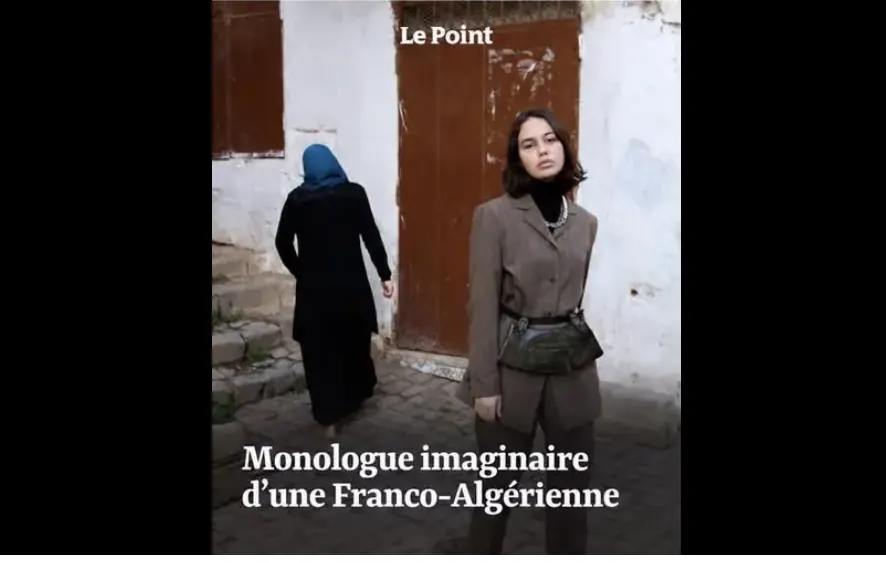
Algerian actress Hania Mansour has taken to social media to express her outrage and demand justice over the unauthorized use of her photo by French magazine Le Point. In a video published on October 3, 2026, Mansour revealed that her image was used without her consent in an article about writer Kamel Daoud. She considers this a serious infringement on her rights and is seeking explanations and action from the magazine.
According to Mansour, her photo was used to illustrate a publication by Le Point, a prominent French magazine. The actress disputes not only the use of her image but also the context in which it was used, as it was associated with Kamel Daoud. Mansour emphasizes that her image cannot be used for editorial purposes without her consent, and she is seeking to have her rights respected.
Mansour's intervention has brought attention to a recurring issue in the media world: who owns the rights to use a person's image, and under what conditions can a photograph be reproduced by a media outlet? The case may also spark a broader debate on media practices when using photographs from social media or sources with unclear exploitation rights.
The use of Mansour's photo without her consent has raised questions about the responsibility of media outlets when using images from the internet. Her case highlights that a photograph accessible online is not necessarily free to use and may be subject to various rules related to image rights and copyright.
Mansour's approach aims to recognize what she considers an infringement on her rights and to obtain a response from Le Point. By making her démarche public through a video, she has given significant visibility to the issue. The reaction of Le Point and whether the magazine will provide explanations on the origin of the photograph and any obtained authorizations remain to be seen.
This case occurs in a context where public figures are increasingly attentive to the use of their images on digital platforms and in the media. It raises an essential question: can a personality's notoriety or the editorial interest of a subject justify the use of a photograph without the person's agreement? Mansour has already given her response: she demands justice and intends to assert her rights.
The outcome of this case may have implications for the use of images in the media and the rights of individuals to control their own images. As the situation unfolds, it will be interesting to see how Le Point responds to Mansour's claims and what actions she may take to protect her rights.
Key points
- Algerian actress Hania Mansour seeks justice over the unauthorized use of her photo by Le Point.
- The case raises questions about media practices and the rights of individuals to control their own images.
- Mansour's démarche aims to recognize what she considers an infringement on her rights and to obtain a response from Le Point.