The United Nations General Assembly convened on November 10 to discuss the veto that killed the renewal of the United Nations Mission for the Referendum in Western Sahara (MINURSO). Algeria's representative, a member of its delegation, attempted to portray Algeria as a detached neighbor and a weary host. However, this attempt was met with skepticism given the country's history with the conflict. The Assembly met under agenda item 62, which forces a debate whenever a permanent Security Council member casts a veto.
The veto was cast by Russia on October 30, which blocked a US-drafted resolution that would have extended MINURSO's mandate for 12 months while anchoring negotiations in Morocco's Autonomy Plan. The US text received 11 votes in favor, one against, and three abstentions. A rival Russian draft proposing a one-year technical extension failed to gain traction, receiving only three votes. MINURSO's mandate lapsed on October 31, and the mission entered liquidation after 35 years and the loss of 20 personnel.
Algeria used its intervention to welcome the collapse of MINURSO, calling it "a blessing in disguise." The Algerian delegate stated that the credibility and honor of the organization had been "seriously tested" and that the vetoed draft marked "a dangerous deviation" from the settlement's established parameters. The delegate distributed blame widely, citing the failure of the pen holder, the council, and the international community. Algeria positioned itself as an observer, a neighbor, and a host of Sahrawi refugees for five decades.
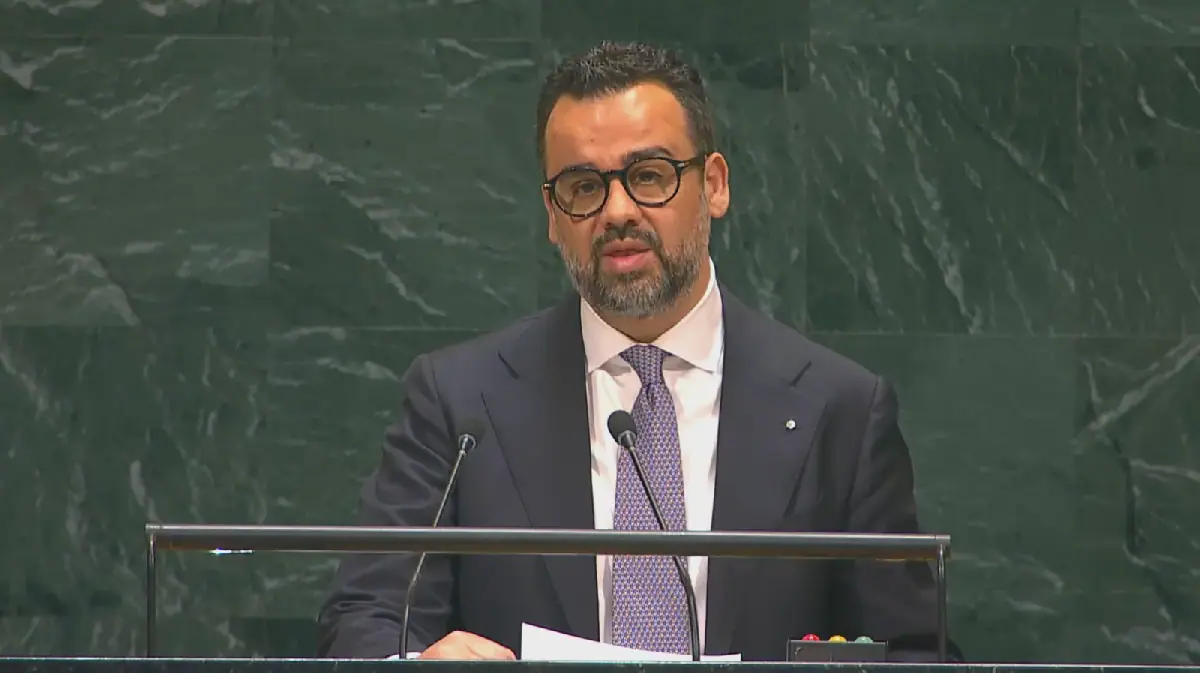
However, Morocco's Permanent Representative to the United Nations, Omar Hilale, countered Algeria's claims of detachment. Hilale argued that the cause of the deadlock is Algeria's political attitude and its refusal to settle the issue. He posed six questions that challenged Algeria's role in the conflict, including why Algeria fears autonomy under Moroccan sovereignty and why it refuses to be considered a party to the conflict. Hilale asserted that Algeria is not an observer but an orchestrator of the dispute.
Hilale also addressed the Polisario Front, stating that everything the group holds "is on loan" from Algeria, including the Tindouf camps, weapons, financial resources, and diplomatic backing. He concluded that when the Polisario says no, "we hear Algiers" and that Algeria does not observe the dispute but orchestrates it. Hilale also questioned Algeria's opposition to registering the Tindouf population, citing a UNHCR report on the diversion of humanitarian aid.
The US representative, Mike Waltz, reinforced Morocco's argument, warning that "hope is not a strategy for peace." Waltz recalled that Resolution 2797 of 2025 made Morocco's Autonomy Plan the basis for negotiations and that recent talks in Madrid and Washington had brought the parties to the table for the first time in nearly a decade. Waltz emphasized the need for a concrete plan to resolve the conflict.
The debate highlights the ongoing tensions between Morocco and Algeria over Western Sahara. Morocco's sovereignty over the region remains a contentious issue, with Algeria's support for the Polisario Front fueling the conflict. The collapse of MINURSO has created uncertainty about the future of the region, and the international community is under pressure to find a solution.
Key points
- Algeria's intervention at the UN General Assembly reveals its ties to the Polisario Front.
- Morocco's Autonomy Plan remains the basis for negotiations.
- The conflict over Western Sahara continues to be a contentious issue between Morocco and Algeria.