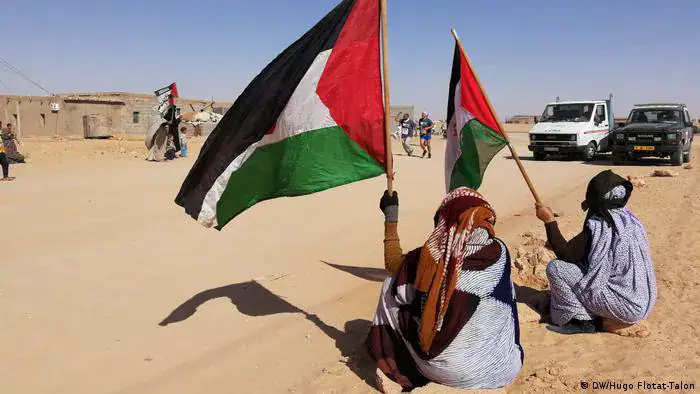
Algeria has reaffirmed that the Western Sahara issue remains a decolonization matter that has not been fully resolved. The country's representative to the United Nations, Mehdi Litim, emphasized this stance during the 39th session of the 81st General Assembly, focusing on the use of veto power. Litim highlighted that discussions on Western Sahara transcend procedural and technical considerations, touching on the core of the conflict and the credibility of the UN in fulfilling its mandate.
Litim recalled the foundation of the UN Mission for the Referendum in Western Sahara (MINURSO), established as part of a settlement plan agreed upon and signed in parallel with a ceasefire agreement. The mission's primary goal was to organize a referendum, allowing the Sahrawi people to exercise their right to self-determination. He noted that over 35 years, the Security Council has consistently affirmed clear criteria for a peaceful, fair, and lasting solution acceptable to both parties, ensuring the Sahrawi people's right to self-determination.
The Algerian representative underscored that the UN's responsibility in this matter has not diminished. He pointed out that Western Sahara remains listed among decolonization issues that have not yet been resolved. Algeria's position puts the UN's responsibility to the test, particularly regarding the commitments and references that underpinned the MINURSO mission. Litim warned that adopting biased approaches or hasty solutions could undermine the foundations of a peaceful settlement and jeopardize international efforts to end the conflict.
Litim expressed concerns that deviating from the decolonization principle and UN norms for the political process could have adverse consequences. He emphasized the importance of upholding the Sahrawi people's right to freely choose their future, cautioning against any approach that might compromise this right. Algeria's stance seeks to ensure that any solution adheres to the principles that should guide a fair, lasting, and mutually acceptable resolution.
In his address, Litim reiterated Algeria's belief in the potential of diplomacy to achieve results, provided it is conducted within the framework of full respect for the UN Charter, international law, and relevant Security Council resolutions. He stressed the necessity of avoiding any course that would deviate from the decolonization principle and UN norms for the political process.
Litim concluded by emphasizing that any settlement that does not guarantee the Sahrawi people's right to self-determination would not align with the foundations of a fair and lasting solution acceptable to both parties. He called for vigilance against any attempts to compromise on this principle, reaffirming Algeria's commitment to supporting the Sahrawi people's right to self-determination.
The international community remains attentive to developments in Western Sahara, with the UN continuing to play a crucial role in efforts to resolve the conflict. Algeria's reaffirmation of its stance on Western Sahara as a decolonization issue underscores the need for a solution that respects the Sahrawi people's rights and adheres to international law and UN resolutions.
Key points
- Algeria urges the UN to enable the Sahrawi people's self-determination.
- Western Sahara remains a decolonization issue.
- Algeria warns against biased or hasty solutions.