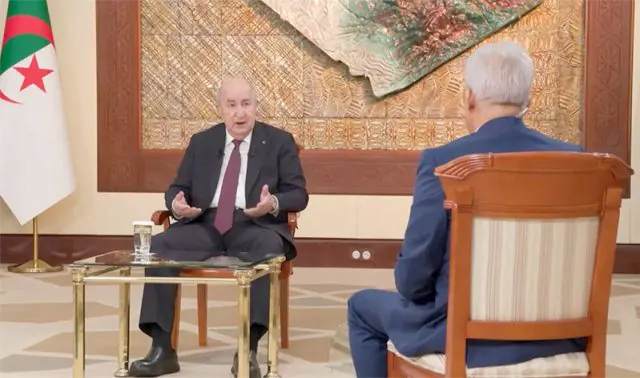
Algeria's economic prospects appear promising, with a projected GDP of $400 billion by the end of 2026 or early 2027, according to President Abdelmadjid Tebboune. He made these remarks during a recent interview with national press representatives. The President noted that this target may even be exceeded, as confirmed by the International Monetary Fund (IMF). Algeria's economic performance in recent years and the momentum of investment, reflected in thousands of projects nationwide, support this optimistic outlook.
President Tebboune highlighted that Algeria's economic growth rate exceeds 4.01%, surpassing that of some European and Mediterranean countries. He attributed this growth to the country's efforts to diversify its economy and promote investment. The President also emphasized that international financial institutions' forecasts for Algeria's economy have been imprecise, as they lack comprehensive data and indicators on the country's economic situation.
The Algerian government is implementing large-scale projects to strengthen the country's industrial fabric and diversify exports beyond hydrocarbons. President Tebboune emphasized the importance of sectors such as mining (phosphate, iron, zinc), steel industry, and major projects like railway infrastructure. These initiatives aim to reduce the country's dependence on hydrocarbons and promote sustainable economic growth.
Hydrocarbons will continue to play a significant role in Algeria's economy, particularly with ongoing oil and gas exploration and efforts to attract major international companies. However, the government is working to increase non-hydrocarbon revenues to enhance the economy's resilience. President Tebboune stressed that economic diversification is crucial for national sovereignty, as it allows Algeria to escape the fluctuations of the global hydrocarbon market.
The President highlighted the significance of investment projects registered with the Algerian Investment Promotion Agency (AAPI) across the country, which will contribute to increased production, job creation, and foreign exchange earnings. He also noted that the level of foreign exchange reserves is expected to remain high until 2031, alongside efforts to reduce import bills. The government aims to promote domestic production and reduce dependence on imports.
President Tebboune emphasized the importance of preserving national sovereignty and decision-making independence, rejecting external debt, particularly from international financial institutions and Western banks. He cited the example of the school supplies sector, which previously relied heavily on imports, but has made significant progress in domestic production. The government aims to prevent unjustified imports and associated losses of foreign exchange.
President Tebboune concluded that Algeria's goal is to become a developed state with strategies in place for development programs until 2030 and 2050. The country aims to achieve a point of no return in its development process, ensuring a sustainable and diversified economy. The government's efforts focus on promoting investment, diversifying exports, and enhancing the business environment to drive economic growth.
Key points
- Algeria's projected GDP is $400 billion by the end of 2026 or early 2027.
- The country's economic growth rate exceeds 4.01%, surpassing that of some European and Mediterranean countries.
- Algeria aims to diversify its economy and reduce dependence on hydrocarbons to promote sustainable growth.