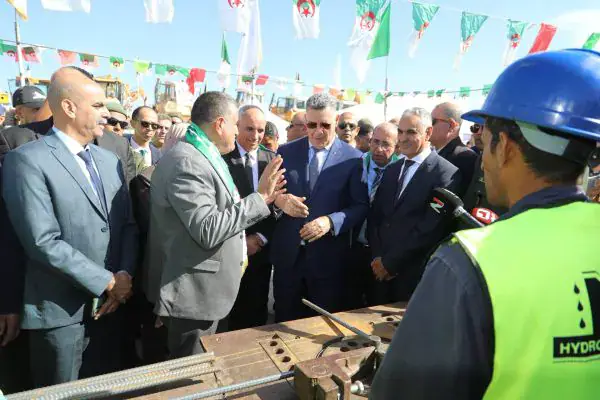
Algeria's Minister of Hydraulics, Lounès Bouzegza, has initiated three strategic water transfer projects in Tlemcen, Mostaganem, and Chlef to enhance the country's water security. These projects aim to transport desalinated water from production stations to consumption areas, particularly in inland regions, through integrated hydraulic infrastructure. The projects are part of Algeria's national strategy to develop seawater desalination.
The three projects have a combined geographical scope of over 250 kilometers and are expected to meet the needs of more than 9 million inhabitants by 2050. They involve constructing transfer pipelines, pumping stations, and storage reservoirs, as well as installing remote management and monitoring systems and cathodic protection devices against corrosion. The projects are being implemented by the Algerian Water Company (ADE) in collaboration with several national specialized companies.
The first project involves transferring water produced by the Tlemcen desalination plant, with a budget of 66.87 billion Algerian dinars. The project aims to reinforce the water supply in Tlemcen and Sidi Bel Abbès provinces. The first phase includes constructing over 105 kilometers of pipelines, three pumping stations, and two reservoirs with a total capacity of 75,000 cubic meters. The project is expected to benefit around 2.2 million inhabitants by 2050.
The second project concerns the Mostaganem desalination plant and has a budget of 55.15 billion Algerian dinars. The project targets the provinces of Mostaganem and Relizane and involves constructing around 110 kilometers of transfer pipelines, three pumping stations, and four storage reservoirs. The infrastructure is expected to strengthen the water supply for nearly 2.9 million inhabitants by 2050 and help mitigate the effects of water stress and climate-related risks.
The third project involves transferring water from the Chlef desalination plant, with a budget of 97.35 billion Algerian dinars. The project covers the provinces of Chlef, Aïn Defla, and Médéa and includes constructing over 233 kilometers of pipelines, four pumping stations, and eight reservoirs. The project aims to reinforce the water supply for around 4 million inhabitants by 2050, extending access to desalinated water to inland regions.
The Algerian government aims to consolidate the water supply chain by linking production facilities, transport networks, and storage and distribution infrastructure. The use of modern remote management and monitoring systems will improve control over hydraulic installations, enhance operational efficiency, and ensure their long-term sustainability. These projects mark a significant milestone in developing Algeria's hydraulic infrastructure and diversifying its water resources.
The projects are being implemented in response to the challenges posed by water stress and the need to secure sustainable water supplies for the population. The developments are part of Algeria's efforts to address the country's water security concerns and ensure a reliable water supply for its citizens. The projects are expected to have a positive impact on the country's water infrastructure and contribute to its economic and social development.
Key points
- Algeria launches three strategic water transfer projects to supply several western and central regions with desalinated water.
- The projects aim to meet the needs of more than 9 million inhabitants by 2050.
- The developments are part of Algeria's efforts to address the country's water security concerns and ensure a reliable water supply for its citizens.