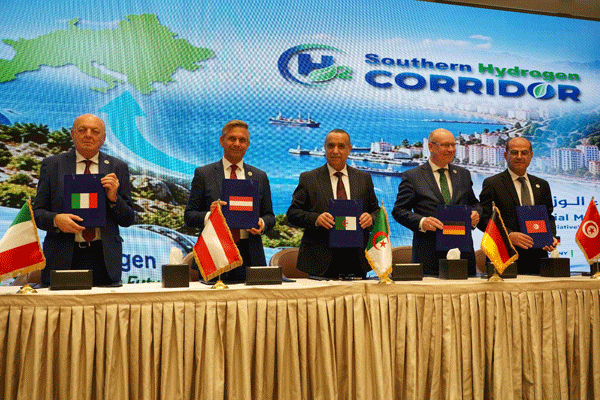
On Thursday, October 1, 2026, the ministers of energy from Algeria, Austria, Germany, Italy, and Tunisia signed a joint political declaration of intent on the Southern Hydrogen Corridor, also known as SoutH2, in Algiers, the capital of Algeria. This significant step aims to materialize a strategic project that will transport green hydrogen from North Africa to European markets, supporting energy transition and emission reduction plans globally. The project is a crucial component of the Algeria-Europe hydrogen alliance, ALTEH2A.
The Southern Hydrogen Corridor is not just an energy infrastructure project; it is a cornerstone of the future hydrogen economy in the Mediterranean region. Algeria has substantial potential to play a pivotal role in the project due to its considerable solar resources, strategic geographical location, advanced energy infrastructure, and industrial expertise. The project's development will foster cooperation in renewable energy and support industrial and economic development.
The joint declaration reaffirms the commitment of the five countries to enhance cooperation in green hydrogen and support the development of a corridor connecting North Africa to major European industrial and energy centers. The ministers emphasized the strategic importance of the initiative as a catalyst for regional integration, energy cooperation, and industrial competitiveness. They also stressed the need for regular and organized dialogue among partner countries to create favorable conditions for a competitive, sustainable, and integrated hydrogen sector.
The project involves the creation of infrastructure to transport green hydrogen, with a planned capacity of 4 million tons per year from Algeria to European countries via a 3,000-kilometer pipeline. This represents approximately 10% of the expected European demand for clean fuel by 2040. The project will also enable Algeria to develop its green hydrogen exports to Europe, leveraging its existing natural gas transportation infrastructure.
Algeria's Minister of Energy and Renewable Energies, Merad Ajal, highlighted the project's significance, stating that it is not just an energy infrastructure project but a fundamental component of the future hydrogen economy in the Mediterranean region. The project has substantial industrial, economic, and environmental implications, offering opportunities for investment, technology transfer, and the creation of new value chains.
The development of the Southern Hydrogen Corridor is a collaborative effort involving various stakeholders, including transportation network operators, national regulatory authorities, financial institutions, producers, and buyers. The ministers welcomed the establishment of a dedicated secretariat, supported by the United Nations Industrial Development Organization (UNIDO), to coordinate international government cooperation and promote private sector engagement in the project's development.
The signing of the Algiers Declaration marks a new phase in the project's development, with the first results of a feasibility study expected in 2027. The project aligns with the goals of the Algeria-Europe energy partnership and will contribute to the growth of a competitive and sustainable hydrogen sector in the region. Key points: - Algeria and European countries signed a declaration to develop the Southern Hydrogen Corridor. - The project aims to transport 4 million tons of green hydrogen per year from Algeria to Europe. - The initiative is a crucial component of the Algeria-Europe hydrogen alliance, ALTEH2A.