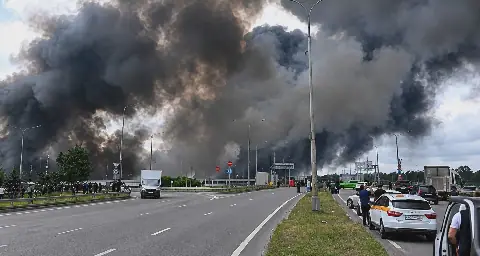
The global helium market is undergoing a significant transformation due to supply disruptions from Qatar, which have been impacted by the crisis in the Strait of Hormuz since March 2026. This has led to a search for alternative sources, with the United States, Russia, and Algeria emerging as key players, according to a report by the Energy Research Unit, Attaqa, based in Washington.
Prior to 2024, the global helium market experienced an oversupply, with an effective production capacity of approximately 206.7 million cubic meters per year, compared to an estimated demand of 175.6 million cubic meters. However, with Qatar representing 35% of global production in 2025, primarily from its Ras Laffan complex, the market dynamics have shifted. The country was the second-largest producer and largest exporter of helium globally.
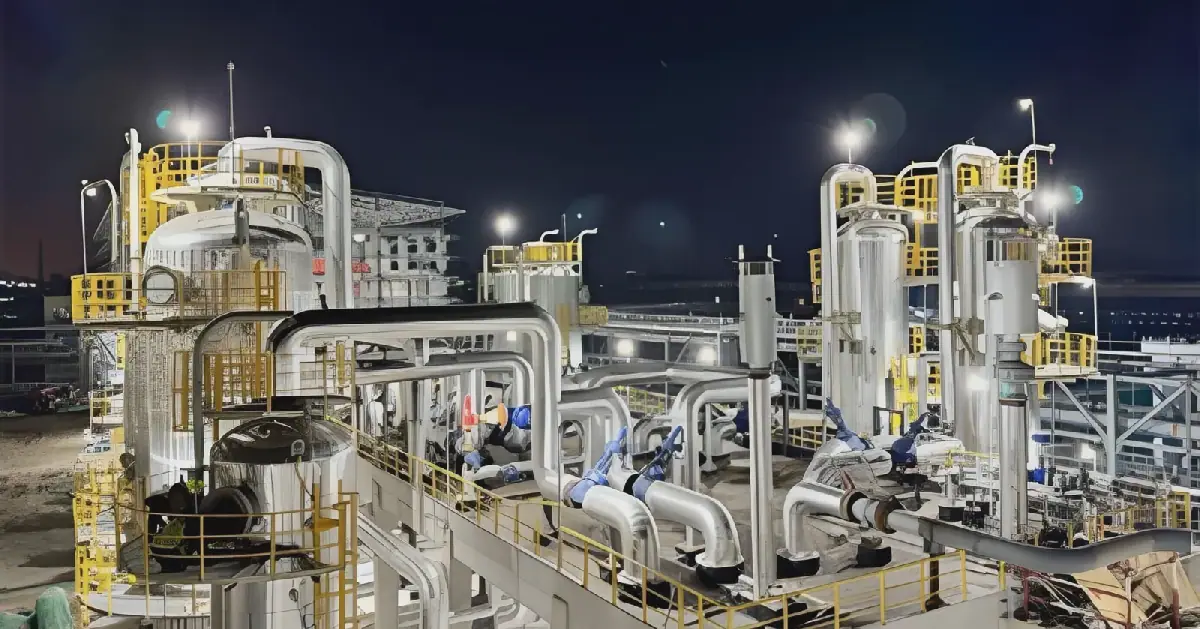
Algeria's helium production is closely tied to its natural gas liquefied (GNL) complexes, with a recorded volume of 11 million cubic meters in 2025. Despite having an installed capacity of 50 million cubic meters per year and reserves estimated at 1.8 billion cubic meters, production is hindered by the underutilization of GNL installations, which operate at less than 40% of their nominal capacity. This limits the capture of helium as a byproduct.
Russia is aiming to increase its helium production capacity through the Amur complex, operated by Gazprom, which is expected to enhance its production despite technical delays and Western sanctions. The country plans to redirect a significant portion of its volumes to China. Meanwhile, the United States maintains its position as the largest producer, with 81 million cubic meters in 2025, thanks to new installations and a storage site in Texas.
New helium projects in Africa and North America are also emerging. In Africa, South Africa's Virginia project and Tanzania's Rukwa project are advancing towards commercial exploitation. In North America, Canada has entered the global market with the start of production at the Stewart Valley site. However, these projects face significant financial and logistical challenges.
The development of new helium projects is hindered by substantial financial and partnership constraints. For instance, ASP Isotopes is seeking $750 million in senior debt from the US DFC and Standard Bank, while Helium One is looking for a major investment partner for the Rukwa deposit. Additionally, geopolitical and operational challenges, including sanctions on Russia and the dependence of Algeria's sector on GNL, pose significant hurdles.
The logistics of transporting helium also present a major challenge, as liquid helium containers can only maintain the gas in its liquid form for 35 to 40 days. This constraint is further complicated by US restrictions on the export of ultra-insulated containers, making shipments from new producing regions more difficult.
Key points
- Algeria has 1.8 billion cubic meters of helium reserves and aims to increase production despite underutilized GNL installations.
- The global helium market faces a new landscape due to supply disruptions from Qatar and emerging projects in the US, Russia, Africa, and Canada.
- New helium projects face significant financial, logistical, and geopolitical challenges.