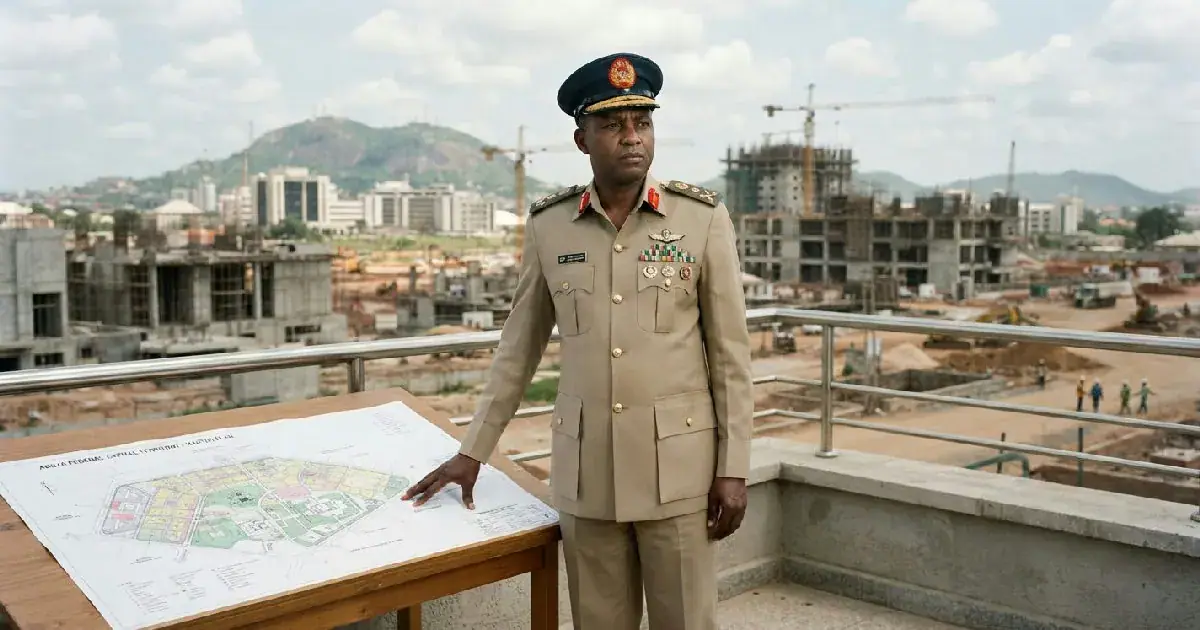
Air Vice Marshal Hamza Abdullahi, a distinguished Nigerian military officer and administrator, passed away on January 3, 2019, at the age of 73 in Germany. Born with a military spirit, Abdullahi joined the Nigerian Air Force in January 1964 as an Officer-Cadet. He received training as an Aircraft Technical Officer in West Germany from 1964 to 1966, gaining essential technical and security expertise. This marked the beginning of a remarkable journey that would see him serve in various capacities, including during the Nigerian Civil War, which started in July 1967.
Abdullahi's military career was marked by significant milestones, including his role in the July 29, 1975, coup that brought General Murtala Mohammed to power. As Air Provost Marshal from 1971 to 1980, Abdullahi was central to maintaining military discipline. He later commanded the Ground Training Group in Kaduna until 1984. His progression within the Nigerian Air Force was swift and strategic. In January 1984, Abdullahi was appointed Military Governor of Kano State following the December 1983 military coup that ousted President Shehu Shagari and ushered in General Muhammadu Buhari's regime.
As Military Governor of Kano State, Abdullahi oversaw state administration and implemented national directives, including the War Against Indiscipline (WAI) campaign launched in 1984. The WAI aimed to enforce public order and civic compliance, reflecting the authoritarian tendencies of military rule. Abdullahi's government also revitalized the Expanded Program on Immunization in January 1985, focusing on protecting children and pregnant women against preventable diseases. His tenure as governor ended in August 1985 when he participated in the coup that brought General Ibrahim Babangida to power.
The idea of relocating Nigeria's capital from Lagos to Abuja emerged in 1976 under General Murtala Mohammed. A committee led by Justice Akinola Aguda recommended the new site, and Federal Capital Territory Decree No. 6 of 1976 formally established the FCT. Construction of Abuja's basic infrastructure began in the early 1980s. Abdullahi inherited a project that already had its legal foundation and a nascent construction program. His role was critical in translating the vision into tangible progress, coordinating diverse entities, and overcoming logistical challenges.
Abdullahi's most significant federal role started in 1986 as Minister of the Federal Capital Territory (FCT), serving until 1989. During his tenure, he oversaw the construction of Phase 1 of Abuja, including the rapid expansion of key districts like Maitama and Asokoro. These areas were designed to accommodate government officials and infrastructure. Essential federal facilities, roads, and public buildings took shape under his watch. His goal was to have 75% of ministries operational in Abuja by 1990, the target date for the official transfer of the capital from Lagos.
Abdullahi described Abuja as "a symbol of our unity," reflecting the national aspirations tied to the new capital. He worked to ensure the successful relocation of the seat of government, a task fraught with administrative and logistical complexities. The establishment of Abuja required meticulous planning for essential services, accommodation, and transport links. Abdullahi's ministry played a crucial role in coordinating these elements. His leadership during a critical construction phase cemented his place in the city's history.
After his distinguished public service, Abdullahi transitioned into the private sector, serving as a director at prominent construction companies, including Julius Berger and Dantata & Sawoe Construction Company. This connected him directly with Nigeria's ongoing infrastructure development. Abdullahi's contributions to Abuja were pivotal, and his legacy as a generation of military officers transitioning to key administrative roles endures. His trajectory offers insight into Nigeria's military era and how individuals moved between political power and national development.
Key points
- Air Vice Marshal Hamza Abdullahi played a crucial role in shaping Abuja, Nigeria's capital.
- Abdullahi served as Minister of the Federal Capital Territory from 1986 to 1989, overseeing the construction of Phase 1 of Abuja.
- Abdullahi's career reflects a period where military personnel were central to governance, shaping Nigeria's infrastructure.