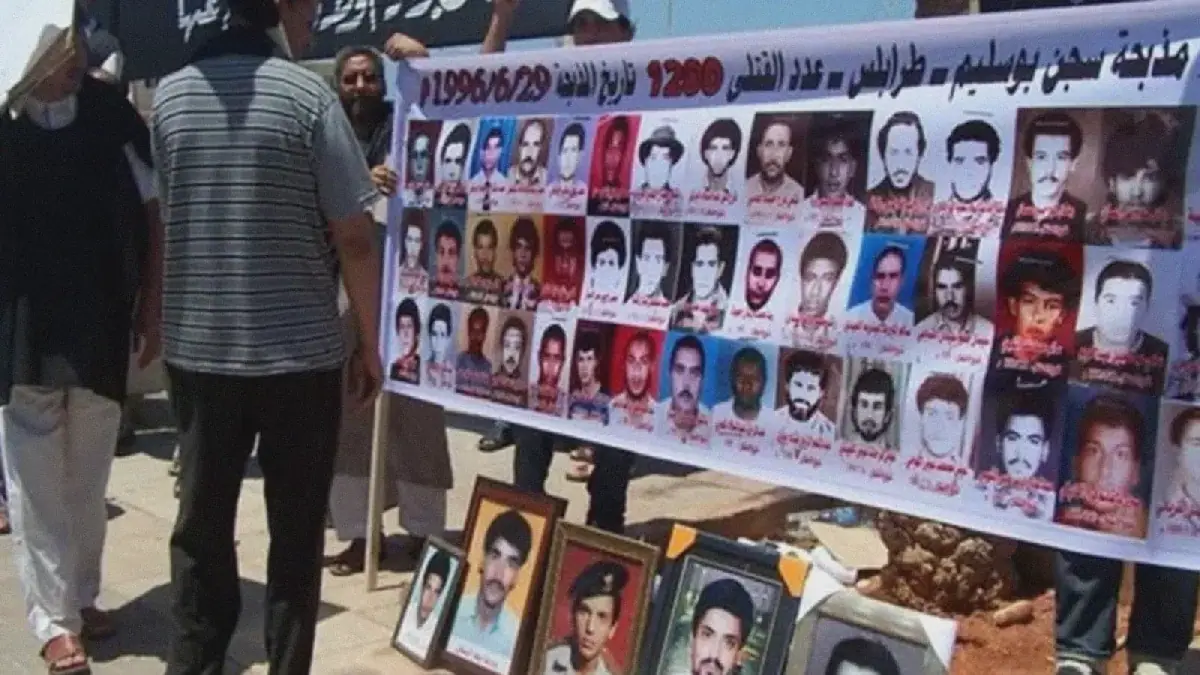
The trial of defendants in the Abu Salim prison massacre case has been postponed again, with the Tripoli Court of Appeals setting a new date of November 15. This decision comes after a change in the judicial body and the absence of the defendants. The new judicial body took over the case as part of the recent judicial movement but was unable to review it, necessitating a delay to allow them time to study the case before resuming the trial.
According to sources close to the case, the absence of the official responsible for operating the video communication system prevented Abdullah al-Senussi and Mansour al-Daw from appearing before the court from their detention locations. This marks the second consecutive session where al-Senussi and al-Daw have not appeared, despite repeated requests from successive judicial bodies for their presence, either in person or via video link.
The trial session also saw the absence of over 80 defendants who had been released in 2019. Their presence was required to complete the trial procedures, but they failed to appear. As a result, the session ended without completing the necessary procedures, with the court set to reconvene on November 15 to continue hearing the case.
The Abu Salim prison massacre is a significant and sensitive case in Libya, with many victims and defendants involved. The case has faced numerous delays and challenges, including the absence of key defendants and issues with the judicial process. The Libyan judicial system has been working to address these challenges and ensure a fair trial.
The change in the judicial body and the absence of defendants have contributed to the delays in the trial. The new judicial body needs time to review the case and ensure that all necessary procedures are followed. The court aims to conduct a fair and impartial trial, and the postponement is intended to allow for a more thorough examination of the case.
Human rights organizations and victims' families have been closely following the case, expressing concerns about the delays and the impact on justice for the victims. The Libyan government has emphasized its commitment to ensuring accountability and justice for those affected by the massacre.
The trial's resumption on November 15 will be crucial in determining the next steps in the case. The court will need to address the issues of the absent defendants and ensure that all parties are present or represented. The case's outcome will have significant implications for Libya's transitional justice process and the rule of law.
Key points
- The trial of defendants in the Abu Salim prison massacre case has been postponed to November 15 due to the absence of defendants and a change in the judicial body.