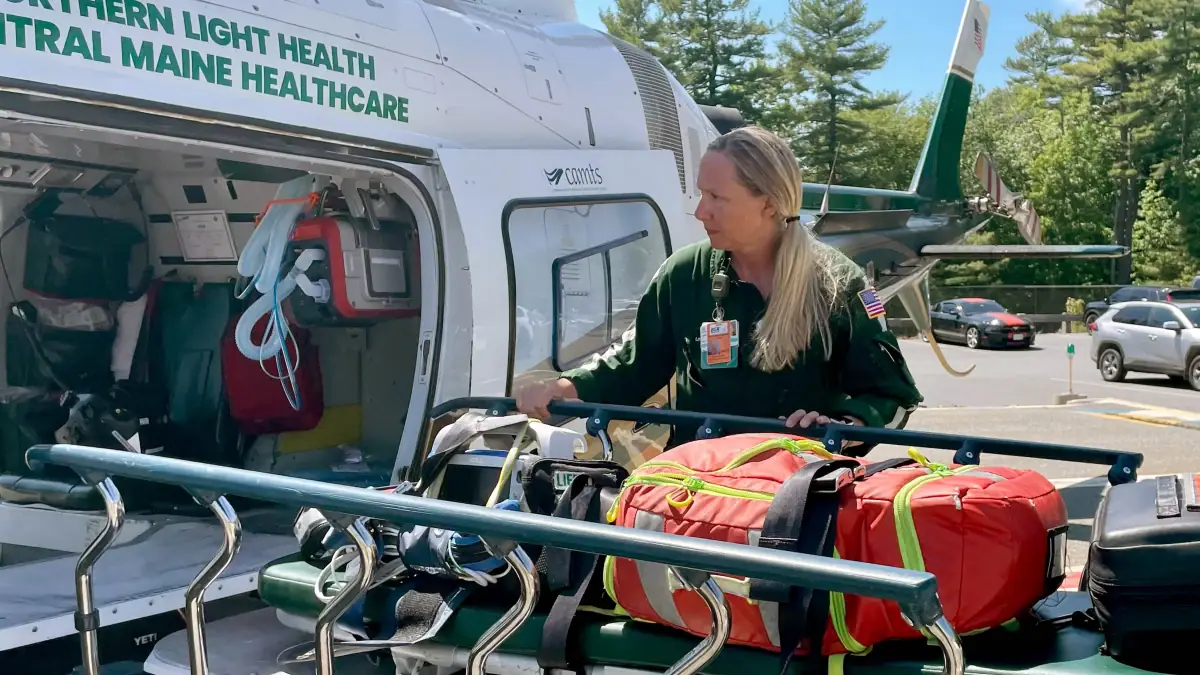
LifeFlight of Maine, a nonprofit air ambulance service, is working to address the challenges of providing medical care in rural areas. The service has seen a significant increase in demand for medical flights, with demand doubling since 2015 and up another 10% this year. This increase in demand is due in part to the closure of rural hospitals and the conversion of others to outpatient-only facilities. As a result, air medical services like LifeFlight are filling the gaps left behind.
The life of a flight clinician is hard and getting harder, with long shifts, unpredictable hours, and significant mental health burdens. Flight nurse Denise Saucier has worked for LifeFlight for seven years and calls it a dream job, but acknowledges the challenges. The service is seeing more patients every day, with crews flying 3,031 flights in 2025, more than one every three hours. Nationwide, air medical services are struggling to keep up with demand, with hundreds of rural hospitals and maternity departments at immediate risk of closing.
To address the staffing shortages, LifeFlight has taken an innovative approach, including a combination of better training, higher pay, and in-house mental health support. The service has established the "Critical Care Academy," a six- to eight-month orientation program, to provide clinicians with the skills and training they need to succeed. The program includes simulations of real-life medical crises, such as emergency births and newborn resuscitation.
LifeFlight's approach to training and retention is being recognized as a model program for the industry. EMS expert and retired emergency medicine professor Mike Abernethy considers LifeFlight one of a handful of model programs for the industry. The service's commitment to providing high-quality care and supporting its clinicians is paying off, with LifeFlight nearly fully staffed for the first time in nine years.
The pressure is on air ambulances as ground services in Maine are increasingly strained. The system is so fragmented that patients can fall through the cracks, as was the case with a woman in a small northern Maine town who died while the county dispatch center called 10 ambulance services with no response. Air ambulance services like LifeFlight are critical to providing access to medical care in rural areas.
LifeFlight's CEO, Joe Kellner, a paramedic himself, has made addressing the recruitment and retention problems a priority. He recognizes that the job is hard and that clinicians are seeing people on their worst day, over and over again. The service's approach to supporting its clinicians, including in-house mental health support, is seen as a key factor in its success.
As the demand for medical flights continues to grow, air ambulance services like LifeFlight will play an increasingly critical role in providing access to medical care in rural areas. With its innovative approach to training and retention, LifeFlight is well-positioned to meet the challenges of providing medical care in the sky. The service's commitment to providing high-quality care and supporting its clinicians is a model for the industry.
Key points
- LifeFlight of Maine is addressing staffing shortages and increasing demand for medical flights through better training, higher pay, and in-house mental health support.
- The service's "Critical Care Academy" provides clinicians with the skills and training they need to succeed in a high-stress, high-stakes environment.
- LifeFlight's approach to supporting its clinicians, including in-house mental health support, is seen as a key factor in its success.