Dr. Mahamudu Bawumia, the NPP presidential candidate, has proposed the adoption of long-term national masterplans for critical sectors of Ghana's economy. These masterplans would be binding on successive governments, regardless of the political party in power. This approach aims to prevent incoming administrations from abandoning projects and policies initiated by their predecessors, ensuring continuity in national development and the completion of long-term infrastructure projects.
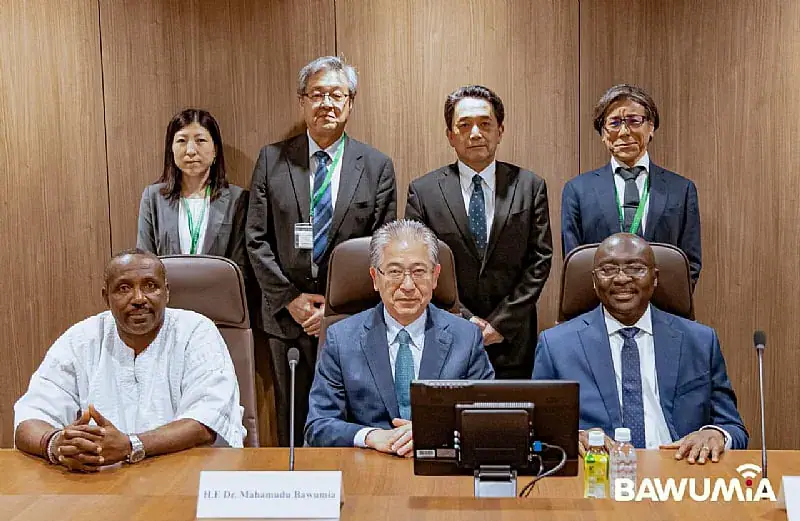
Dr. Bawumia made this proposal after engaging with Japanese development and engineering institutions during his visit to Japan. He discussed key development challenges with the Japan International Cooperation Agency (JICA), Nippon Koei, CTI Engineering, and Oriental Consultants Global. The discussions focused on disaster risk reduction, coastal erosion, flood mitigation, transport planning, and the development of masterplans for cities.
Dr. Bawumia was impressed by Japan's long-term approach to national development, where successive governments and stakeholders build consensus around development plans and remain committed to implementing them over extended periods. Japan's model allows projects and development policies to continue for decades with little risk of being abandoned by a new administration.
Dr. Bawumia contrasted Japan's approach with Ghana's development approach, arguing that the absence of agreed national masterplans in several critical sectors has contributed to policy discontinuity whenever political power changes hands. He stated that Ghana must move away from a system where successive governments pursue different development priorities without building on long-term plans established by previous administrations.
The former Vice President proposed that political parties develop consensus-driven national masterplans in critical areas such as coastal erosion management, flood control, and public transport. These plans would formally commit all parties to implementing them, ensuring that they remain national priorities regardless of which party wins an election and forms the next government.
Under the proposed arrangement, political parties would place long-term national development objectives above partisan interests in selected strategic sectors. Dr. Bawumia believes Ghana can adapt elements of Japan's planning model to build a durable development framework that successive governments would be committed to implementing. This framework would help ensure that development projects and policies are not abandoned or significantly altered with each change in government.
Dr. Bawumia's proposal aims to promote stability and continuity in Ghana's development agenda. By adopting binding national masterplans, Ghana can make progress on long-term projects and policies, ultimately contributing to the country's growth and development. The proposal will require political parties to work together and prioritize national development objectives over partisan interests.
Key points
- Dr. Bawumia proposes binding national masterplans to ensure development continuity across administrations.
- The proposal aims to prevent policy discontinuity and promote stability in Ghana's development agenda.
- Ghana can adapt elements of Japan's planning model to build a durable development framework.
Reporting sources
- Bawumia Proposes Binding ... · ModernGhana