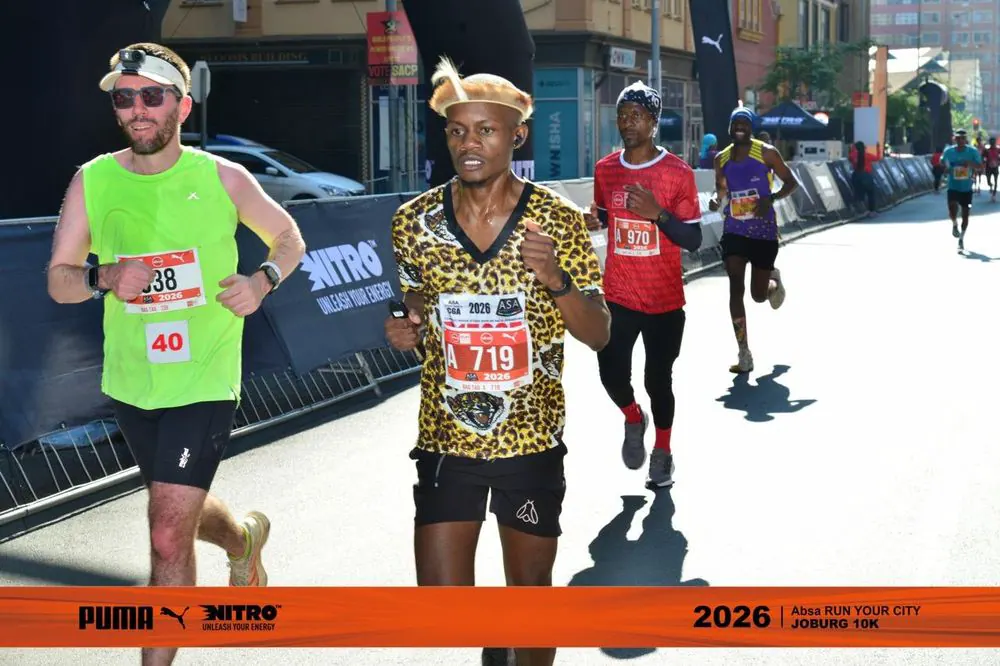
Michael Sherman, a South African runner, recently participated in the Absa Run Your City Joburg 10k on Heritage Day, September 24. After narrowly missing his target time of sub-40 minutes at the Tshwane 10k on August 23, Sherman decided to try a new approach to his training. He turned to his AI assistant, Google Gemini, to guide his build-up to the Joburg 10k. The idea came about after Sherman caught a bad case of the flu just two days after the Tshwane race, leaving him sidelined and seeking advice on how to get back on track.
Sherman began having detailed conversations with Gemini, asking for advice on training schedules, mileage distribution, and when it was safe to attempt a hard workout again. The AI assistant provided Sherman with complete weekly training plans, mapping out specific sessions directly onto his calendar. However, Sherman noted that the overall program erred heavily on the side of caution, likely due to his persistent old injury that frequently flares up. As a result, much of the build-up felt too easy, and Gemini acted like a supportive echo chamber, telling Sherman exactly what he wanted to hear to boost his confidence.
Despite the mental encouragement from Gemini, Sherman found that it was not enough to prepare him physically for the demands of the Joburg 10k. On race day, he felt completely spent early on, without even pushing flat out. The immediate fatigue proved to Sherman that he was genuinely underprepared, not just struggling with the high heat and elevated course profile. Sherman acknowledged that hitting race-day targets comes down to hard physical preparation and that spinning an encouraging narrative won't change the outcome on the road.
Sherman's experience with AI training highlights the limitations of relying solely on technology for athletic preparation. While Gemini provided nice mental encouragement, it left Sherman lacking in true physical readiness. Sherman has now returned to what 25 years of running experience has taught him works best for his body. He plans to put in solid, uninterrupted training blocks, with his next race six weeks away. Sherman might ask Gemini for the occasional tip or quick reference, but he certainly won't rely on it as heavily again.
The Absa Run Your City Joburg 10k took place on Heritage Day, September 24. Other runners have also been preparing for various running events in South Africa. Gerda Steyn, for example, is set to headline the inaugural Run Your City Mangaung 10k on October 25. The event will see Steyn test her speed against top talent in her hometown.
Sherman's story serves as a reminder that athletic preparation requires a combination of physical training and mental toughness. While AI can provide support and encouragement, it is not a substitute for the hard work and dedication required to achieve success in sports. Sherman's experience will likely resonate with other athletes who have also experimented with AI training plans.
In the end, Kabelo Mulaudzi emerged victorious at the Absa Run Your City Joburg 10K, producing a composed tactical performance to retain his title. The event was a significant competition, with many top athletes participating. Sherman's experience and insights will likely be of interest to these athletes as they prepare for their own events.
Key points
- AI training plans can provide mental encouragement but may lack in physical preparation.
- Hard physical preparation is essential for achieving success in sports.
- A combination of physical training and mental toughness is required for athletic success.