Artificial intelligence is being increasingly used in classrooms across Africa to draft lesson plans, create exercises, and explain complex concepts. However, access to AI tools does not automatically make their use educationally sound. The central question for African education systems is how to prepare teachers to use AI critically and safely in ways that respond to their classroom realities.
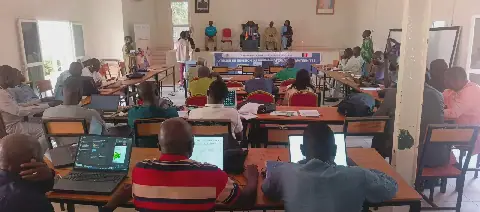
An October 2026 edition of EdTech Mondays Africa, convened by the Mastercard Foundation, brought together teachers and education leaders from Liberia, Tanzania, Nigeria, Senegal, and Zambia to examine what preparing learners for an AI-shaped world requires. The consensus was clear: AI can save teachers time, but without sustained training, reliable infrastructure, and teacher involvement in its design, the technology risks widening educational inequalities rather than addressing them.
Teachers across the panel described how AI was helping to reduce lesson preparation time. Senegalese English teacher Mohamed Sané said the technology enables him to prepare more efficiently, leaving more time for student interaction. Zambian biology teacher Rhoda Namakao Muvita reported similar benefits. However, Tanzanian educator Fatna Waziri Senkondo highlighted a critical limitation: AI can produce convincing answers that are nevertheless incorrect.
The panel’s discussion aligns with UNESCO’s AI Competency Framework for Teachers, which outlines 15 competencies across five dimensions: a human-centred mindset, ethics of AI, AI foundations and applications, AI pedagogy, and AI for professional learning. The framework emphasises a broader approach than basic tool training, recognising that teachers must understand the technology’s limitations and its implications for learners and teaching practice.
UNESCO’s International Institute for Capacity Building in Africa (IICBA) has also highlighted the limited availability of national frameworks for AI teacher training across the continent. However, the promise of AI remains constrained by infrastructure. UNESCO data indicates that only 36% of primary schools in sub-Saharan Africa have access to electricity, an essential foundation for digital learning.
Educators called for sustained professional learning supported by devices, connectivity, and institutional commitment. A one-off workshop rarely provides teachers with sufficient time to practise, evaluate results, and adapt their teaching methods. Fatna Senkondo emphasised that investment must extend beyond isolated training sessions, giving teachers continuous opportunities to learn alongside the infrastructure needed to apply their skills.
Measuring progress also requires more than counting the number of accounts created or teachers trained. Meaningful indicators include teachers’ confidence in verifying AI-generated content, access to devices and connectivity, the accessibility of materials for learners with disabilities, the frequency and quality of classroom use, and evidence of improved learning outcomes.
Key points
- AI can save teachers time, but without sustained training, reliable infrastructure, and teacher involvement in its design, the technology risks widening educational inequalities rather than addressing them.