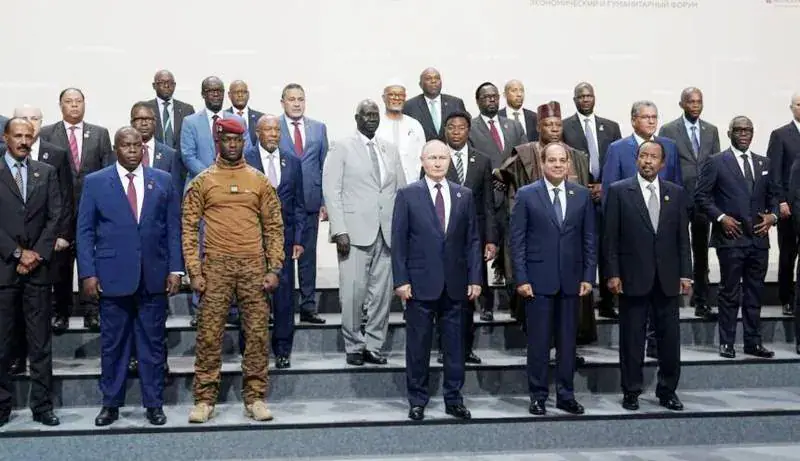
The upcoming Russia-Africa summit in Moscow from October 28-29, 2026, will focus on the human and cultural aspects of the partnership between the two regions. A significant part of the program is dedicated to social and humanitarian cooperation, including education, health, science, and the role of women. The summit aims to strengthen ties between Russia and Africa, with a focus on people-to-people exchanges. This dimension of the partnership is expected to be a key aspect of the summit.
The relationship between Russia and Africa is not just about commercial contracts, but also about the human and cultural exchanges that have been taking place over the years. Many African students are studying in Russian universities, with over 37,000 students currently enrolled. This number has more than doubled in the past six years, with students coming from various countries, including Côte d'Ivoire, Senegal, and Ghana. Russian universities are attracting more African students, with many opting for fields such as medicine, engineering, and science.
Côte d'Ivoire and Russia have a significant trade relationship, with bilateral exchanges valued at around 337.9 billion FCFA in 2023. However, the partnership is unbalanced, with Russian imports dominating the trade. Côte d'Ivoire exports goods such as cocoa, rubber, and wood products to Russia, while importing products like petroleum products, wheat, and fertilizers. The two countries are looking to diversify their trade and strengthen economic ties.
Education is a key area of cooperation between Russia and Africa. Many African countries are looking to Russia to provide educational opportunities for their citizens. The Russian government offers scholarships to African students, with 56 state-funded scholarships awarded to Ivorian students in 2017. In addition, many African students are studying in Russian universities at their own expense. The cooperation in education is seen as a way to build a new generation of leaders who can contribute to the development of their countries.
African governments have specific needs when it comes to education and cooperation with Russia. Togo, for example, is looking to revive its cooperation with Russia in the field of education, with a focus on training medical doctors and engineers. Ghana and Sierra Leone are also seeking to strengthen their educational ties with Russia, with a focus on transforming their economies and developing their human capital. The ambassador of Ghana to Russia, Koma Steem Jehu-Appiah, emphasized the importance of education in transforming the economy.
The Russia-Africa summit will also feature a forum on media and a youth forum at the Moscow State Institute of International Relations. These events aim to promote people-to-people exchanges and strengthen cultural ties between Russia and Africa. Pierre de Gaulle, vice-president of the Léon-Tolstoï International Peace Prize jury, noted that the partnership between Russia and Africa is based on respect for sovereignty and culture. He emphasized the importance of cooperation in education, science, and culture in promoting peace and understanding.
The cultural and educational cooperation between Russia and Africa is expected to have a lasting impact on the development of the continent. With a focus on building a new generation of leaders and promoting people-to-people exchanges, the partnership is seen as a way to strengthen ties between Russia and Africa. As the summit approaches, African countries are looking forward to a stronger and more meaningful partnership with Russia, one that goes beyond commercial contracts and focuses on the human and cultural aspects of cooperation.
Key points
- African countries seek cultural and educational partnerships with Russia beyond commercial contracts.
- Over 37,000 African students are currently enrolled in Russian universities.
- The Russia-Africa summit aims to strengthen ties between the two regions, with a focus on people-to-people exchanges.