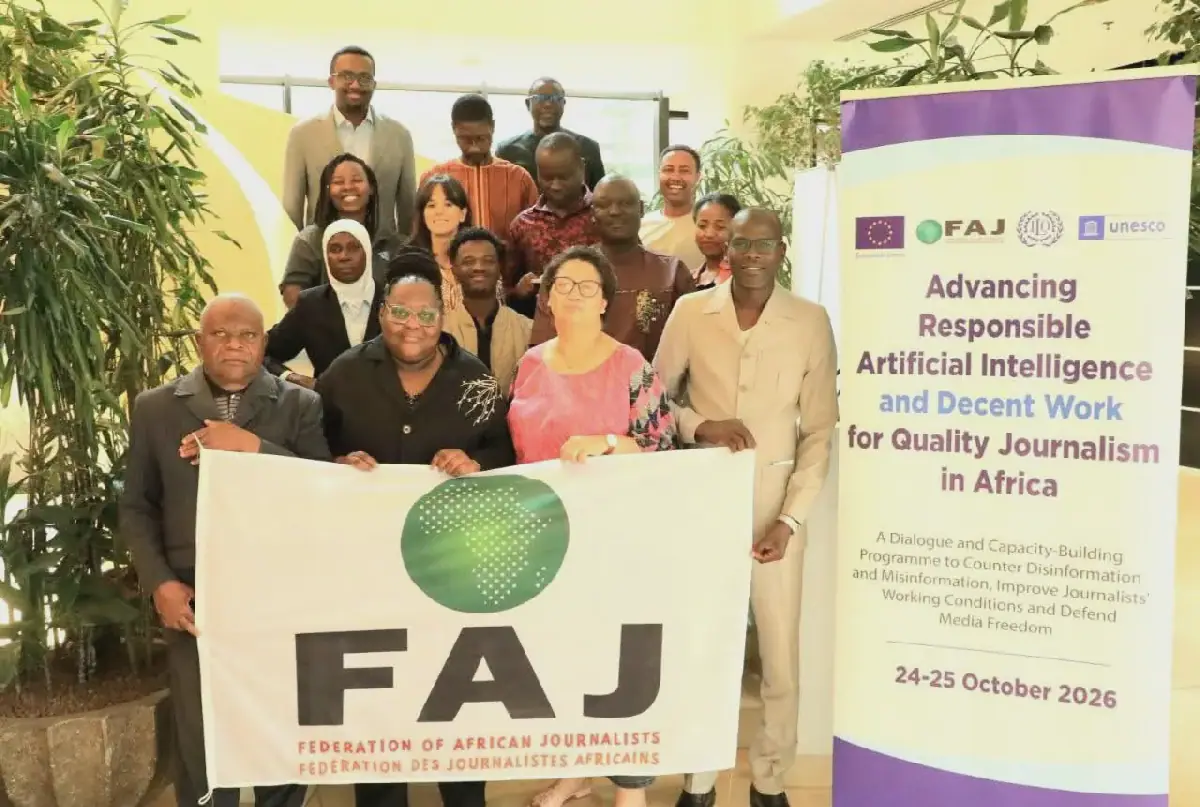
The African Federation of Journalists (FAJ) has adopted a continental plan of action to defend press freedom, improve working conditions for journalists, and promote responsible use of artificial intelligence (AI). The plan was adopted during a meeting in Addis Ababa, Ethiopia, on October 24-25, 2026, attended by representatives from the African Union Commission, UNESCO, the International Labor Organization (ILO), and the European Union. The meeting brought together leaders of African journalist unions and organizations.
The meeting discussed the challenges facing the media sector, including disinformation and the need to preserve journalistic independence in the face of technological advancements. Participants examined the opportunities offered by AI in newsrooms, such as research, translation, and fact-checking. However, they also raised concerns about the risks of AI-generated misleading content, source impersonation, and job automation in the media. These issues were highlighted as key areas of focus for the plan of action.
The working conditions of journalists were a significant topic of discussion. Participants denounced low wages, delayed payments, lack of employment contracts and social protection, and editorial pressures. Physical attacks, judicial harassment, and online violence, particularly against female journalists, were also addressed. These issues were discussed in the context of a survey conducted by the FAJ among 1,586 journalists in 45 African countries.
The survey aimed to strengthen advocacy for better working conditions and increased protection for media actors on the continent. FAJ President Omar Faruk Osman emphasized the need to make AI a tool serving journalism, rather than further precarization. He stressed that decent work, editorial independence, and responsible use of new technologies are essential for quality information and combating disinformation.
The plan of action adopted by the FAJ aims to prioritize press freedom and journalists' rights in the face of transformations in the African media landscape. The FAJ intends to present the plan's priorities to its member organizations, African and international institutions, unions, and human rights organizations. This will help ensure that the issues discussed are addressed and that journalists' rights are protected.
The meeting's discussions highlighted the importance of collaboration between journalist organizations, institutions, and governments to address the challenges facing the media sector. The FAJ's plan of action is expected to serve as a framework for advocacy and action on press freedom and journalists' rights in Africa. The adoption of the plan demonstrates the commitment of African journalists to promoting quality information and defending their rights.
The FAJ's efforts to promote press freedom and decent work for journalists are crucial in the context of the rapidly evolving media landscape in Africa. The plan's focus on responsible AI use, improved working conditions, and editorial independence reflects the complexities of the challenges facing journalists on the continent. By prioritizing these issues, the FAJ aims to contribute to a more favorable environment for journalism in Africa.
Key points
- African journalists adopt a plan to defend press freedom and promote decent work in the AI era.
- The plan aims to address challenges facing the media sector, including disinformation and job automation.
- The FAJ intends to present the plan's priorities to its member organizations, institutions, and governments to ensure press freedom and journalists' rights are protected.