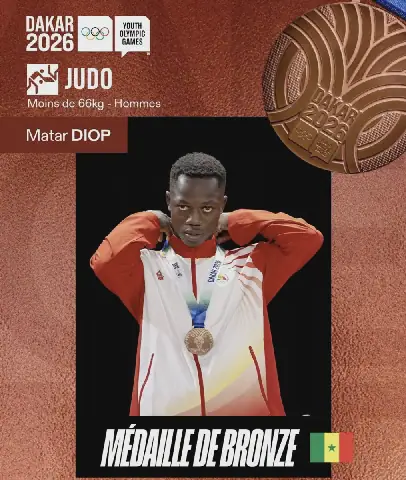
The fourth Summer Youth Olympic Games officially opened in Dakar, Senegal, on Saturday night, marking a historic moment for Africa. President Bassirou Diomaye Faye declared the Games open at the Abdoulaye Wade Stadium in Diamniadio, in front of a roaring crowd. The ceremony was watched live in over 30 countries, with IOC President Kirsty Coventry noting that every African nation had committed to broadcasting the Games.
The Youth Olympic Games in Dakar bring together 2,700 athletes aged 14 to 17 from around the world, competing in 153 medal events across 25 sports. The events will take place in three locations: Dakar, Diamniadio, and the beach resort of Saly. Notably, the Games have achieved full gender equality across athlete quota places, sports, disciplines, and events, with half the quota places allocated to women and half to men.
One of the most significant aspects of the Games is the participation of the first refugee team to compete at a Youth Olympics. The team, consisting of six athletes based in Kenya and Uganda, will compete in track and field, judo, and taekwondo. Despite not having a flag or anthem, their presence is a powerful statement, particularly given that Africa hosts the bulk of the world's refugees.
The road to Dakar 2026 was not without its challenges. Initially scheduled for 2022, the Games were postponed due to the COVID-19 pandemic. However, Senegal used the extra time to build venues, train volunteers, and rally the nation. The country's capital region is hosting various events, including the opening ceremony, archery, badminton, and gymnastics.
The mascot, Ayo, has become a folk hero in the build-up to the Games. As the continent's first Olympic event, Dakar 2026 sets a new standard. However, three key tests lie ahead: the economy, legacy, and the continental case. Senegal is celebrating amidst economic strain, and the success of the Games will be judged by their lasting impact on the country and its people.
The legacy of the Youth Games will be evaluated based on the opportunities they create for young athletes, schools, and sports clubs. If Dakar delivers on these fronts, the Games will be considered a success. Conversely, if the event fails to leave a lasting impact, the stadiums will become monuments to a fleeting moment.
The Youth Games are also seen as an audition for a full Summer Games on African soil. A successful Dakar 2026 makes a strong case for Africa's hosting capabilities, while a troubled event may provide skeptics with an excuse to deny the continent future hosting opportunities. As the Games commence, all eyes are on Dakar to see whether Africa has simply been invited to the Olympic table or has come to claim a seat at its head.
Key points
- The Dakar 2026 Youth Olympic Games mark Africa's first time hosting an Olympic event, 130 years after the Games began.
- The Games feature 2,700 athletes from around the world, competing in 153 medal events across 25 sports, with full gender equality across athlete quota places.
- The event includes the first refugee team to compete at a Youth Olympics, consisting of six athletes based in Kenya and Uganda.