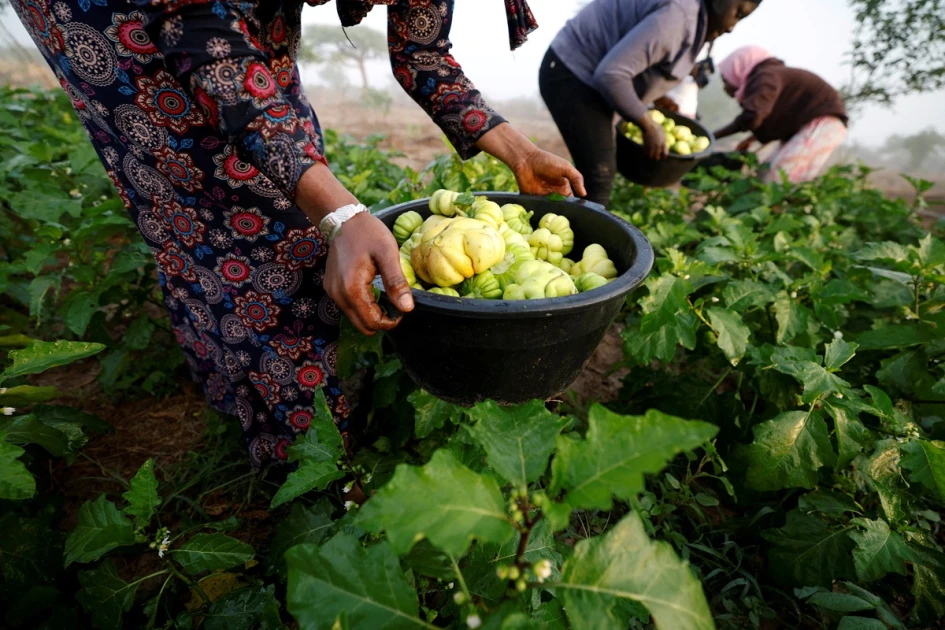
Africa's agricultural sector has experienced rapid growth, with output increasing at 4.3% annually since 2000, the fastest rate globally. This growth has significant implications for the continent's economy and food security. According to the African Development Bank (AfDB), Africa holds nearly 65% of the world's uncultivated arable land, yet imports close to $70 billion worth of food annually. This paradox highlights the need for the continent to convert its agricultural momentum into sustained, innovation-driven value creation.
The intra-African market for agricultural goods is beginning to respond, with the African Continental Free Trade Area (AfCFTA) having the potential to unlock fertilizer trade and reduce supply chain vulnerabilities. The framework for regional integration exists, but implementation at scale is needed. Agricultural value-added accounts for roughly 17% of Africa's GDP, down marginally from 18% in 2020. Despite producing more food than ever, about 307 million people still face tough times or undernourishment.
Homegrown solutions are already working in various countries. In Tanzania, Mbamba MTE Company has built a network of over 81,000 smallholder farmers across three regions, using its position as a grain trader to drive demand for improved, climate-resilient seed varieties. In Nigeria, the Support to the National Agricultural Growth Scheme expanded wheat cultivation from 11,820 hectares in 2021 to approximately 400,000 hectares in 2025, increasing yields and benefiting around 400,000 smallholder farmers.
In The Gambia, the Pro-Vitamin A enhanced maize variety PVA Syn 13 is now grown by an estimated 80 to 90 percent of maize farmers, delivering both nutritional benefits and higher incomes. In Kenya, the Agoro East Aggregated Farm in Nyakach transformed 52 acres of fragmented, contested land into a collectively managed commercial enterprise. Farmers diversified into fish farming, poultry, and black soldier fly production, restoring over 4 million hectares of degraded land.
To scale African agribusiness, the continent must leverage modern technology, innovative irrigation, and sustainable water management. Private sector investments, robust supply chains, and market partnerships are propelling this growth, meeting the rising demand for high-quality raw materials and healthy consumer products across expanding global markets. However, systemic weaknesses such as digital infrastructure, financing, and regional trade barriers must be addressed.
Digital infrastructure must reach the last mile, with tools like the Virtual Agronomist, a WhatsApp-based AI chatbot, providing tailored soil health advice and producing a 60% yield increase among users. Financing must shift from production to value addition, with blended finance models that leverage public resources to attract private capital being essential. The African Development Bank's operations supported nearly 5,000 agribusinesses in 2025, but this remains modest relative to need.
Women's empowerment is also crucial, with women accounting for approximately 80% of Kenya's agricultural labor force. Targeted programs that expand land rights, finance, and leadership opportunities for women will accelerate inclusive growth. Youth and women agribusiness projects are successful, with high yields per acre and supplying high-quality crops to manufacturing companies. Scaling agriculture initiatives focus on structured out-grower networks, contract farming models, and specialized micro-enterprise networks that tie smallholder production directly to large-scale commercial processors.
Key points
- Africa's agricultural output has grown at 4.3% annually since 2000, the fastest rate globally.
- The continent holds nearly 65% of the world's uncultivated arable land, yet imports close to $70 billion worth of food annually.
- Homegrown solutions, such as Mbamba MTE Company in Tanzania and the Support to the National Agricultural Growth Scheme in Nigeria, are already delivering results at scale.