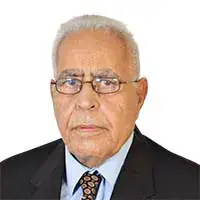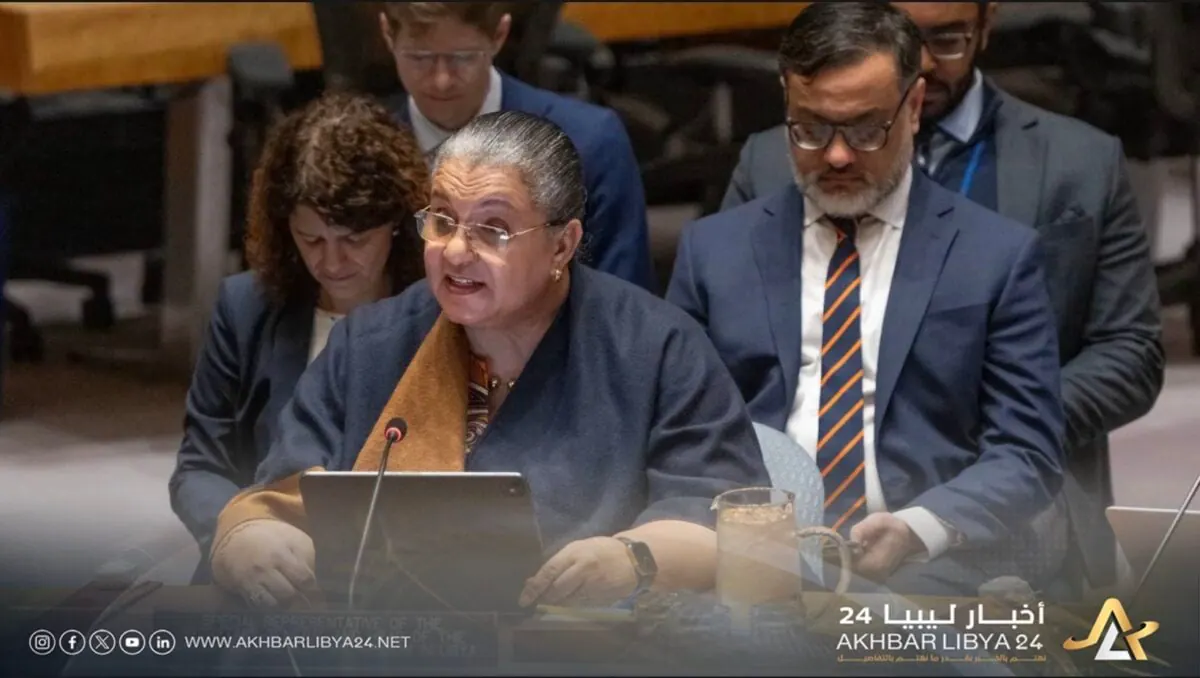
The upcoming briefing by UN envoy to Libya, Hana Tietie, before the UN Security Council on October 14 is expected to be different from previous briefings. According to Masoud Al-Salami, a professor of international relations, the briefing will come at a critical time as it coincides with the approaching end of the UN mission's mandate on October 31. The briefing is expected to focus on the outcomes of the 4+4 committee and the future of Libya's political process.
Al-Salami stated that Tietie will enter the briefing with new papers, particularly regarding the 4+4 committee's efforts to push Libya's crisis towards a solution. He added that the briefing will likely focus on the political, economic, and security developments in Libya and the steps to be taken in the coming period. The 4+4 committee's outcomes will be subject to discussion, and Tietie is expected to request the UN Security Council's support for the next steps in the political process.
The 4+4 committee's outcomes include several key points aimed at resolving Libya's crisis. Al-Salami noted that the committee's efforts represent a practical achievement in pushing Libya's crisis towards a solution. However, he warned that the actual implementation of these outcomes on the ground may face significant challenges. The UN Security Council's support for these outcomes will be crucial in determining their success.
The UN mission's mandate is set to expire on October 31, and the Security Council is expected to extend it for another year. Al-Salami noted that the extension may come with the same or additional mandates, which will impact the mission's ability to address Libya's complex issues. The briefing by Tietie will be critical in shaping the UN Security Council's decision on the mission's extension.
Regarding the 4+4 committee's outcomes, Al-Salami stated that Tietie will defend them before the UN Security Council. However, he warned that the political reality on the ground may be more complex, with some parties, including the State Council, potentially rejecting the outcomes. This may lead to Tietie having to consider alternative approaches, including engaging with some members of the State Council or pursuing another dialogue track.
A significant challenge lies in implementing the 4+4 committee's outcomes, particularly in forming a unified government and executive authority. Al-Salami noted that this process will involve complex procedural and political issues, which may put Tietie in a difficult position. The coming period will test the ability of the new political process to transition from agreements to concrete actions on the ground.
Al-Salami expressed optimism about Tietie's enthusiasm and confidence in moving forward with the political process. However, he raised concerns about the mechanism the UN Security Council and the UN mission will use to ensure the implementation of the 4+4 committee's outcomes. The challenge lies in finding a practical way to guarantee the execution of these outcomes and prevent previous scenarios of stagnation.
Key points
- The UN envoy's briefing to the UN Security Council will focus on the 4+4 agreement and the future of Libya's political process.
- The briefing comes at a critical time as the UN mission's mandate approaches its expiration date.
- The implementation of the 4+4 committee's outcomes, particularly in forming a unified government, will be a significant challenge.