The Reverend Professor Kwabena Agyapong-Kodua, Vice-Chancellor of Pentecost University, has urged African countries to move beyond dependence on imported technology and invest in local research, innovation and advanced manufacturing to accelerate industrial development. He made the call in an interview with the Ghana News Agency on the sidelines of a dissemination conference on the Lasers4NetZero project held at Gomoa Fetteh in the Central Region.
According to Rev. Prof. Agyapong-Kodua, Africa must develop the technical expertise and infrastructure to manufacture products locally using modern technologies rather than continue importing finished goods. He cited electric vehicles, electronic devices and industrial equipment as examples of products that Africa should manufacture locally.
The Lasers4NetZero project is a four-year European Union-funded research and training project aimed at making electric vehicle manufacturing more efficient, cost-effective and environmentally sustainable. The project commenced in January 2024 and is expected to end in December 2027. It involves six academic institutions and eight industrial partners from Europe and Africa.
Rev. Prof. Agyapong-Kodua said African universities had a critical role in equipping students with the skills needed to develop and manufacture emerging technologies. He noted that Pentecost University was establishing an engineering village dedicated to emerging technologies, including Industry 4.0 and Industry 5.0, to prepare students for the changing demands of modern manufacturing.
The facility, being developed at Oyibi, is expected to be completed by July 2027 and will expose students to advanced technologies and practical engineering applications. The Vice-Chancellor said the university's participation in Lasers4NetZero would also strengthen knowledge transfer, international research collaboration and doctoral training.
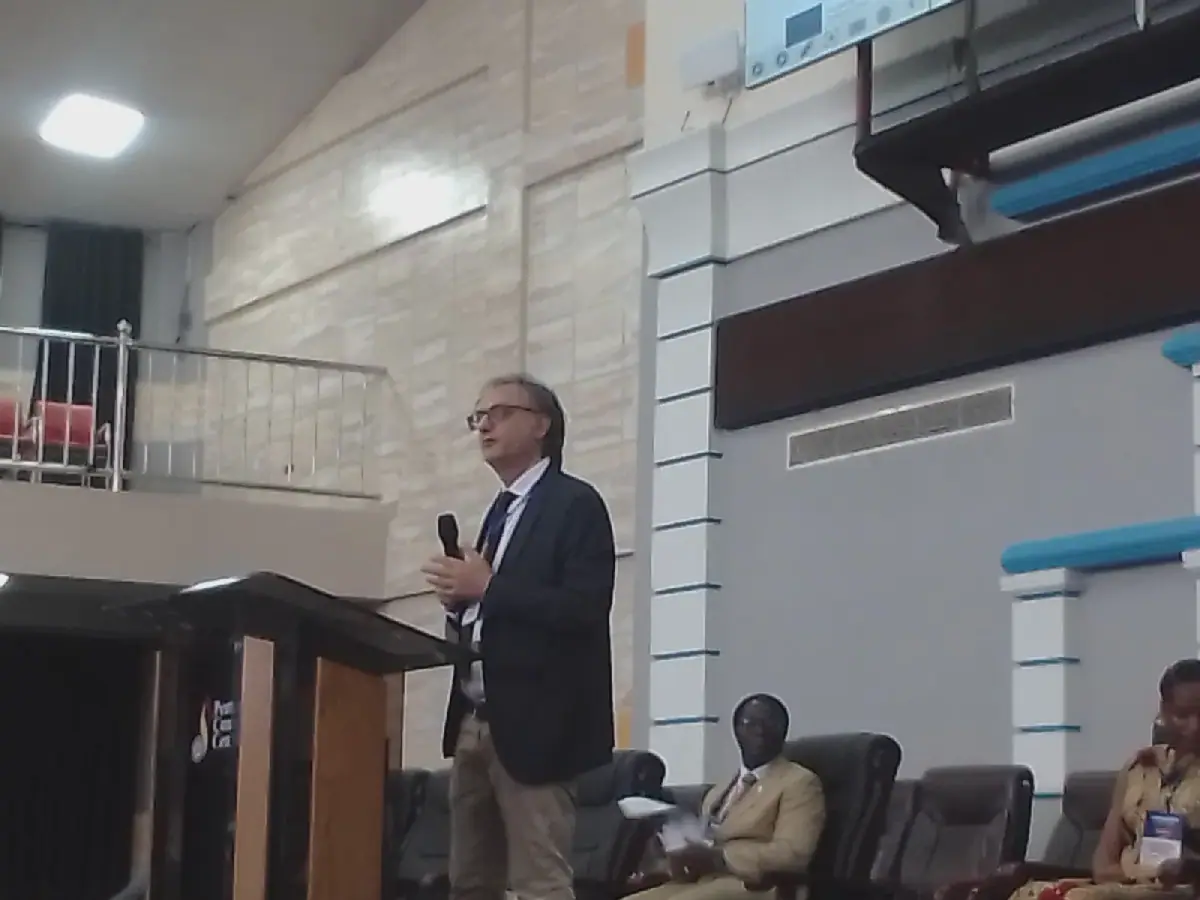
Professor Alessandro Fortunato, University of Bologna, Italy, who is the Laser4NetZero Project Coordinator, said about 30 per cent of emissions associated with electric vehicles could arise from manufacturing processes. He noted that the project sought to reduce those emissions by improving the manufacturing of batteries and fuel cells through advanced laser technologies and artificial intelligence.
The conference brought together researchers, students and industry stakeholders to share research findings and assess progress towards developing more sustainable manufacturing methods for electric vehicle batteries and fuel cells. The project also offers African researchers and students opportunities for international exchanges, doctoral supervision and collaborative research.
Key points
- African countries must invest in local research, innovation and advanced manufacturing.
- Pentecost University is establishing an engineering village to prepare students for emerging technologies.
- The Lasers4NetZero project aims to make electric vehicle manufacturing more efficient and environmentally sustainable.