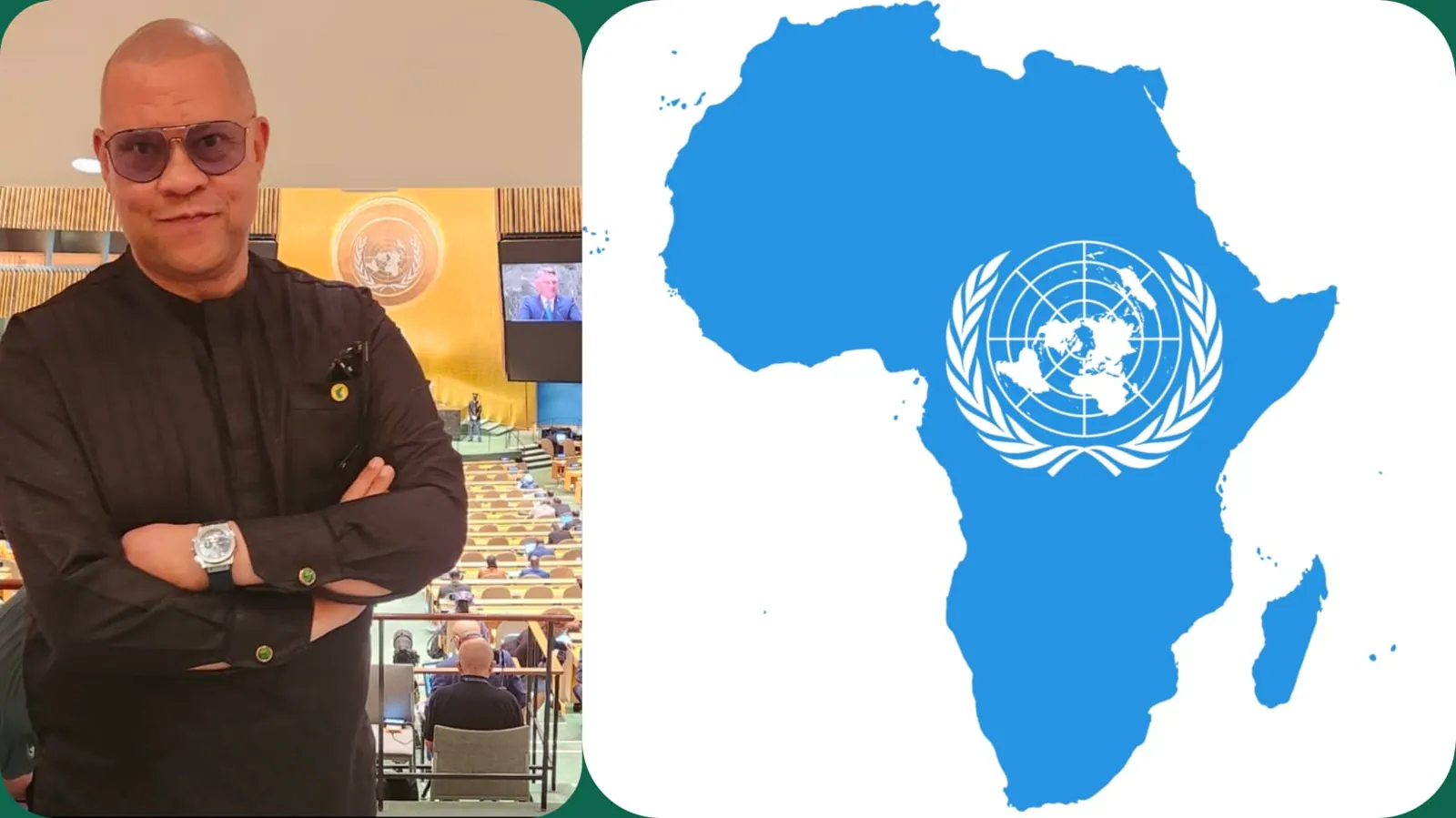
The 81st United Nations General Assembly (UNGA) opened in New York City under the theme "Restoring Trust, Managing Transformation: A United Nations that Delivers for All." However, African nations are questioning the organization's relevance and legitimacy, given its outdated structure. The UN was established in 1945, when most of Africa was under colonial rule, and currently, only five nations - the United States, France, Russia, China, and the United Kingdom - hold permanent seats on the Security Council.
The African continent, comprising 54 member states, or one-fifth of the world's population, has no permanent representation on the Security Council. This has led to criticisms that the UN does not truly represent all of humanity. African nations argue that the organization's architecture is obsolete and that reform is necessary to reflect the changing global landscape. The continent is demanding a larger role in the UN, including permanent seats on the Security Council and a greater voice in global decision-making.
African nations are also pushing for action on several key issues, including climate finance, debt relief, and artificial intelligence. They argue that climate finance has not been delivered at the promised scale, and that debt is stifling development. Additionally, Africa is seeking to increase its representation in global forums where AI is being designed, as well as to correct the inaccurate mapping of the continent.
The African delegation to the UNGA is insisting that its demands are not about charity, but about equity and justice. They argue that the continent is not arriving at the negotiating table as a beggar, but as a major player with significant economic potential, a growing market, and vast renewable energy resources. Africa is also home to the world's youngest population and critical minerals needed to power the global economy.
The issue of representation is a critical one for Africa, as the continent feels that its voices are not being heard in global decision-making forums. African leaders are demanding that the institutions that claim to represent humanity finally begin to look like humanity. They argue that the future will be written with African leaders at the table and with African hands on the pen.
The African collective position is clear: it will no longer watch history being decided about it, without it, and supposedly for it. The continent is seeking to correct the "original sin of exclusion" and to ensure that its interests are represented in global decision-making. This will require significant reforms to the UN's architecture, including the expansion of the Security Council to include African permanent members.
Ultimately, the African delegation to the UNGA is pushing for a more equitable and just global system. They argue that restoring trust in the UN can only begin when the original sin of exclusion is corrected. The continent's demands are not limited to a seat at the table, but also include action on the critical issues facing humanity, such as climate change, debt relief, and artificial intelligence.
Key points
- African nations demand reform at the UN, citing obsolete architecture and lack of representation.
- The continent is pushing for action on climate finance, debt relief, and artificial intelligence.
- Africa seeks to correct the "original sin of exclusion" and ensure its interests are represented in global decision-making.