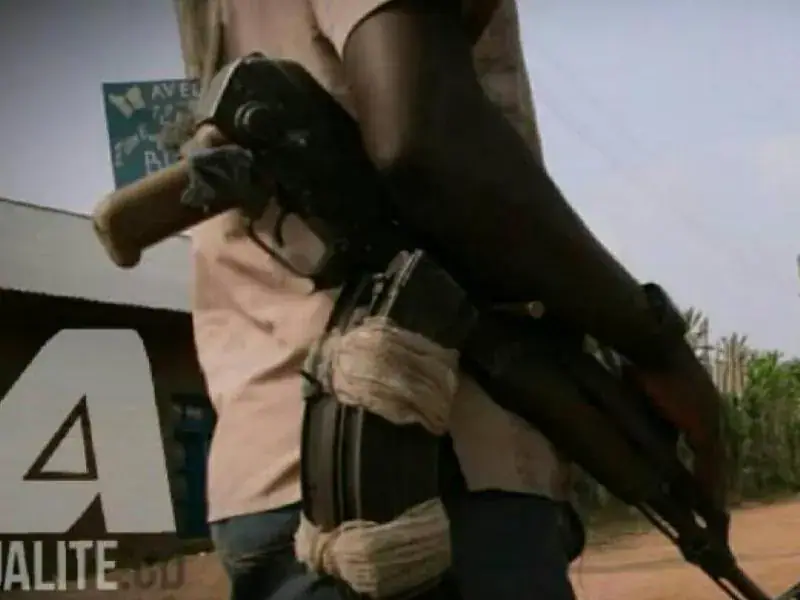
The Allied Democratic Forces (ADF), an armed group operating in the eastern Democratic Republic of Congo (DRC), has reduced its reliance on external financing from the Islamic State in Iraq and the Levant (ISIL). According to a recent investigation by The Sentry, the ADF now generates substantial revenue from the exploitation and illicit trade of gold. The group controls several gold mines, including those in the Manguredjipa region of Lubero territory.
The ADF earns between $1 and $1.6 million annually from gold mines in the Manguredjipa region alone. The group exercises control over multiple other gold-rich territories, with supply chains extending from eastern DRC to Uganda. This illicit trade has become a primary source of financing for the ADF, allowing it to sustain its operations and expand its influence in the region.
The ADF's activities have resulted in significant human suffering, with the group responsible for numerous attacks on civilians, including massacres in churches and during funerals. Survivors have reported witnessing militants burning houses, mutilating bodies, and using systematic rape as a weapon of war. The group has also been known to recruit child soldiers, with some as young as nine years old.
Despite the severity of the ADF's actions, the group has benefited from the relatively low priority given to it by the Congolese government. The government has focused its military efforts on combating the M23 rebel group, supported by Rwanda. According to John Prendergast, co-founder of The Sentry, the joint military operation between Uganda and DRC has only displaced the ADF, allowing it to continue its economic activities.
The ADF's control of gold mines and trade routes has significant implications for regional stability. The group's ability to generate substantial revenue from gold has enabled it to maintain a significant operational presence, with an estimated 600-700 fighters as of February 2026. The Congolese government, along with international partners, faces significant challenges in addressing the ADF's activities.
The situation in eastern DRC remains volatile, with ongoing clashes between the ADF and local forces. The group has expanded its activities into new areas, including the province of Haut-Uele, which was previously unaffected. Local leaders and civil society organizations have expressed concerns that the joint military operations and state of siege have not yielded desired results.
The international community has expressed concern over the ADF's activities, with the US recently sanctioning Rwanda's defense ministry and a financial institution for their support of the M23 rebel group. Efforts to address the root causes of the conflict and promote regional stability continue, with a focus on disrupting the ADF's financial networks and promoting accountability for human rights abuses.
Key points
- The ADF generates $1-1.6 million annually from gold mines in the Manguredjipa region of eastern DRC.