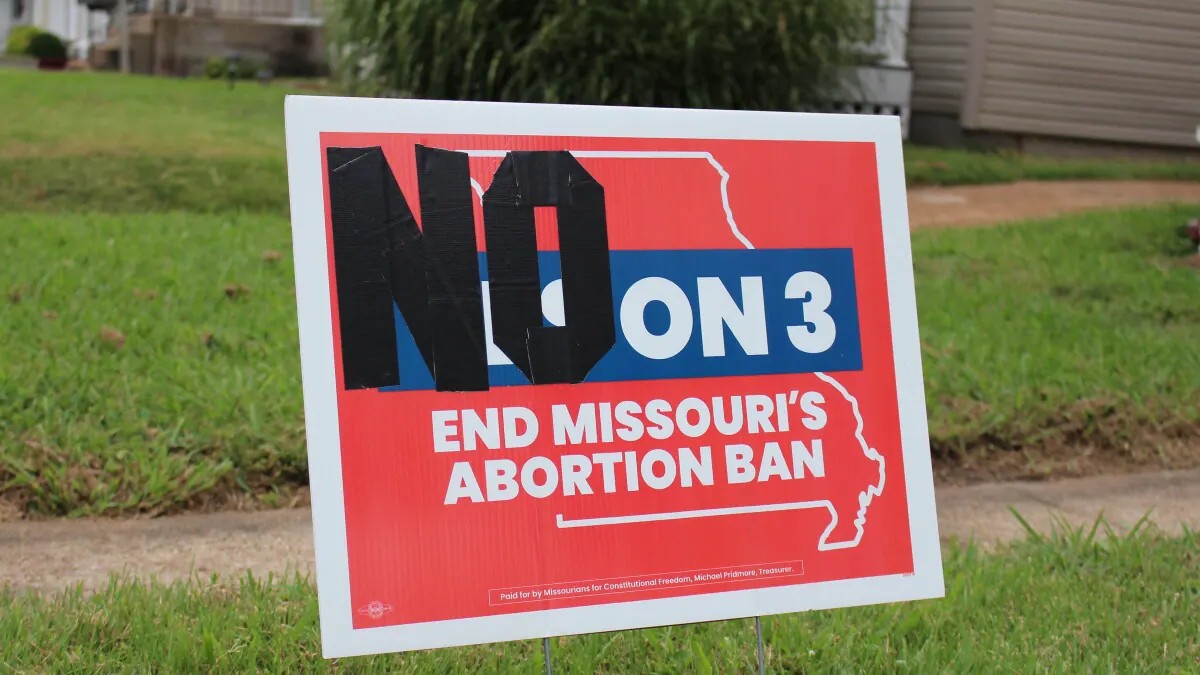
The US Supreme Court's 2022 decision in Dobbs v. Jackson Women's Health Organization has led to a patchwork of state rules on abortion, with varying degrees of bans or limitations. Missouri voters added abortion protections to the state constitution in 2024, but the state's Republican-dominated legislature is now asking voters to overturn those protections. The conflicting measures have the same title: Amendment 3. A "yes" vote in 2024 supported adding protections, while a "no" vote in 2026 would keep them.
Missouri is one of two states voting on abortion rights for the second time since 2024, with Nevada also holding a second vote. Voters in Idaho and Virginia will decide on abortion rights for the first time. In Missouri, the measure would repeal the 2024 amendment that guaranteed abortion access through fetal viability and replace it with a ban on abortions with exceptions for medical emergencies, fetal anomalies and pregnancies resulting from rape or incest.
The abortion landscape in the US has been significantly altered since the Dobbs decision. Missouri was the first state to ban abortion after the decision, and only 150 abortions were performed in the state in 2021, down from 5,772 in 2011. Despite Missouri voters backing the abortion amendment in 2024, it took nearly two years for medication abortions to resume in the state.
Advocacy groups are working to clarify abortion rules and ensure voters are informed. Kristi Hamrick, vice president of media and policy for the anti-abortion organization Students for Life Action, said there is a constitutional crisis due to the varying state standards on abortion. Nevadans for Reproductive Freedom introduced a ballot measure to enshrine the state's law allowing abortions up to 24 weeks after conception into the state constitution.
In Nevada, voters will need to support the expanded protection again in November for it to be enacted, as the state's law requires two majority votes to enshrine constitutional amendments. The Nevada ballot measure wouldn't change the state's existing law but would make it more difficult to overturn abortion access. Denise Lopez, president of Nevadans for Reproductive Freedom, said voters are still mobilized and care about the issue.
The spate of referenda comes as the US continues to grapple with the implications of the Dobbs decision. Idaho has one of the strictest abortion bans in the country, while Utah allows abortion up to 18 weeks. In Virginia, voters will decide whether to amend their state constitution to codify abortion rights. Missouri is the only state voting this year on removing abortion protections already on the books.
The second vote on abortion in Missouri has caused confusion, with some voters expressing frustration. Margot Riphagen-Dunn, CEO of Planned Parenthood Great Rivers, said the whiplash of a second statewide vote on abortion mirrors the confusion patients have experienced about whether abortion is available in the state. Reagan Barklage, vice president of Students for Life of America, said people need to be clear on what they're voting for.
Key points
- Missouri voters will decide whether to keep or overturn abortion protections added to the state constitution in 2024.
- Voters in multiple states, including Nevada, Idaho and Virginia, will also decide on abortion rights in the upcoming general election.
- The US Supreme Court's 2022 decision in Dobbs v. Jackson Women's Health Organization has led to a patchwork of state rules on abortion.