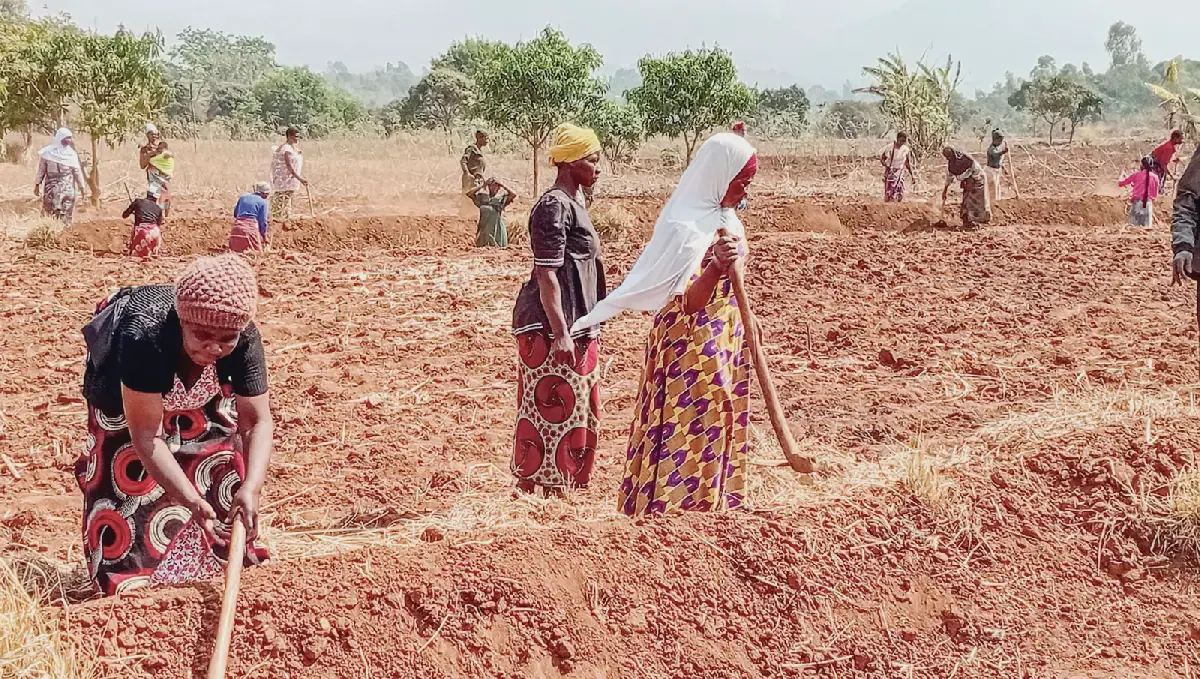
For years, Levison Kamleka, a 45-year-old farmer from Group Village Mkanda in Zomba District, Malawi, struggled to harvest more than three to four bags of maize from his fields. However, in the 2025-2026 farming season, his harvest increased to 21 bags after receiving support through an anticipatory action intervention implemented by the World Food Programme (WFP). Kamleka has used six bags for food and has 14 remaining, expressing optimism about the initiative's impact on his life.
Kamleka's experience is part of WFP Malawi's Zero Hunger Village (ZHV) model, which combines agricultural support, irrigation, school meals, nutrition services, climate information, and anticipatory action to address hunger and malnutrition. The community-driven initiative targets 1,200 villages and 54,400 beneficiaries across 14 districts, including Nsanje and Zomba. Launched in September 2025, the model aims to improve food availability, household incomes, children's health, and school attendance while helping communities prepare for droughts, floods, and economic shocks.
In Nsanje District, one of Malawi's drought-prone areas, irrigation is helping farmers grow crops despite increasingly unreliable rainfall. Chrissy Edward, 35, from Bithi 1 Village, has benefited from irrigation support under the ZHV model, which WFP is implementing in partnership with Nsanje District Council. Edward grows rice along the banks of the Shire River and has seen her harvest increase from two to three bags to nine bags from her 0.1-hectare plot.
The ZHV model also supports farmers in Traditional Authority Tengani, where Aline Bingara, 52, from Bithi 2 Village, has benefited from irrigation. She grows sweet potatoes, maize, rice, and vegetables to feed her family and earn money from surplus produce. Bingara says irrigation has helped her feed her family throughout the year, allowing her to plant different crops and sell her harvest to buy essentials for her children.
WFP's integrated resilience interventions combine agricultural production with support for market access, savings, and climate risk management. In Traditional Authority Mbenje in Nsanje, irrigation schemes allow farmers to grow crops up to three times a year. The Tapulumuka Irrigation Scheme, established in March 2018, covers 6.5 hectares and benefits 98 farmers from several villages.
The interventions have also had a positive impact on the lives of beneficiaries, such as Annie Moyo, 81, from Mwanabowa Village, who has used the opportunities created by these interventions to improve her living conditions. She has built a house and a shop, both with electricity, and bought a refrigerator for commercial use. Seleman Mussa, born in 1975, also credits irrigation with improving his family's circumstances, having bought a bicycle and a mattress, supported his children's education, and built a house.
Kamleka's harvest demonstrates the value of preparing farmers for climate shocks before they cause severe food shortages. Malawi faces recurrent droughts, floods, and cyclones that disrupt livelihoods and place pressure on emergency response systems. WFP is working with the Government of Malawi to strengthen anticipatory action by using climate forecasts and early warning information to provide assistance before a predicted shock occurs, aiming to protect agricultural production and help families avoid harmful coping strategies.
Key points
- The World Food Programme's Zero Hunger Village model combines agricultural support, irrigation, and school meals to address hunger and malnutrition in Malawi.
- Irrigation schemes have helped farmers in drought-prone areas grow crops and increase their incomes.
- The interventions have had a positive impact on the lives of beneficiaries, improving their living conditions and food security.