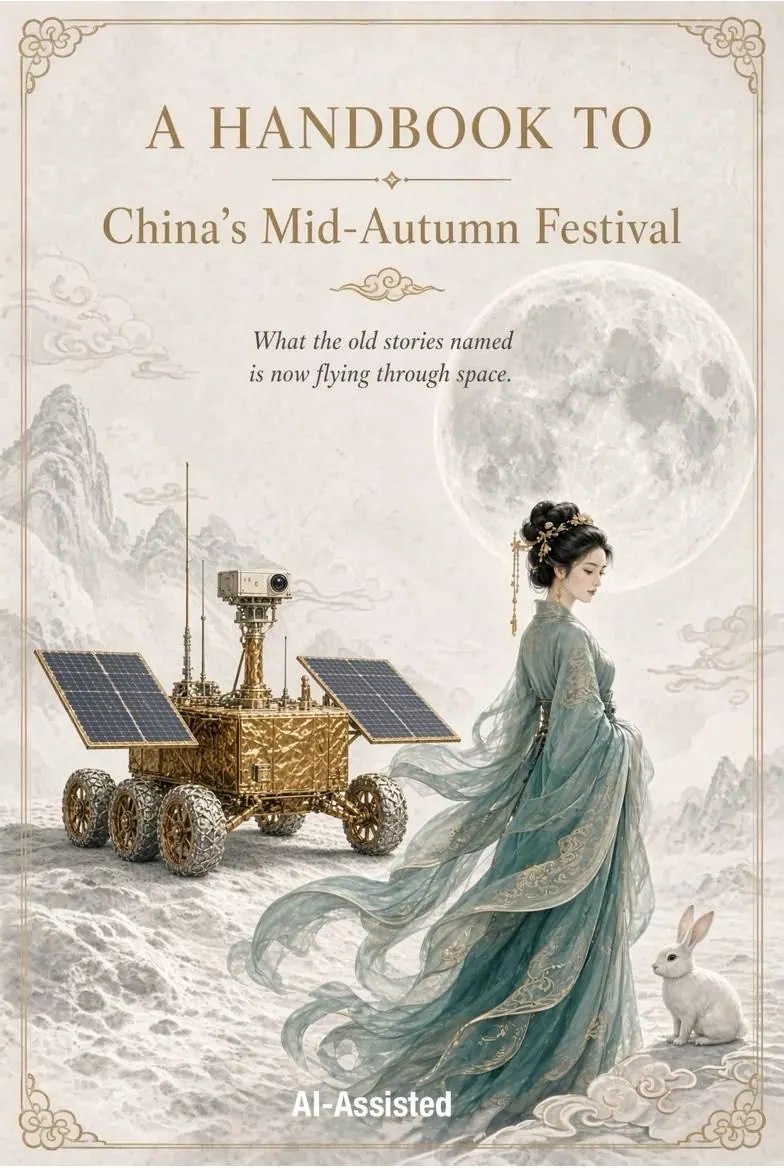
China's Mid-Autumn Festival is approaching, and with it, the tradition of reuniting under the full moon. The festival, also known as the Reunion Festival, holds great significance in Chinese culture, ranking second only to Spring Festival. It is a time when families come together, and the full moon symbolizes reunion and longing. The classic scene involves a round table, a box of mooncakes, and a few plates of fruit, often pomelo, with lanterns adding to the ambiance.
The Mid-Autumn Festival falls on the 15th day of the eighth month in the Chinese lunisolar calendar, usually in September or October. In 2026, the festival will take place on September 25. Customs vary across cities, with Xiamen's Bo Bing dice game, Beijing's Tu'er Ye clay rabbit figurines, and Shanghai's park gatherings being a few examples. In Hong Kong, people cut mooncakes in teahouses and walk with lanterns, while in other regions, mooncakes are a staple, often enjoyed with hot tea or pomelo.
Mooncakes have a rich history, originating as offerings to the moon and later becoming a symbol of family reunion. The traditional pastry consists of a crust and filling, which vary by region. The five most common styles are Cantonese, Beijing-style, Suzhou-style, Teochew-style, and Yunnan-style. Cantonese mooncakes are characterized by thin skin and plenty of filling, while Suzhou-style mooncakes have flaky layers that shed crumbs when bitten into.
The legend of Chang'e, who flew to the moon after swallowing the elixir of immortality, is at the heart of China's moon myths. She and her husband, Hou Yi, have been separated ever since, with Chang'e now residing in the Moon Palace. The Jade Rabbit, Yutu, pounds medicine on the moon, while Wu Gang stands under a laurel tree, chopping it forever, symbolizing the longing and reunion that defines the Mid-Autumn Festival.
China's lunar exploration program, approved in 2004, has achieved significant milestones over the past decade. The program, named after the Chang'e legend, has successfully launched several probes, including Chang'e-4, which achieved the world's first soft landing on the far side of the moon. The relay satellite Queqiao, or Magpie Bridge, enables communication between the far side of the moon and Earth.
As the Mid-Autumn Festival approaches, people in China and around the world prepare to celebrate. The traditional greeting, "中秋快乐" (Zhōngqiū kuàilè), or "Happy Mid-Autumn Festival," is exchanged, and families gather to enjoy mooncakes, watch the moon, and share stories of the legend. The festival is a time for reunion, reflection, and appreciation of the beauty of the full moon.
For those interested in experiencing the Mid-Autumn Festival, there are various ways to participate. One can try making mooncakes, joining a mooncake-making session, or purchasing a classic Cantonese lotus-paste-and-yolk mooncake. Additionally, learning about the legends of Chang'e, the Jade Rabbit, and Wu Gang can deepen one's understanding and appreciation of the festival's cultural significance.
Key points
- The Mid-Autumn Festival is a significant celebration in Chinese culture, symbolizing family reunion and longing under the full moon.
- The festival has a rich history, with customs and traditions varying across cities and regions.
- China's lunar exploration program, named after the Chang'e legend, has achieved significant milestones in recent years.