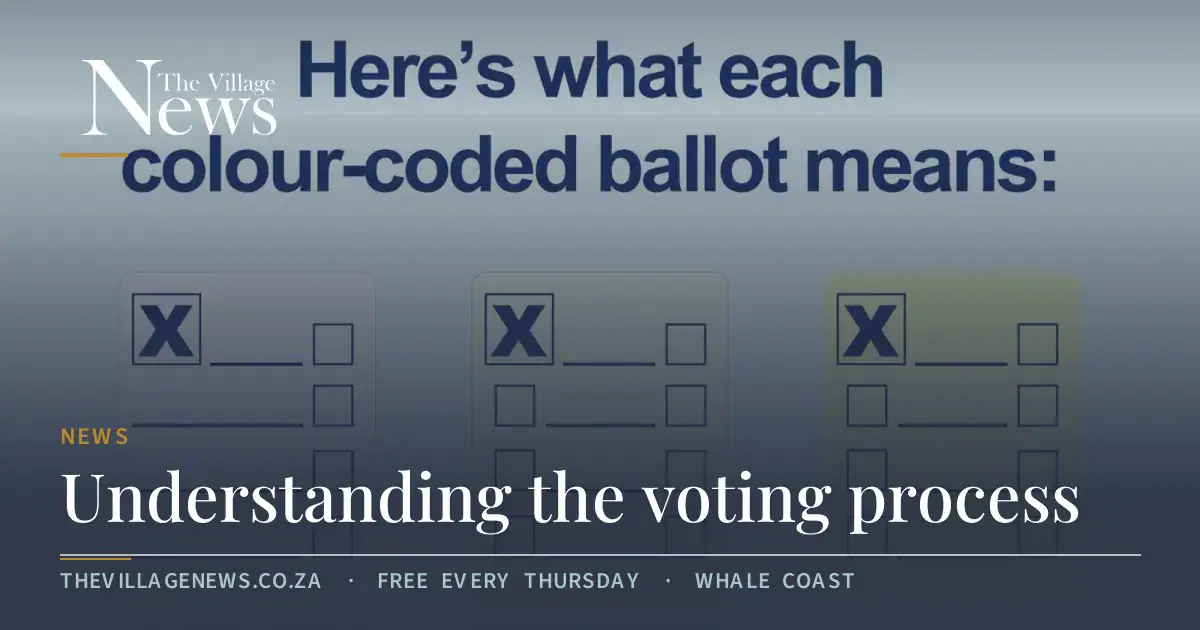
South Africans are set to go to the polls next Wednesday for the highly anticipated local government elections. With the voting process set to take place across the country, residents are being encouraged to familiarize themselves with the procedures to ensure a smooth and successful voting experience. According to The Village News, voters will have three votes to cast, marked on three different colored ballot papers.
To cast their vote, residents will need to visit their designated voting station, where they will be required to present their ID card or temporary identification certificate to the voting officer. The officer will verify the voter's identity and registration, confirming that they have not already voted. Once verified, the voter's name will be marked off the roll, and their thumb will be inked with indelible ink.
The voting officer will then provide the voter with three official ballot papers, each with a different color, representing the ward ballot, proportional representation (PR) ballot, and district ballot. The voter will proceed to an empty voting booth, mark their choices on each ballot paper, fold them to conceal their votes, and then deposit each one into the corresponding ballot box.
The three ballot papers serve distinct purposes, with voters having one vote to elect a ward councillor to the local council, one to elect a political party to the local council through the PR ballot, and one to elect a political party to the district council. Each ballot paper has a specific color, with the ward ballot being white, the PR ballot being green, and the district ballot being yellow.
In the event that a voter makes a mistake on a ballot paper, they can request a replacement from the presiding officer, ensuring that the incorrectly marked ballot paper is marked as cancelled. However, once a ballot paper has been deposited into the ballot box, it cannot be retrieved. Voters with physical disabilities or visual impairments can choose to be assisted by a designated person or the presiding officer.
The voting process also includes measures to ensure transparency and accountability, with observers and party agents representing different parties present during the process. If a voter arrives at a voting station and is unsure whether it is the correct one, they can check with election officials before joining the queue.
In case of any issues or complaints during the voting process, voters can object at the voting station, and the presiding officer will address their concerns. The voting process is designed to be accessible and inclusive, with measures in place to accommodate voters with disabilities and ensure the integrity of the election.
Key points
- Voters will have three votes to cast in the local government elections, marked on three different colored ballot papers.
- The voting process includes measures to ensure transparency and accountability, with observers and party agents present during the process.
- Voters with physical disabilities or visual impairments can choose to be assisted by a designated person or the presiding officer.