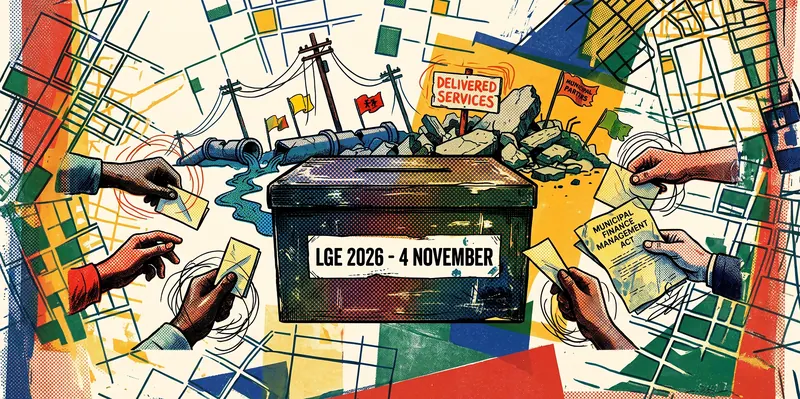
The countdown to the 2026 local government elections has begun, with South Africans set to go to the polls on November 4, 2026. The elections will be held on a public holiday, with voting stations open from 7am to 9pm. The local government elections are crucial as they determine who will run municipalities for the next five years, delivering essential services such as water and sanitation, electricity, local roads, and waste collection.
In the local government elections, voters will choose their ward councillor and party representatives. The ballot system will differ depending on whether one lives in a metro or outside of it. In metros, voters will receive two ballots: one for a ward councillor and one for a party. Outside of metros, voters may receive a third ballot for their district council. Ward councillors serve as a vital bridge between the municipal council and the local community, and voters should assess their performance in delivering services and meeting demands.
To participate in the elections, voters must be registered and vote at their designated voting station. Voters can check their registration status and find their voting station using the Electoral Commission of SA's (IEC) website or by SMSing their ID number to 32810. Those who are unable to vote in person on election day can apply for a special vote, which will take place on November 2-3, 2026. Applications for special votes are open until October 12, 2026.
The IEC provides various tools to help voters find their ward and voting station. Voters can use the Voting Station Finder on the IEC website or SMS their ID number to 32245 to find their ward councillor and contact details. The ward councillor tool on the IEC website also allows voters to enter their ward number and find their current councillor and contact details.
When evaluating ward councillors, voters should consider their performance in delivering services and meeting demands. According to Professor Jaap de Visser, South African Research Chair in Multilevel Government, Law and Development, voters should look beyond political ideologies and assess whether individual councillors delivered on their promises and didn't steal from the public purse.
The 2026 local government elections will also see various parties and individuals contesting for mayoral positions in South Africa's metros. Some of the mayoral contenders include Helen Zille of the DA, Herman Mashaba of ActionSA, and Dr. Tlaleng Mofokeng of the EFF, among others. The ANC has yet to confirm its candidates for some of the metros.
As the elections approach, voters must ensure they are registered and informed about the candidates and parties contesting in their area. The IEC's website and voting station finder tool can help voters find their ward and voting station. By participating in the 2026 local government elections, South Africans can hold their municipalities accountable and shape the future of their communities.
Key points
- The 2026 local government elections will take place on November 4, 2026.
- Voters will choose their ward councillor and party representatives in the elections.
- The ballot system will differ depending on whether one lives in a metro or outside of it.