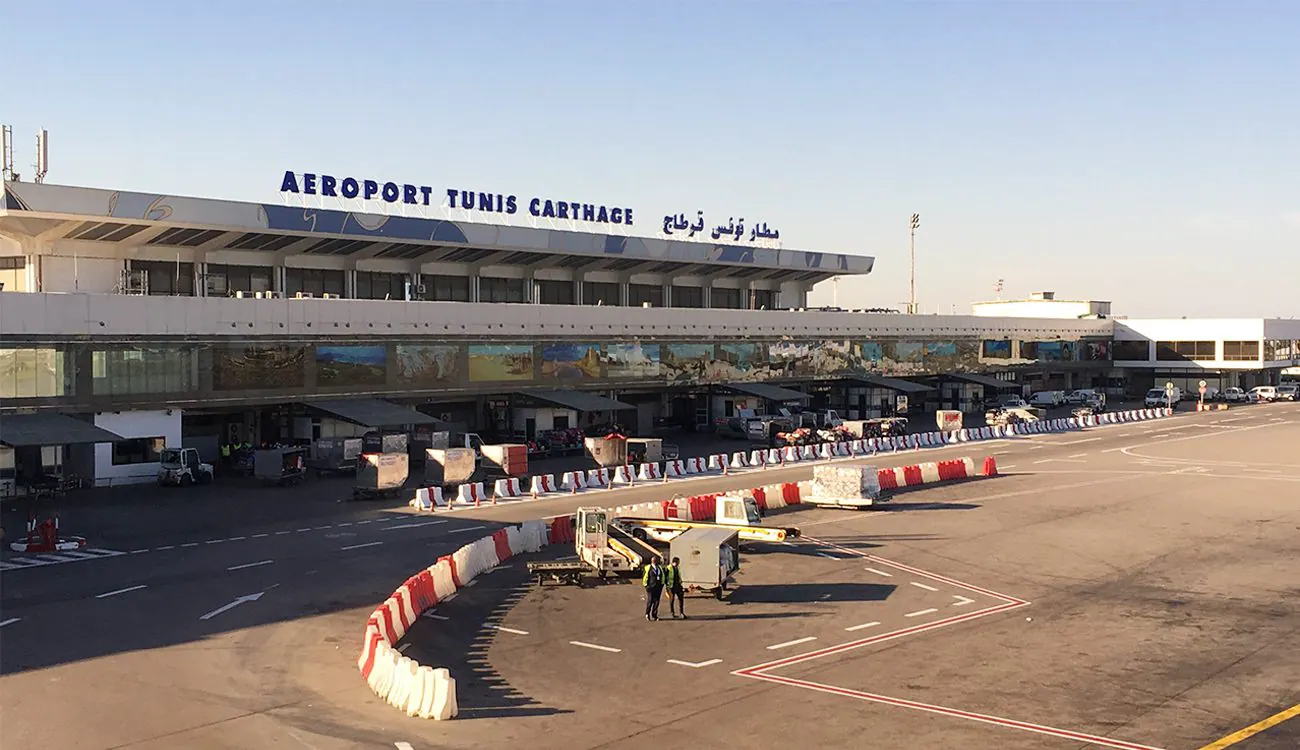
The Tunis-Carthage airport has secured the 8th position in the African airport capacity ranking, according to data from the African Airlines Association (Afraa). With 526,444 available seats in August 2026, the airport has solidified its presence among the continent's primary air transport hubs. This ranking is a testament to the airport's significance in facilitating air travel and trade within Africa and beyond.
The African airport capacity ranking is led by Cairo International Airport, with 1.85 million available seats, followed closely by Addis-Abeba with 1.25 million and Johannesburg with 1.15 million. Casablanca ranks 4th with 803,579 seats, while Algiers comes in 5th with 676,242 seats. Nairobi and Cape Town occupy the 6th and 7th positions, respectively. Tunis-Carthage's 8th position is notable, as it surpasses Lagos, which ranks 9th with 483,103 seats, and Marrakech, which ranks 10th with 480,112 seats.
The presence of five North African airports in the top 10 - Cairo, Casablanca, Algiers, Tunis, and Marrakech - underscores the region's substantial influence on continental air transport. North Africa accounts for 41.9% of the total available seats in August 2026, followed by East Africa with 22.7% and Southern Africa with 18.3%. This distribution highlights the region's critical role in facilitating air travel and trade within Africa.
On a continental scale, African air capacity has increased by 8.8% in August 2026 compared to the same period last year. Intra-African flights have seen a more significant surge, with a 10.5% increase, indicating a strengthening of connectivity between various markets on the continent. This growth in air capacity is a positive indicator for the industry, but it also presents challenges in terms of balancing supply and demand.
Despite the growth in air capacity, there is a notable disparity between the increase in available seats and the actual demand. In July 2026, available seat kilometers (ASK) rose by 9% compared to the same period last year, while revenue passenger kilometers (RPK) increased by 5.8%. This gap may put pressure on pricing and load factors, highlighting the need for airlines to adapt to changing market conditions.
For Tunisia, the Tunis-Carthage airport's ranking underscores the capital's importance as a hub for air travel and trade with Africa and other international markets. The airport's presence in this ranking is a positive indicator for the country's aviation industry, but it also emphasizes the need for sustainable economic growth and performance for airlines operating in the region.
As the African air transport industry continues to evolve, the challenge for airlines and airports will be to translate growth in capacity into sustainable economic performance. With the right strategies and investments, the industry can capitalize on the growth in air travel and trade, ultimately driving economic development and prosperity across the continent.
Key points
- Tunis-Carthage airport ranks 8th in African airport capacity with 526,444 available seats in August 2026.
- North Africa accounts for 41.9% of the total available seats in August 2026.
- African air capacity has increased by 8.8% in August 2026 compared to the same period last year.