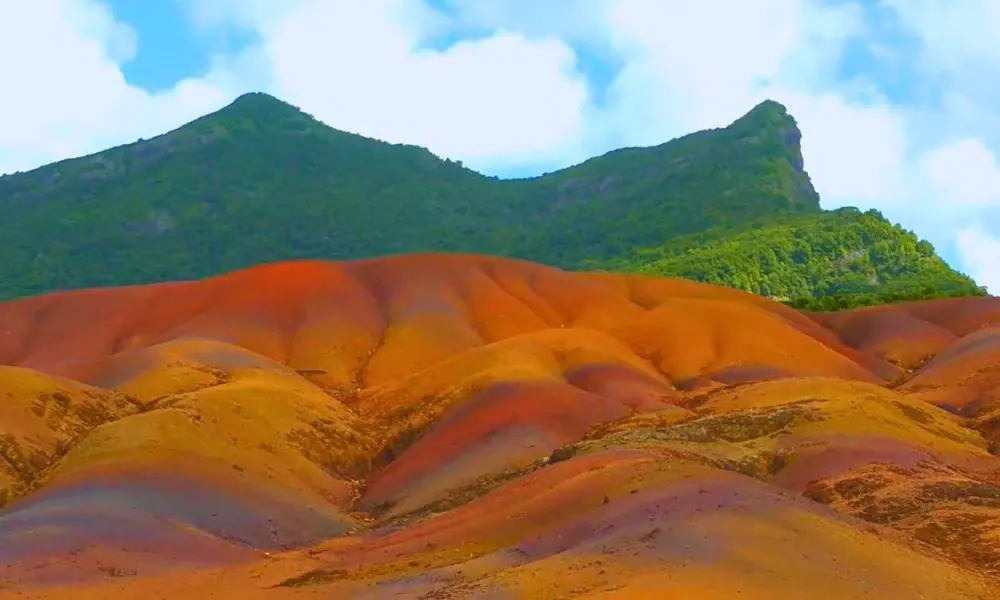
Deep within a dense green forest on the island of Mauritius lies the Seven Colored Earth in Chamarel, a rare geological phenomenon featuring small, bare, rolling sand dunes striped with seven distinct colours: red, brown, violet, green, blue, purple, and yellow. This natural wonder has become a major attraction, drawing visitors from around the world who are fascinated by its unique beauty.
The formation of the Seven Colored Earth is attributed to the island's volcanic origin. Millions of years ago, Mauritius was created by underwater volcanoes when liquid magma cooled into dark, solid basalt rock. Over time, the hot and wet tropical climate broke down the hard volcanic rock into clay, while heavy rains washed away normal nutrients and water-soluble minerals, leaving only iron and aluminum behind.
The distinct colours of the Seven Colored Earth are a result of the oxidation of iron and aluminum in the rock. The iron produces bright red and brown shades, while the aluminium creates blue and violet hues as the rock rusted and broke down under the sun. This natural process has created a unique science puzzle, with the colours remaining entirely separated in distinct stripes.
Visitors to the Seven Colored Earth can conduct a simple experiment to understand the phenomenon. When a handful of the coloured dirt is taken, placed in a jar, and shaken, the mixture does not stay muddy. Left to sit for a few days, the dirt separates back into distinct coloured layers because iron and aluminum particles naturally repel each other, refusing to mix permanently and automatically sorting themselves out to keep the stripes clean and sharp.
Despite massive tropical rainstorms in Mauritius that would normally wash a bare hill of dirt without tree roots into the ocean, the dunes barely erode. The specific way the heavy metal particles pack together makes the ground surprisingly solid, allowing water to run off the top without carrying the dirt away. This unique characteristic has ensured the long-term preservation of the Seven Colored Earth.
The Seven Colored Earth is not only a natural wonder but also a popular tourist destination. The site provides a unique opportunity for visitors to learn about geological processes and the importance of conservation. The attraction is a significant contributor to the local economy, attracting tourists who are interested in exploring the island's natural beauty.
The preservation of the Seven Colored Earth is crucial for future generations. Efforts are being made to protect the site from erosion and human impact, ensuring that this natural wonder continues to inspire and educate visitors for years to come. The site serves as a reminder of the importance of preserving our natural heritage and promoting sustainable tourism practices.
Key points
- The Seven Colored Earth in Mauritius is a rare geological phenomenon featuring small, bare, rolling sand dunes striped with seven distinct colours.
- The colours of the Seven Colored Earth are a result of the oxidation of iron and aluminum in the rock.
- The site is surprisingly resistant to erosion due to the way the heavy metal particles pack together, making the ground solid and allowing water to run off the top.